Shifting Sands: Apple, Nvidia, and Intel's Risky Bid for American Chipmaking
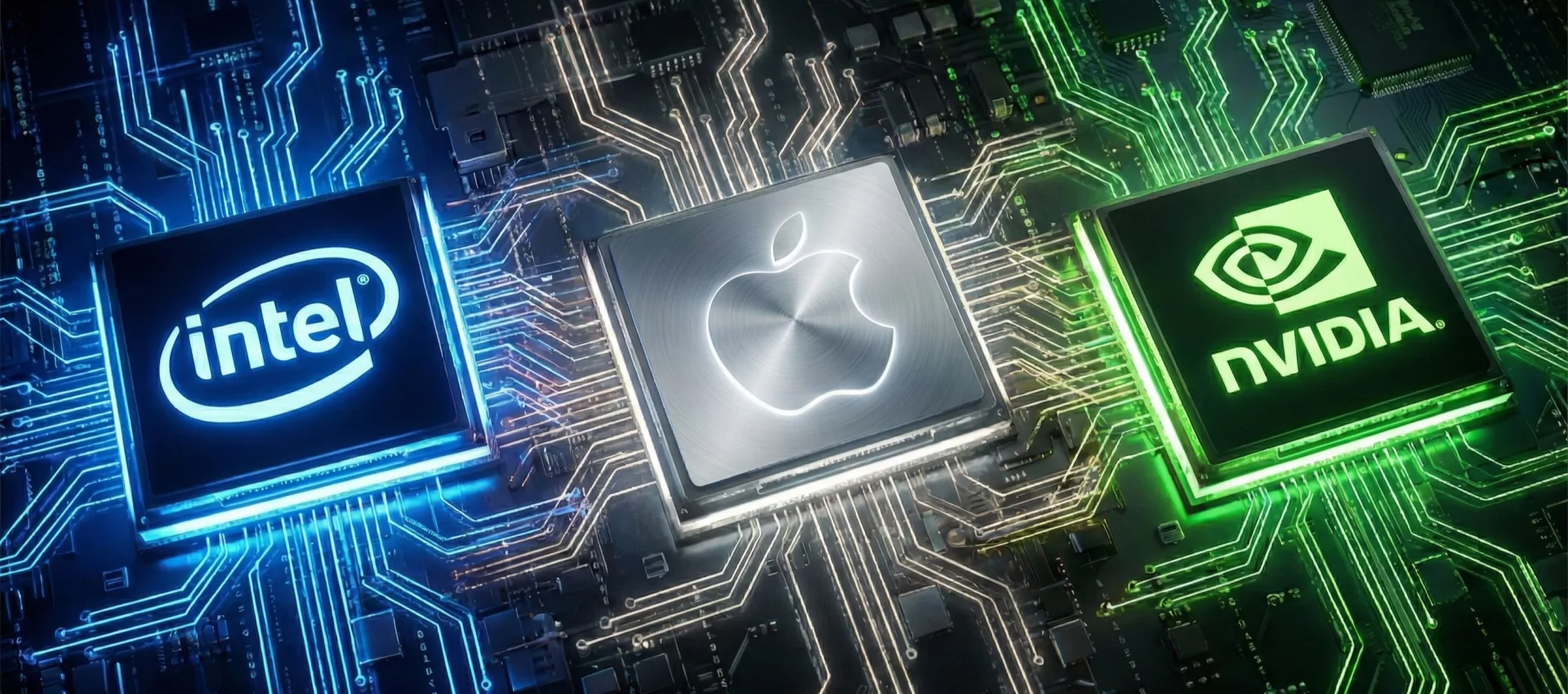
The semiconductor world is buzzing with reports that tech titans Apple and Nvidia are in talks with Intel to outsource a portion of their processor production and packaging to Intel's U.S. facilities, potentially starting in 2028. This isn't just a corporate handshake; it's a strategic gambit, signaling a profound re-evaluation of the semiconductor supply chain. Geopolitical tensions, mounting pressure from the U.S. government, the looming specter of tariffs, and a clear desire for supply chain diversification are pushing these industry giants to consider once-unthinkable collaborations. The news, unsurprisingly, sent Intel shares climbing in premarket trading, suggesting investors are betting on a much-needed boost for the embattled chipmaker.
However, we believe it's crucial to temper this optimism with a healthy dose of realism. Both Apple and Nvidia are reportedly eyeing "low volume, low-tier, non-core" production runs. This cautious approach aims to mitigate mass production risks and, perhaps more importantly, preserve their deeply entrenched relationships with their current primary manufacturing partner, TSMC. Meanwhile, Intel Chief Financial Officer David Zinsner evidently sees potential, having purchased company stock earlier this week, on Monday, January 26, 2026.
Apple's Measured Return to Intel's Orbit
Apple's reported interest involves producing some of its entry-level M-series processors for cost-sensitive laptops and tablets, such as the MacBook Air and iPad Pro, at Intel. These are the chips that currently roll off TSMC's lines but aren't as mission-critical or performance-intensive as the A-series SoCs powering iPhones or Apple's higher-end M Pro and M Max offerings.
The timeline for this potential production at Intel is set for 2028, though some reports from analyst Ming-Chi Kuo hint at manufacturing of lower-end M-series processors beginning as early as mid-2027. This marks a particularly intriguing, and arguably cautious, re-engagement with Intel. It follows Apple's definitive departure from Intel x86 CPUs in Mac computers, a transition completed between 2020 and 2022. While this new arrangement wouldn't see Intel designing Apple's chips (the M-series remain Apple-designed and Arm-based), it would mean Intel fabricating them, specifically using its upcoming 18A process.
Apple is reportedly considering Intel's 18A (or 18A-P) or 14A process technology for these chips, which are targeted specifically for the U.S. market. Meeting U.S. policy requirements would necessitate both silicon production and packaging operations to be conducted domestically. Industry analysts suggest that only the Apple M8 could realistically transition to Intel's 14A node, and GF Securities analyst Jeff Pu even speculates Intel could produce A21 or A22 series chips for non-Pro iPhone models starting in 2028. For Apple, this collaboration presents a significant engineering hurdle: porting its micro-architectures to Intel's nodes while ensuring competitive performance for the American market. This is no small feat, and we think the "low-volume, non-core" designation underlines the experimental nature of this venture.
Nvidia's Strategic Play for Feynman GPU Components
Nvidia, too, is reportedly looking to tap into Intel's foundry services. The plan involves manufacturing portions of the I/O dies for its forthcoming Feynman GPUs at Intel in the U.S., leveraging Intel's 18A or the planned 14A process technology, also slated for 2028. This comes despite Nvidia making a substantial $5 billion investment in Intel in late 2025. This investment was a common stock purchase and part of a broader collaboration for custom data centers and PC products, effectively a "lifeline" to Intel, and a vote of confidence in its manufacturing capabilities.
While the main GPU die for the Feynman architecture – the successor to Rubin, anticipated in 2028 – is expected to remain with TSMC, Nvidia intends for Intel to handle up to 25% of the final packaging using its EMIB technology at Intel's New Mexico facilities. This also falls under the umbrella of "non-core, low-volume, low-tier components" for Nvidia.
However, we must inject some skepticism here. Tom's Hardware highlights potential challenges with EMIB technology for the Feynman GPUs' estimated high power consumption, projected to be around 5-6 kW. This level of power might not be adequately supported by the necessary integrated voltage regulation offered by EMIB. Furthermore, adopting Intel's Foveros Direct 3D packaging for Feynman would likely necessitate a redesign of the GPU, a considerable undertaking, compared to TSMC's established CoWoS-L solution. While Intel's EMIB and Foveros are attracting attention as TSMC's CoWoS capacity is strained, and Intel boasts excess packaging capacity, the technical hurdles for such high-power chips are far from trivial. GizNewsDaily also suggests Intel’s 14A may be reserved for specific "low-end" GPUs for Nvidia.
Geopolitical Currents and the Drive for Diversification
These alleged plans from both Apple and Nvidia are not born from a sudden technological epiphany, but rather a calculated response to a complex global landscape. The key drivers include:
- Geopolitical concerns and direct political pressure from the U.S. government to onshore semiconductor manufacturing.
- The specter of potential tariffs on semiconductors produced outside of the U.S., with Commerce Secretary Howard Lutnick stating that companies not investing in the U.S. could face tariffs as high as 100%.
- Capacity constraints at existing foundries like TSMC, which is struggling to keep up with the insatiable demand for advanced packaging, particularly for AI chips.
- A critical need for risk diversification to reduce over-reliance on a single manufacturer or a particular region, especially given ongoing global uncertainties.
This dual-foundry approach, as it's being termed, is fundamentally designed to minimize mass production risks for Apple and Nvidia. From TSMC's perspective, this diversification isn't necessarily a blow; offloading "non-core" orders could alleviate U.S. political pressures and reduce concerns about monopoly, potentially strengthening TSMC's hand in future pricing and supply negotiations for its most advanced, high-margin products.
Intel's Foundry Dreams and the Elusive 14A Process
Intel's ambition to become a leading foundry is well-documented, but its path has been fraught with challenges. The 14A node, crucial for these potential collaborations, faces a more extended timeline than initially reported. While the original article stated risk production in 2027 and mass production in 2028, recent insights from DIGITIMES, citing Intel CEO Lip-Bu Tan at the Cisco AI Summit, indicate that 14A risk production is now targeted for 2028, with mass production delayed to 2029. Furthermore, external customers may not see meaningful 14A volume access until 2030, or even 2031, due to bottlenecks in funding and fab capacity build-out. This significant delay casts a shadow on the 2028 targets discussed by Apple and Nvidia.
Intel CEO Pat Gelsinger recently confirmed that two customers are evaluating 14A specifications, though he refrained from naming them. Given the current limitations of Intel's 18A technology, any truly meaningful cooperation with American chipmakers is largely anticipated to hinge on the readiness of 14A production. Intel's 18A process, currently in risk production, is expected to reach volume manufacturing in the second half of 2025. It promises a 15% improvement in performance per watt and a 30% increase in transistor density compared to Intel 3, and some reports suggest it can even outperform TSMC's N2 node in raw performance, though TSMC N2 may still offer higher density and lower cost.
Many of Intel's initial partnerships with American chipmakers are reportedly starting with EMIB advanced packaging due to the inherent risks associated with adopting newer 14A and 18A processes. Intel is aggressively pursuing foundry customers, with a roster of potential collaborators including Google, Microsoft, AWS, Qualcomm, Broadcom, AMD, Tesla, and entities tied to large U.S. government contracts. In contrast, Samsung Foundry, another player in advanced chip manufacturing, is reportedly facing challenges in achieving stable yields for its SF2 process, which often leads companies to prefer TSMC for advanced chip production.
Unconfirmed Reports and the Road Ahead
It bears repeating: neither Apple nor Nvidia have officially confirmed these reported plans. Significant challenges remain, not least whether Intel will actually possess enough advanced manufacturing capacity for third-party customers by 2028, particularly given the revised 14A timeline. Tom's Hardware suggests Nvidia might ultimately choose to wait for TSMC to establish its advanced packaging capabilities in America later in the decade, rather than undertake a potentially costly and complex redesign of its large GPUs for Intel's Foveros technology.
From our perspective, while this news is undoubtedly a positive indicator for Intel's foundry aspirations and its stock performance today, the devil will be in the details of execution and the true scale of these "low volume, low-tier, non-core" collaborations. The reported discussions, if they ultimately materialize, will indeed mark a significant evolution in how major tech companies navigate their critical semiconductor supply chains in an increasingly complex and politically charged global market. We will be watching closely to see if Intel can truly deliver on its ambitious promises and whether these tentative partnerships evolve into something more substantial.






Comments