Intel is gearing up for what could be its most critical desktop launch in years: the next-generation Core Ultra Series 4 processors, codenamed "Nova Lake," expected in late 2026. This isn't just another refresh; it's a calculated gamble to reclaim the desktop performance crown and solidify market share across both desktop and mobile platforms, with the rollout continuing into 2027. We see Nova Lake as Intel's bold declaration that it's serious about regaining lost ground, and the promised architectural advancements, a new desktop socket, and beefed-up AI capabilities certainly suggest a significant overhaul.
Intel's Corporate Vice President of Investor Relations, John Pitzer, has stated that Nova Lake will "conclude" Intel's desktop roadmap for 2026, which, in our view, signals its strategic importance. The company is promising "best-in-class" performance for demanding tasks like gaming, digital entertainment, and 4K streaming. While every chip launch makes such claims, the underlying technical details suggest Intel might actually be putting its money where its mouth is this time.
A Deep Dive into Nova Lake's Ambitious Architecture
Nova Lake processors are set to introduce a hybrid architecture featuring two entirely new core designs: Coyote Cove P-Cores for raw performance and Arctic Wolf E-Cores for efficiency. The decision to forgo HyperThreading on Coyote Cove P-Cores is a notable departure from Intel's recent strategy. This move is reportedly being compensated by an increased physical P-core count to maintain and boost multi-threaded performance. We're cautiously optimistic, as relying solely on brute force core counts to offset HyperThreading's benefits has had mixed results in the past, and it remains to be seen how this will play out in real-world benchmarks, especially against AMD's mature SMT implementations.
Key architectural enhancements include:
- Integrated Graphics: Powered by the new Xe3 "Celestial" graphics architecture (also known as Xe3P graphics), Nova Lake promises enhanced graphics performance for gaming and professional workloads. If "Celestial" can truly deliver on its promise, it could finally offer a compelling integrated graphics solution that challenges AMD's strong iGPU offerings, which have often held an edge.
- Neural Processing Unit (NPU): A next-generation NPU (NPU6) will be integrated, specifically designed to meet Copilot+ requirements. This indicates Intel is heavily invested in the burgeoning AI PC market, aiming to provide the dedicated hardware necessary for local AI acceleration. For a PC to qualify as a Copilot+ PC, it needs an NPU capable of at least 40 Tera Operations Per Second (TOPS). This NPU6 will be crucial for Intel's positioning in the AI era.
- Process Node: At least one tile of Nova Lake is expected to be manufactured on Intel's advanced 18A process node. This is significant as 18A is a key technology for Intel's manufacturing resurgence, also allocated for Panther Lake notebooks and future server products. The successful deployment of 18A is paramount for Intel's competitiveness, and recent reports suggest yield improvements are progressing well, which is good news for consumers hoping for timely availability.
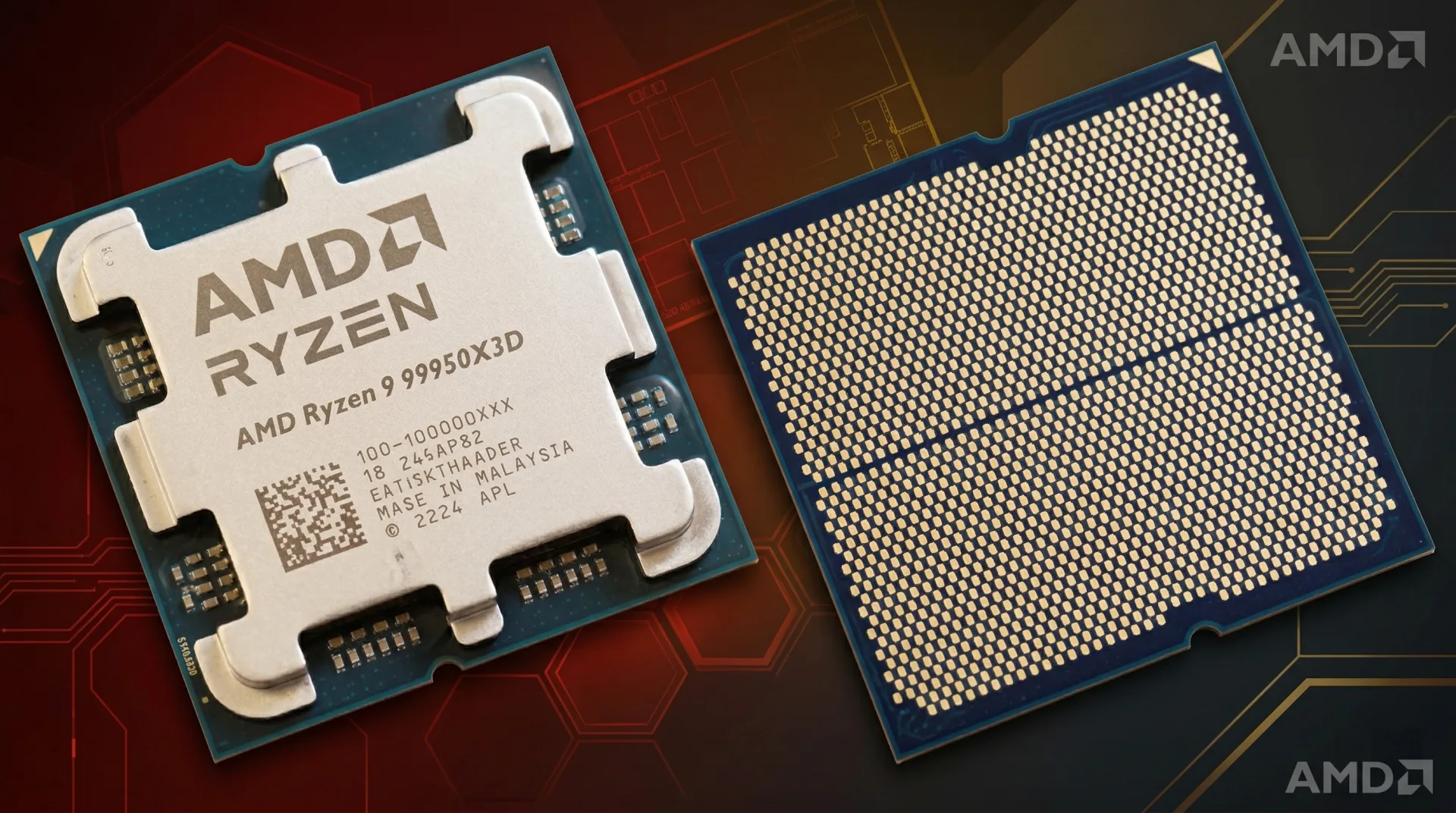
- Big Last-Level Cache (BLLC): Special SKUs of Nova Lake are anticipated to feature a large Big Last-Level Cache (BLLC), Intel's direct response to AMD's highly successful 3D V-Cache technology. Reports suggest up to 288 MB of BLLC for Core Ultra 9 variants and up to 144 MB for Core Ultra 7 models. This is a direct challenge to AMD's Ryzen X3D processors, which have carved out a niche in gaming due to their massive L3 cache. For context, AMD's Ryzen 7 7800X3D offers 96MB of L3 cache, so Intel's proposed BLLC figures are certainly aggressive and could significantly boost gaming and latency-sensitive application performance.
These innovations are expected to significantly improve Instructions Per Cycle (IPC) and overall performance-per-watt efficiency. While every new generation claims this, the combination of new core designs, a cutting-edge process node, and a dedicated response to AMD's cache advantage makes Nova Lake a serious contender.
Desktop Platform Overhaul: New Socket, New Rules
The launch of Nova Lake will usher in a new era for Intel's desktop platform, introducing a new socket and updated specifications. This platform overhaul is a double-edged sword; it promises longevity for the new platform but also means existing users will need entirely new motherboards.
- New Socket: Desktop Nova Lake processors will utilize the new LGA 1954 socket, replacing the current LGA 1851. While a new socket is always a pain for upgraders, it often signifies foundational changes necessary for future advancements. We hope this socket has a longer lifespan than some of its predecessors.
- Core Configurations: Desktop Core Ultra 9 models are expected to feature dual compute tiles, potentially offering up to 52 total cores (16 P-cores, 32 E-cores, 4 LP E-cores), or a configuration of 42 total cores (14 P-cores, 24 E-cores, 4 LP E-cores). Core Ultra 7 models, with a single compute tile, could see up to 28 total cores (8 P-cores, 16 E-cores, 4 LP E-cores). Mobile variants are projected to reach a maximum of 28 cores. These core counts, especially for the flagship Core Ultra 9, are substantial and would easily outstrip current mainstream offerings, potentially giving Intel a multi-threaded performance lead. For comparison, AMD's top consumer chip, the Ryzen 9 7950X, features 16 cores and 32 threads.
- Memory Support: Desktop users can anticipate support for high-speed memory, with expected specifications reaching up to DDR5-8000 MT/s (1DPC 1R). This is incredibly fast, pushing the boundaries of consumer memory. While impressive on paper, we wonder how many mainstream users will truly benefit from or be able to afford DDR5-8000 kits at launch, as current high-end speeds typically hover around DDR5-6000 to DDR5-7200 MT/s for optimal performance and stability.
- PCIe Lanes: The platform is rumored to provide ample connectivity, including an expected 36 PCIe 5.0 lanes and 16 PCIe 4.0 lanes. This is a generous allocation, providing plenty of bandwidth for multiple NVMe drives, graphics cards, and other high-speed peripherals. For context, current high-end platforms typically offer around 24 PCIe 5.0 lanes from the CPU, with additional lanes from the chipset.
- TDP: Maximum TDP for desktop models is projected to range between 125-175W. This range is typical for high-performance desktop CPUs, though cooling solutions will undoubtedly need to be robust to handle sustained loads, especially at the higher end of that spectrum.
It's important to remember that many of these details—core counts, cache sizes, memory, PCIe lanes, and TDP—are based on current expectations, leaks, and industry reports. As analysts, we always advise a healthy dose of skepticism until official confirmation from Intel arrives.
Intel's Strategic Imperative: Reclaiming the Desktop Crown
Intel's commitment to the Nova Lake architecture reflects an aggressive strategy to regain market leadership, particularly in the DIY desktop CPU segment where AMD has made significant inroads. The company has indicated that higher-end "K" models will likely launch first, followed by mainstream and entry-level variants, a common strategy to maximize initial impact.
Despite facing current wafer supply shortages, Intel has affirmed its commitment to the client market, focusing on mid- and high-end products. This strategic focus is designed to fortify market share and profitability in both notebooks and desktops. In our view, prioritizing these segments makes sense, as they offer higher margins and greater influence over the enthusiast market.
Intel's Q4 2025 earnings reported $13.7 billion in revenue, a 4% decrease year-over-year, with full-year 2025 revenue remaining flat. The Client Compute Group (CCG) reported $8.2 billion, down 7% year-over-year, while the Data Center and AI (DCAI) business group saw a 9% increase, reaching $4.7 billion. The decline in CCG revenue underscores just how crucial a successful rollout of Nova Lake will be to reverse these trends and regain momentum in its core PC business. The reported progress in yield improvements for its 18A process node will be a key factor in Nova Lake's ability to hit market efficiently.
Looking further ahead, Intel's 14A process node, the successor to 18A, is reportedly targeting production by the end of 2026. This showcases Intel's long-term roadmap beyond Nova Lake, but also highlights the aggressive timeline Intel is pursuing in its manufacturing journey. The success of Nova Lake will set the tone for these future ambitions.





Comments