
The phrase making the rounds this week — "Google TurboQuant RAM price crash" — gets two important things wrong.
First, TurboQuant is not a RAM product. It's a compression algorithm from Google Research, announced on March 24, 2026 in a blog post and paper, with more detail presented at the AI at Scale summit on March 30. Google describes it as a way to compress the KV cache used during large language model inference, and more broadly as a vector-quantization technique for memory-heavy workloads. Google's own writeup says it targets one of the biggest inference bottlenecks: memory overhead, especially when context windows grow. The original announcement is on the Google Research blog, and outside summaries have framed it similarly, including TechInformed.
Second, consumer DDR5 pricing has not crashed. As of April 1, U.S. retail DDR5 prices looked more like a plateau than a collapse. A 2x16GB DDR5-6000 CL30 kit averaged $529, only modestly below the $535–$550 range seen in late March. That lines up with broader RAM price tracking from Tom's Hardware and market-watch style analysis from DropReference.
What did happen is narrower, but still meaningful: memory-related semiconductor stocks sold off hard after Google's announcement and the follow-on discussion around it.
What actually moved
Late March trading shows a clear market reaction, even if the "RAM crash" label is sloppy.
Micron was hit the hardest in the U.S. sell-off. Over two days, the company fell more than 14–15%, wiping out more than $25 billion in market value, and the decline intensified on March 30–31, with multiple trading halts. Western Digital dropped 11–13%, Seagate fell about 9%, and the damage spread across Asia as well: SK Hynix fell 6.2–6.4% on March 26, Samsung Electronics dropped about 4.7%, and Kioxia dipped nearly 6%. CNBC captured the basic shape of that regional move when it reported that South Korean memory names and Kioxia fell after Google's software announcement spooked investors about memory demand.
That doesn't prove TurboQuant will materially shrink memory demand. It does show that traders quickly treated it as a credible enough threat — or at least a credible enough reason to reassess very rich expectations.
What TurboQuant claims, and why investors cared
Google's headline claims are the reason this spread so fast.
TurboQuant is described as reducing KV cache memory usage by at least 6x and delivering up to 8x speedups in some attention workloads. The paper and summaries around it say the system combines PolarQuant with Quantized Johnson-Lindenstrauss (QJL) methods. Community writeups have put the pitch in practical terms: compressing KV cache down to roughly 3–4 bits per element without retraining or fine-tuning in the tested setups, as noted in a developer-oriented summary on Dev.to.
That matters because KV cache is a real cost center in inference. If a model can keep more context in less memory, operators may be able to run larger workloads on the same accelerator footprint, fit more sessions per GPU, or avoid pushing into higher-capacity memory configurations as quickly as expected. In theory, software efficiency can attack hardware demand from underneath.
That's the theory investors sold on.
The catch: the headline numbers are not the same as deployed reality
This is where the analysis has to stay a little boring, because the details matter.
The available research text includes several caveats:
Those caveats matter more than the meme version of the story suggests. A lab result aimed at KV cache compression is not automatically a broad reduction in all memory demand. It may end up being meaningful for some inference workloads, barely relevant for others, and difficult to operationalize at scale until tooling improves.
One outlet described the online reaction with a joke about HBO's Silicon Valley and Pied Piper, but MakeMeTechie made the more useful point alongside it: it is still a lab-stage result for now.
Why the market still sold first
Even with all that uncertainty, the sell-off wasn't irrational. It was fast, but not baseless.
A lot of memory names had been trading on the idea that AI inference and training would keep pulling the whole sector into a prolonged demand upswing. TurboQuant hit a weak point in that narrative: what if software starts reducing how much memory each query or each deployed model actually needs?
That is essentially how several analysts framed it.
Morgan Stanley analyst Shawn Kim argued that while TurboQuant could reduce memory use per query, it may also trigger a Jevons paradox effect: making inference cheaper could increase total AI usage enough that aggregate memory demand still rises. In that reading, TurboQuant is not necessarily bearish for memory in the long run; it may simply shift the cost curve and enable more local or lower-cost deployments.
Wells Fargo analyst Andrew Rocha took the more direct concern seriously, saying TurboQuant attacks the cost curve of AI inference and raises the question of how much memory capacity will really be needed long term if system specs come down.
Goldman Sachs analyst Peter Callahan described the move as a "sanity check" rather than panic, with investors reassessing whether the memory supercycle can survive meaningful software-driven efficiency gains.
Several tier-one banks also downgraded the memory sector from Overweight to Neutral, citing a possible structural shift in AI capex toward software optimization over hardware accumulation.
That cluster of views helps explain why a research blog post could erase tens of billions in equity value. The market wasn't pricing in a verified collapse in DRAM demand. It was pricing in the possibility that the peak assumptions were too clean.
Why this is not really about desktop DDR5
One reason the "RAM crash" headline is misleading is that it collapses several very different markets into one bucket.
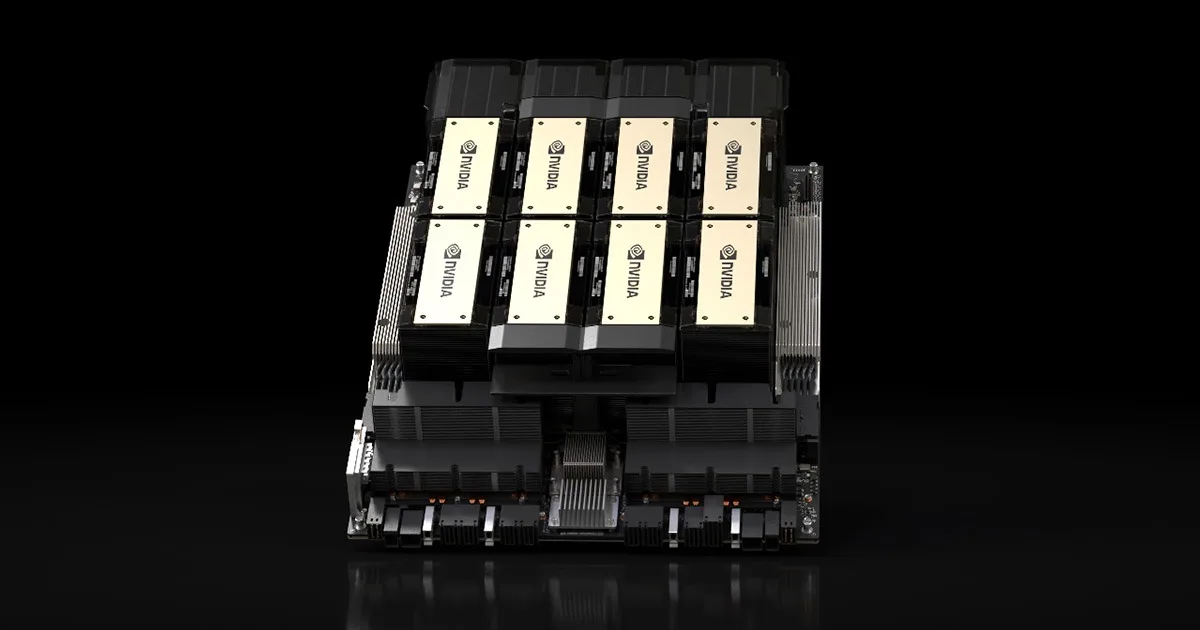
TurboQuant is being discussed mostly in the context of AI inference, especially around GPU memory pressure and the KV cache. The performance references in the materials point to NVIDIA H100 and B200-class accelerators, with community work also touching CPU and Apple Silicon environments. That is not the same thing as saying ordinary desktop DDR5 DIMMs should suddenly get cheaper.
Even if TurboQuant proves useful, the first-order effect would more likely show up in server inference economics, accelerator utilization, and memory configuration planning for AI systems. Retail DDR5 pricing depends on a broader mix of PC demand, channel inventory, contract pricing, supplier discipline, and product segmentation. The fact pattern here simply does not show a retail collapse.
The near-term counterargument is straightforward: demand is still booked
There's also a practical reason not to read the stock move as settled fact.
A Micron spokesperson said the company's full-year HBM4 capacity is sold out under binding contracts, including its first five-year customer agreement. That doesn't disprove the software-efficiency thesis. It does suggest that near-term demand remains strong, especially in the highest-value AI memory tiers.
This is the part markets often flatten into a single story. A software breakthrough can pressure the longer-term demand model while leaving current supply tight, contract-backed, and expensive. Both can be true for a while.
The date confusion and data noise are real too
A smaller but relevant point: even basic timeline coverage around TurboQuant has been a little messy.
Some reporting and secondary summaries refer to March 25 as the public release date, while Google's announcement and the pre-verified materials point to March 24. There are also inconsistencies in some stock-price tables and before/after figures across different summaries and aggregators. None of that changes the core picture, but it does reinforce how quickly this story outran clean sourcing.
That's another reason to be careful with sweeping claims about a "crash."
What to watch next
If you're trying to figure out whether this becomes a real memory-market story or just a sharp overreaction, a few things matter more than the slogans.
First, official implementation matters. As of April 1, Google had not released an official open-source library, codebase, or production integration for TurboQuant. Community work is useful, but broad impact usually depends on easier deployment and repeatable benchmarks.
Second, independent reproduction matters more than blog-post maxima. The "up to 8x" and "6x" numbers are attention-grabbing, but the real question is what happens under common inference settings, especially where operators already use lower-precision techniques.
Third, watch HBM and accelerator-config commentary more than desktop RAM shelves. If TurboQuant changes buying behavior, it is more likely to show up first in AI infrastructure planning than in consumer DIMM pricing.
Finally, don't confuse a stock sell-off with a confirmed end-market reset. What the market has clearly done is reprice the possibility that software can eat into hardware assumptions. What it has not shown, at least yet, is a literal collapse in RAM prices or a demonstrated drop in real-world memory demand.
For now, the practical takeaway is straightforward: TurboQuant looks important enough to monitor, but not finished enough to settle the memory debate. If the claims hold up in production-like environments, memory suppliers may face more pressure on the "how much capacity is enough?" question. If deployment proves messy, or if cheaper inference expands usage faster than compression reduces per-query memory, the current sell-off could look overstated. The evidence so far supports caution either way — just not the phrase "RAM price crash."










Comments