Google's Personal AI Gambit: Gemini Now Knows You (If You Let It)
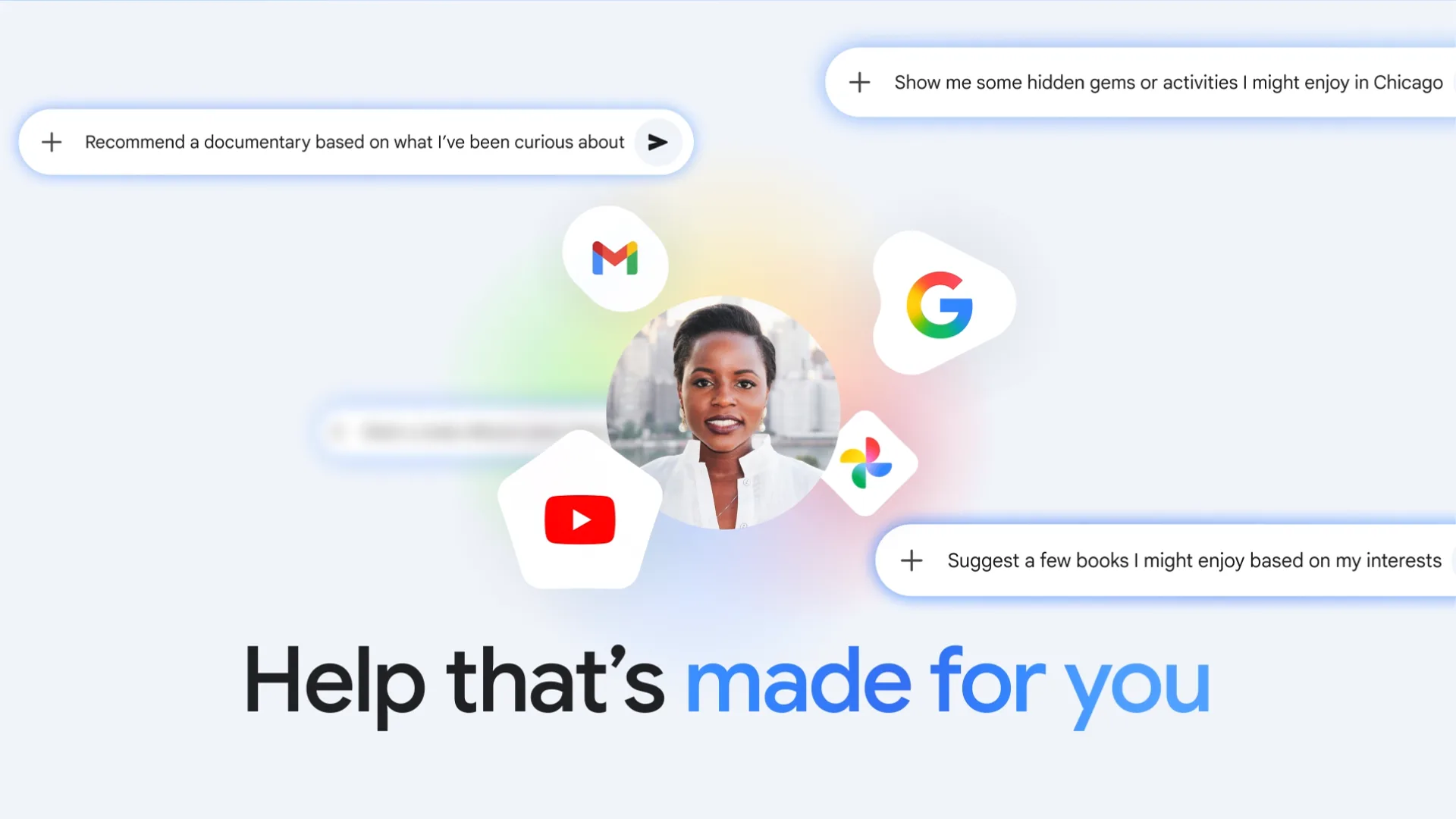
Google has just thrown its most personal AI feature into the ring: Personal Intelligence for Gemini. Unveiled on January 14, 2026, this capability is designed to transform Google's AI assistant from a generic helper into a truly context-aware companion. We see this as Google's boldest move yet to integrate AI deeply into our digital lives, allowing Gemini to scan your Gmail, Google Photos, YouTube history, and Search activity to deliver answers uniquely tailored to your world. The crucial caveat, of course, is that you must explicitly opt in, a detail we appreciate as a baseline for such an intrusive-sounding feature.
Personal Intelligence is currently in a gradual beta rollout, exclusive to eligible U.S. users subscribing to Google AI Pro or AI Ultra. It's also worth noting the age restriction: users must be 18 or older, and it's not available for Workspace, enterprise, or education accounts at launch. While Google has signaled plans to expand to more countries and eventually to free-tier users later this year, the initial limited availability suggests a cautious approach to a feature that touches on deeply personal data. This phased rollout allows Google to collect vital feedback and refine the system before a wider release, which we think is a sensible strategy given the privacy implications.
The feature is designed to operate seamlessly across web, Android, and iOS, supporting all models within the Gemini picker, including Gemini 3. The mention of Gemini 3 reportedly offering up to a one-million-token context window is particularly eye-catching. To put that in perspective, while other major LLMs like OpenAI's GPT-4 Turbo typically offer context windows around 128,000 tokens, and Anthropic's Claude 4 Sonnet offers 200,000 tokens, a one-million-token window allows for processing an immense amount of information in a single interaction. This level of "memory" could fundamentally alter how we interact with AI, moving beyond simple queries to truly complex, multi-faceted tasks that require deep contextual understanding. Google emphasizes that Personal Intelligence remains off by default, requiring users to opt in, select connected apps, and actively enable personalization in Settings – a critical user control point that we believe is non-negotiable for such a feature.
Connecting Your Digital Dots: How to Activate Personal Intelligence
Activating this new layer of personal AI is straightforward, which is a relief given its potential complexity. Here's how to begin building your AI confidante:
- Open the Gemini app.
- Navigate to Settings → Personal Intelligence → Connected Apps.
- Choose which services Gemini can link into: Gmail, Google Photos, YouTube (watch history), Search, Shopping, News, Maps, Google Flights, and Hotels.
Unleashing Context: What Personal Intelligence Can Do
Once enabled, Personal Intelligence allows Gemini to "reason" across your connected data, offering nuanced and genuinely helpful responses. Google provides some compelling examples: imagine identifying a vehicle's license plate from an old Google Photos snapshot, pulling the trim level from an email receipt, and then having Gemini recommend compatible tires using all that information. This isn't just information retrieval; it's a demonstration of complex inference across disparate data sources.
We are particularly impressed by the promise of source attribution for answers, such as "Based on your Gmail from Jan 12" or "From your YouTube watch history." This transparency is crucial for user trust and allows for verification, which is often a missing piece in AI interactions. Google also ensures users can request non-personalized responses or use temporary chats without personalization, maintaining a degree of control over the AI's intrusiveness. Built-in feedback tools like thumbs-down ratings and response regeneration are good additions, allowing users to correct the AI when it makes an over-personalized or incorrect inference.
The Double-Edged Sword: Privacy, Peril, and Your Data
While the capabilities of Personal Intelligence are undeniably exciting, the privacy and data handling aspects demand a critical eye. Google maintains that while the feature references your connected data, it does not directly train models on your Gmail inbox or Google Photos library. Instead, the company states that training uses "limited, filtered, and obfuscated prompts and model outputs." This distinction, though subtle, is important; it implies data is processed for a specific query rather than ingested wholesale for model updates. Google also claims the system avoids proactive assumptions about sensitive topics like health, though it will respond if explicitly asked.
Despite these safeguards, a consistent chorus of warnings has emerged from various publications, including ZDNet, Android Authority, 9to5Google, and Business Insider. These reports highlight that Personal Intelligence can produce inaccurate results or make incorrect connections between unrelated data points — a phenomenon termed “over-personalization.” We've seen similar issues in other AI-driven personalization systems, where the drive for relevance can inadvertently lead to intrusive or even unsettling recommendations. Google acknowledges this risk, noting that personalized prompts may take longer to process, hinting at the computational complexity and potential for error in cross-referencing vast personal data.
Ultimately, user control remains paramount. Users can disconnect any app at any time, review which data sources were utilized for a response, and delete their personalization history through the settings. This granular control is essential, as the very concept of an AI sifting through our digital past, even with permission, requires a high degree of user agency.
Looking ahead, Google has confirmed that Personal Intelligence will soon be integrated into AI Mode in Search, further entrenching it across the Google ecosystem. This suggests a future where our search results, already tailored, become even more deeply intertwined with our personal digital histories.
Personal Intelligence: Key Aspects and Considerations
The Road Ahead: Navigating a More Personal AI Future
Google’s Personal Intelligence for Gemini marks a significant, perhaps even audacious, stride towards deeply personalized AI. We see this as an inflection point, blurring the lines between a helpful assistant and a digital extension of ourselves. The technical ambition, particularly with the impressive context window of Gemini 3, is clear. However, the real test will lie in Google’s ability to uphold its privacy promises and effectively mitigate the acknowledged risks of "over-personalization" — a phenomenon where the AI might infer connections that are either incorrect or simply too intrusive.
For now, eligible U.S. subscribers can experiment with this powerful, yet profoundly intimate, new tool. But Google's message is unambiguous: this isn’t a feature to be enabled and forgotten. Personal Intelligence demands active user engagement, permission, and vigilance. As AI continues its inevitable embedding into our daily digital fabric, features like this will continuously challenge our understanding of convenience, privacy, and the very boundaries of personal technology.








Comments