The Shifting Sands of the Next-Gen Horizon
The buzz around Sony's PlayStation 6 is growing, but not for the reasons many gamers initially hoped. Instead of an imminent release, we're hearing increasingly loud whispers of a significant delay, pushing the next-generation console's arrival to as late as 2029 or even 2030. This is a notable departure from earlier industry expectations that had us penciling in a late-2027 or early-2028 launch, fueled by initial rumors and even court filings from the FTC v Microsoft case. We think this shift underscores the complex interplay of global economics, rapidly evolving technology, and strategic market positioning that now dictates the console landscape.
The narrative has truly shifted. While online personality Ali-A reportedly posted on Facebook that Sony plans to delay the PS6 until 2028, community commentators have since pushed this expectation even further, anticipating a timeline of 2029 or beyond. The most recent and arguably most significant development comes from industry analysis by David Gibson, Senior Research Analyst at MST Financial, who, in a report posted on SandStoneInsights Japan, suggests the PlayStation 6 may not arrive until 2030.
It's paramount to remember that Sony has remained tight-lipped, neither formally announcing the PlayStation 6 nor confirming any release dates or delays. All information thus far is based on leaks, analyst projections, and industry observations. Yet, the convergence of these independent reports paints a remarkably consistent picture of a console launch pushed back. This consistency, in our view, lends considerable weight to the possibility of a longer wait.
The 'RAMpocalypse' and the Price Point Predicament
Why the extended wait? The reasons appear multifaceted, deeply rooted in current global economic conditions and the tech sector's latest shifts. We believe this isn't simply a matter of technical ambition, but a forced recalibration.
Soaring Component Prices: The AI Effect
Reports consistently hint at current industry conditions as a primary reason for the delay. Console manufacturers, including both Sony and Microsoft, are grappling with a particularly brutal economic reality: soaring RAM prices. A global RAM shortage has affected not just memory modules but also PSUs, CPU coolers, and GPUs. This shortage has been ominously dubbed the "RAMpocalypse," driven largely by the insatiable demands of the AI boom that began in 2025 and continues into 2026. Data centers, hungry for processing power to fuel rapidly expanding AI technologies, are consuming vast quantities of PC parts, stressing supply chains and outbidding other sectors. Some analysts project that AI data centers could absorb nearly 70% of the world's memory chip production by 2026, a truly staggering figure. We can't help but wonder if console makers were fully prepared for such an aggressive shift in component demand.
The Elusive Sub-$500 Console
Higher prices for individual components severely impact Sony and Microsoft's ability to mass-produce home gaming consoles at competitive price points, traditionally under $500. This struggle for affordability, combined with the increasing price of SSDs and GPUs (neither of which Sony nor Microsoft manufactures themselves), makes a timely launch of advanced hardware economically challenging. Historically, market-leading consoles have often launched in the $450-$600 (adjusted for inflation) range. If new consoles hit the market at significantly higher prices due to component costs, it risks alienating a broad consumer base, a lesson we believe the industry has learned from past expensive launches like the PlayStation 3.
Beyond Economics: A Strategic Bet on AI and Cutting-Edge Architecture
Economic constraints aren't the only narrative. Sony appears to be using this extra development time to push technological boundaries, particularly in the realm of Artificial Intelligence. We see this as a calculated move to future-proof the console, albeit one that demands patience from consumers.
AI Integration at the Core
AI is a significant factor, with both Sony and Microsoft reportedly keen to capitalize on the rapidly advancing technology. The PlayStation 6 is rumored to feature an AI-enabled custom chip – a custom SoC silicon designed collaboratively by Sony and AMD. This isn't just about faster load times; we expect genuinely new gameplay experiences to emerge from such deep integration.
Innovative Architectural Leaps
Known features of the PS6's rumored specs highlight this ambition:
- Radiance Cores: Built directly onto the chip, these are dedicated to handling ray tracing features, freeing up the CPU and offering a "significant speed boost." This sounds like a direct response to the performance challenges of real-time ray tracing in current-gen consoles, which often necessitate compromises.
- Neural Arrays: Designed to connect GPU Compute Units, maximizing efficiency and boosting overall performance. The promise here is greater processing power, but the real benefit will be in how developers utilize this for more complex worlds and interactions.
- Universal Compression: An ambitious new technology that analyzes and compresses all data where possible. This could be a genuine game-changer for game sizes and loading times, which continue to be pain points for many.
- Sony even holds a patent for an AI ghost companion, hinting at deeper AI integration into the gaming experience itself. While intriguing, we remain cautiously optimistic about how seamlessly such a companion will integrate without feeling like a gimmick.
This level of custom silicon design and ambitious AI integration requires extensive research, development, and testing, which naturally extends the development cycle. Sony and AMD are reportedly working closely on "Project Amethyst," a venture aimed at creating a next-gen asset library to power future upscaling technology, leading to advancements in Sony's in-house console-level upscaler, PlayStation Spectral Super Resolution (PSSR). We welcome any technology that pushes visual fidelity, but the proof will be in how well PSSR 2.0 performs compared to existing solutions.
The PS5's Extended Tour of Duty
A PS6 delay also aligns perfectly with Sony's current strategy for the PlayStation 5. Launched in November 2020, the PS5 is currently in its sixth year. Sony CFO Lin Tao recently stated that the console is "in the middle of its journey/lifecycle," and the company expects its lifecycle to be extended. Historically, PlayStation consoles have followed a 6-7 year cycle (PS3 in 2006, PS4 in 2013, PS5 in 2020), which would suggest a new console by 2026 or 2027. However, extending the PS5's relevance buys Sony crucial time.
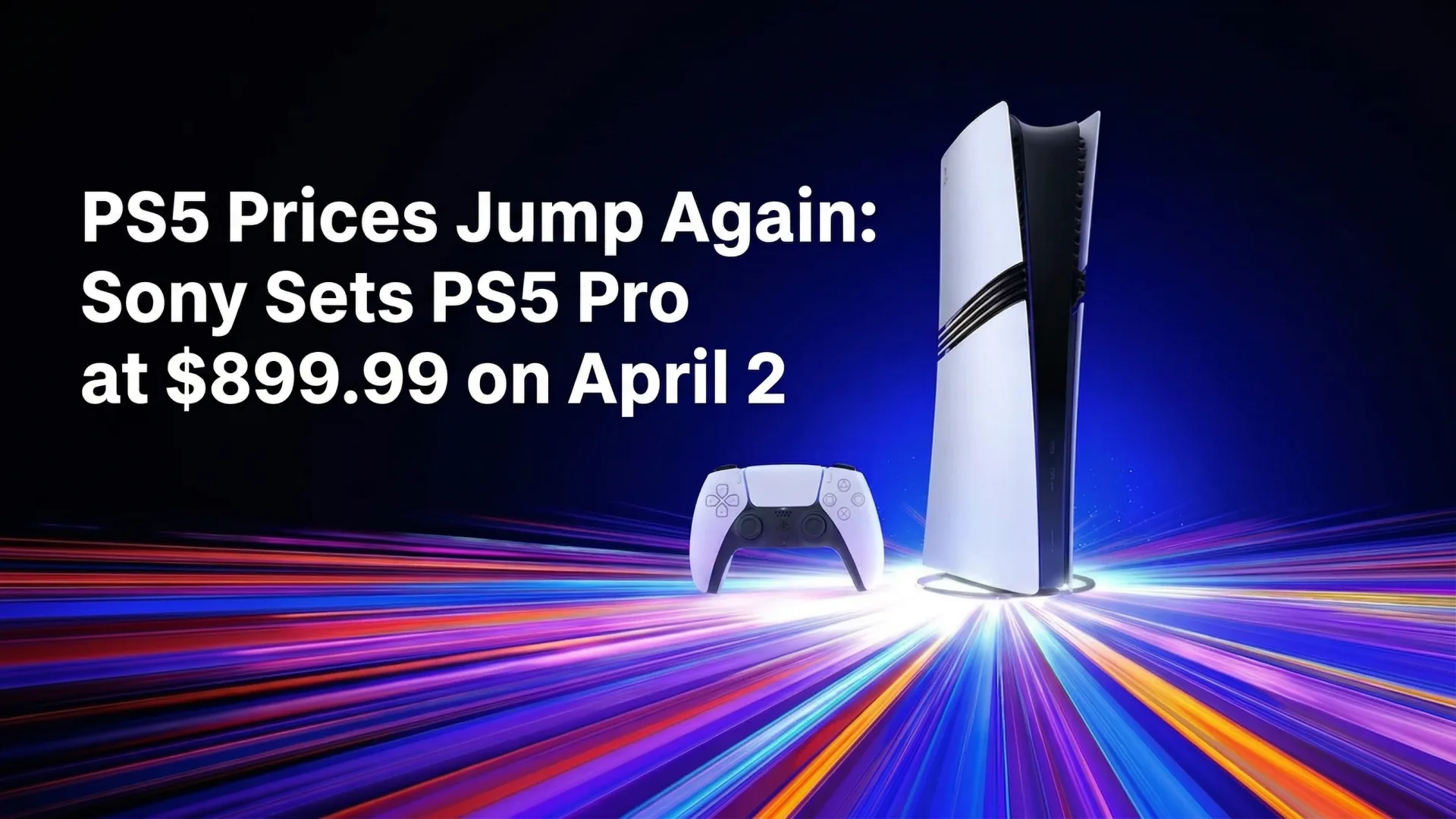
The rollout of PSSR 2.0-based upscaling for the PlayStation 5 Pro in 2026 will provide a significant mid-cycle refresh, keeping the current generation fresh and exciting while development for the PS6 continues behind the scenes. This extended lifecycle could also be a lesson learned from the PS5's launch, which took almost two years to become readily available in stores after its initial release, a challenge Sony might wish to avoid repeating. We predict that a longer, more stable production run for the PS5 will be beneficial for both Sony's bottom line and consumer satisfaction.
A Broader Industry Slowdown?
Sony isn't alone in facing these challenges. Microsoft's "Next-generation Xbox" is also reportedly being delayed, with "some new developments reportedly pushing back its timeline". This suggests that the economic and technological hurdles, particularly the RAM shortage, are industry-wide, making a simultaneous delay for both major players a logical outcome. While the Xbox Series X/S launched in 2020, similar to the PS5, Microsoft has already increased console prices twice, with the 2TB Xbox Series X now reportedly at an "eye-popping $800".
Meanwhile, Nintendo successfully launched its Switch 2 in 2025, albeit reportedly without "the latest technology." This strategic choice might have allowed Nintendo to navigate the component shortages more effectively, leading to strong sales figures, including 4.4 million units in the US in 2025, maintaining its status as the fastest-selling console in US history. We believe Nintendo's approach highlights a different philosophy: prioritizing accessibility and unique experiences over raw power, a strategy that clearly paid off in a challenging market. The Steam Deck and the broader PC gaming ecosystem on Steam also continue to appeal to a segment of the market, particularly with more Xbox and PlayStation exclusives making their way to the platform.
Investor Confidence and the Road Ahead
From an investor standpoint, Sony (SONY) stock saw a slight gain of 0.46% on Friday, January 23, 2026, and has fallen 10.59% year-to-date in 2026 as of that date, despite being up 10.23% over the prior 12 months. While trading activity was lower than average on the 23rd, Wall Street analysts maintain a "Moderate Buy" consensus rating with an average price target of $32, representing a potential 39.71% upside. This outlook suggests that while there might be short-term fluctuations, a strategic delay to ensure a powerful, competitively priced, and technologically advanced console could be seen as a prudent long-term move by investors. We concur; a rushed product would likely do more damage than good in the current climate.
The likely delay of the PlayStation 6 is a move by Sony to navigate a challenging economic climate while simultaneously pushing the boundaries of console technology, particularly in the rapidly growing field of AI. While the wait may be longer, the promise of a next-generation experience, unburdened by compromised specs or astronomical price tags, might just be worth it. Gamers should brace for a longer ride with their current PS5s, anticipating that the PlayStation 6, whenever it arrives, will be a console built not just for the next few years, but for the next decade of gaming innovation. However, a delay to 2029 or 2030 also carries risks, as some community members worry that key components like AMD's RDNA GPU architecture might be "out of date at that point," potentially impacting graphical fidelity given the increasing demands of ray tracing and rising costs of RAM and storage. Sony has a delicate balancing act ahead.









Comments