Ring's Super Bowl Ad: A Cuddly Trojan Horse for Surveillance?
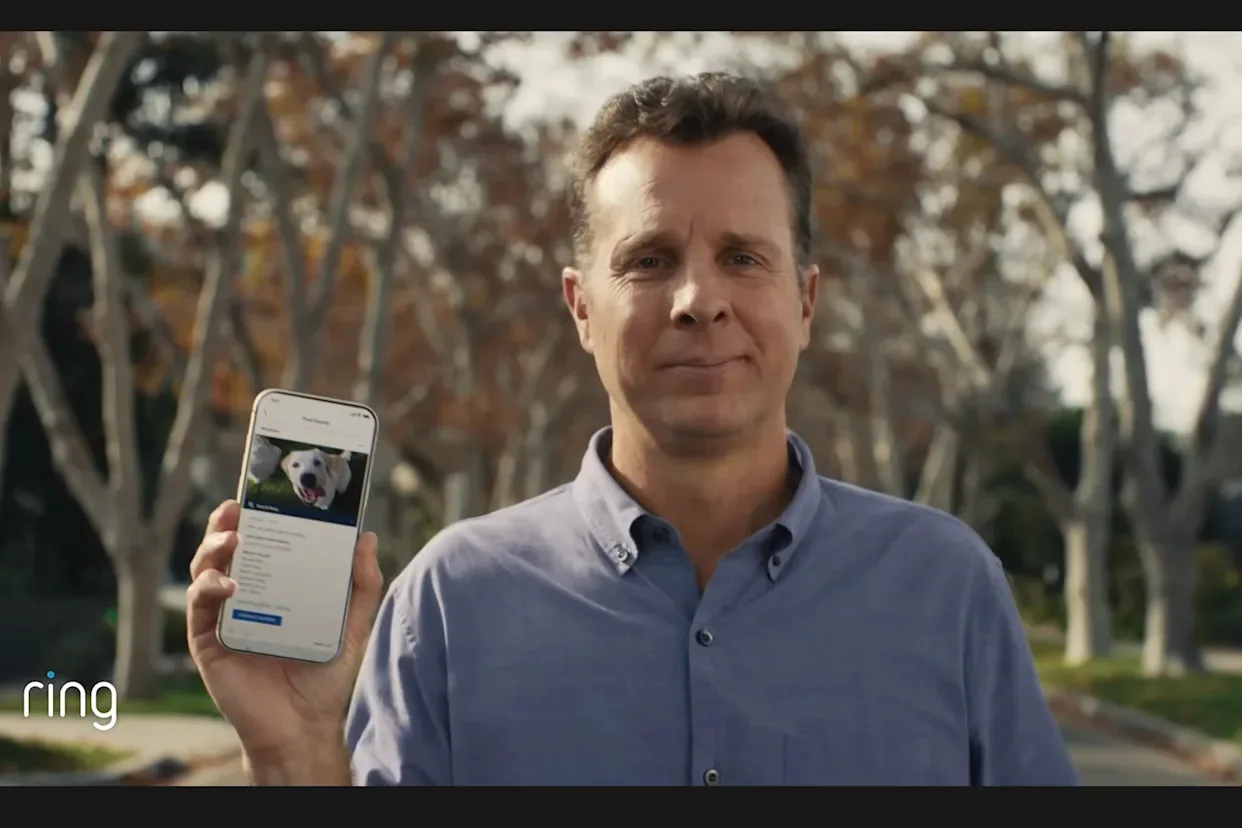
The Super Bowl is typically a stage for aspirational advertising, a place where innovation aims to inspire desire. But this year, a 30-second spot from Amazon-owned Ring, aired during Super Bowl LX on February 8, 2026, became less about selling a product and more about igniting a fierce debate on privacy, surveillance, and the future of our digital lives. Narrated by Ring founder Jamie Siminoff, the ad championed "Search Party," an AI-powered feature for finding lost dogs, boldly declaring it "Available to everyone, for free, right now."
On the surface, it sounded heartwarming, a benign use of technology for a common good. However, the collective shudder that rippled across social media told a different story. "Creepy," "dystopian," "terrifying," and "mass surveillance propaganda" were just some of the labels hurled at the ad, with many users vowing to uninstall their Ring cameras or never buy one. So, why did an ad about reuniting lost pets with their owners trigger such an overwhelmingly negative, even panicked, response? In our view, the answer lies in Ring's controversial history, the nature of its evolving technology, and deep-seated public fears about unchecked surveillance. The ad inadvertently highlighted precisely what makes so many people uneasy about the proliferation of networked home security cameras.
The Ad That Launched a Thousand Fears – And Few Lost Pups
Ring's "Search Party" feature is designed to locate lost dogs. Owners upload a picture of their missing pet to the Ring Neighbors app, and the AI, trained on tens of thousands of dog videos, scans footage from neighborhood cameras for a match. If found, the camera's owner is alerted and can choose to share the video or notify the pet owner. Ring claims it has helped reunite "more than a dog a day" and has even pledged $1 million to animal shelters to aid its use. As of February 8, 2026, the feature was expanded, allowing anyone in the U.S. to initiate a Search Party, even without owning a Ring camera.
Jamie Siminoff’s narration presented a vision of technology uniting communities for a common, good cause. However, privacy expert Chris Gilliard of 404 Media immediately dubbed the ad "a clumsy attempt by Ring to put a cuddly face on a rather dystopian reality". We found this assessment particularly astute. While helping lost dogs sounds noble, the feature's claim of reuniting "more than a dog a day" seems a modest return when considered against the potential reach of a vast network of cameras across millions of homes. Critics questioned the true intent: if Ring's AI can scan a neighborhood's cameras for a specific dog, what prevents it from doing the same for a specific person?.
Beyond the Pups: The Shadow of Mass Surveillance
The primary concern voiced by critics, and one we share, is the ease with which technology designed for one purpose can be adapted for another, more invasive one. While Ring spokesperson Emma Daniels stated that Search Party is "not capable of processing human biometrics" and that Ring has "no knowledge or indication that we’re building features like that at this point" when it comes to searching for people, experts and the public remain unconvinced.
The Slippery Slope: The Electronic Frontier Foundation (EFF) declared the ad "offered a vision of our streets that should leave every person unsettled about the company’s goals for disintegrating our privacy in public," adding that it "previewed future surveillance... where biometric identification could be unleashed." This fear isn't unfounded; history shows that tools capable of large-scale surveillance are rarely confined to their initial stated purpose. As ACLU Senior Policy Analyst Jay Stanley put it, "AI allows vast stores of video to be searchable just as large bodies of texts, and when you combine that with a vast and cloud centralized network of video cameras, the potential for abuse is frightening."
Facial Recognition and Opt-Out Defaults: Ring's own product roadmap fuels these concerns. Its "Familiar Faces" feature, a facial recognition capability introduced in October 2025, allows individual accounts to identify people, albeit with an 'opt-in' requirement. However, "Search Party" itself is enabled by default on any outdoor camera enrolled in Ring’s subscription plan, making it an 'opt-out' feature. Privacy advocates argue this significantly expands surveillance reach, as many users do not review default settings. We view this 'opt-out' default for a feature leveraging neighborhood-wide AI scanning as a significant privacy misstep, effectively expanding the surveillance footprint without explicit user consent. Senator Ed Markey (D-MA), a vocal critic of Ring, reinforced this point, warning in October 2025 that Familiar Faces represents a "dramatic expansion of surveillance technology" posing "vast new privacy and civil liberties risks". Markey's immediate reaction to the Super Bowl ad was blunt: "This definitely isn’t about dogs — it’s about mass surveillance."
A Troubled Past and Opaque Partnerships
Public apprehension is deeply rooted in Ring's documented history and its existing relationships. Ring has a long history of partnerships with law enforcement, which have frequently drawn criticism from privacy advocates.
Community Requests and Police Access: While Ring rolled back direct police requests for footage in January 2024, after its 2021 policy change requiring police requests to be publicly visible via the Neighbors app, it still facilitates the sharing of footage. Its "Community Requests" feature allows users to share camera footage with local law enforcement during an active investigation, processed through third-party companies like Axon and, until recently, Flock Safety. Ring spokesperson Emma Daniels stated this provides a "more secure chain of custody," and users can decline requests without notification. However, critics worry that once footage is shared, it can be retained, combined with other datasets, or disseminated further in ways difficult for individual users to track. The FBI has reportedly used "suspiciously-obtained metadata" from Ring cameras in the Nancy Guthrie kidnapping case, illustrating that data persistence remains a concern. Law enforcement agencies can also access Ring videos with a search warrant, and Ring asserts its right to share footage without user consent under limited circumstances.
The Flock Safety and ICE Controversy: The impending partnership with Flock Safety was particularly alarming for critics. Flock Safety offers its own network of surveillance technology, including CCTV and automated license plate recognition (ALPR) systems, and holds contracts with law enforcement. A late fall 2025 404 Media report indicated that a division of ICE had access to Flock’s camera network, even though Flock Safety claims it does not provide "direct access" to any U.S. Department of Homeland Security agency. Media reports also confirm that police departments accessing Flock data have, on occasion, shared it with federal immigration officers despite local laws.
The ACLU’s Chad Marlow warned that the collaboration between Ring and Flock could transform individual surveillance tools into a "giant mass surveillance apparatus for sale to anyone who has the money to buy it — including governments." While Ring spokesperson Emma Daniels denied any partnerships with ICE, the reported actions of its partner, Flock, and the potential for local agencies to share data with federal ones, undermine public trust, especially following sensitive events like the "fatal ICE shooting in Minneapolis" which has heightened public awareness and concern over such surveillance. In a development subsequent to the Super Bowl ad's airing, Ring announced the cancellation of its partnership with Flock Safety, following significant backlash. We see this as a direct response to public pressure, underscoring the deep distrust that had formed around the potential for these integrated surveillance networks.
The Public's Unease: A Reflection of Deeper Fears
The fierce backlash to Ring's Super Bowl ad wasn't just about a cute dog-finding feature; it was a potent reflection of widespread anxieties about the erosion of privacy in an increasingly monitored world. The ad, intended to showcase the benevolent side of Ring's AI, instead inadvertently brought to the forefront the very concerns that privacy advocates like the ACLU's Jay Stanley highlight: "the public doesn't fully appreciate just how effective centralized video databases have become."
Ring founder Jamie Siminoff has renewed his focus on using Ring products for crime prevention, citing AI possibilities and believing neighborhood cameras could "zero out crime" within a year. However, for many, this vision isn't one of safety, but of pervasive, inescapable surveillance. We remain skeptical of promises to "zero out crime" through ubiquitous surveillance, as such claims often gloss over the profound societal and civil liberties costs involved. The Super Bowl ad, with its seemingly innocent premise, became a clear symbol of this ongoing tension, reminding millions of viewers that the line between convenience and constant monitoring is becoming increasingly blurred, and the potential implications are far from cuddly.
The Super Bowl is typically a stage for aspirational advertising, a place where innovation aims to inspire desire. But this year, a 30-second spot from Amazon-owned Ring, aired during Super Bowl LX on February 8, 2026, became less about selling a product and more about igniting a fierce debate on privacy, surveillance, and the future of our digital lives. Narrated by Ring founder Jamie Siminoff, the ad championed "Search Party," an AI-powered feature for finding lost dogs, boldly declaring it "Available to everyone, for free, right now."
On the surface, it sounded heartwarming, a benign use of technology for a common good. However, the collective shudder that rippled across social media told a different story. "Creepy," "dystopian," "terrifying," and "mass surveillance propaganda" were just some of the labels hurled at the ad, with many users vowing to uninstall their Ring cameras or never buy one. So, why did an ad about reuniting lost pets with their owners trigger such an overwhelmingly negative, even panicked, response? In our view, the answer lies in Ring's controversial history, the nature of its evolving technology, and deep-seated public fears about unchecked surveillance. The ad inadvertently highlighted precisely what makes so many people uneasy about the proliferation of networked home security cameras.
The Ad That Launched a Thousand Fears – And Few Lost Pups
Ring's "Search Party" feature is designed to locate lost dogs. Owners upload a picture of their missing pet to the Ring Neighbors app, and the AI, trained on tens of thousands of dog videos, scans footage from neighborhood cameras for a match. If found, the camera's owner is alerted and can choose to share the video or notify the pet owner. Ring claims it has helped reunite "more than a dog a day" and has even pledged $1 million to animal shelters to aid its use. As of February 8, 2026, the feature was expanded, allowing anyone in the U.S. to initiate a Search Party, even without owning a Ring camera.
Jamie Siminoff’s narration presented a vision of technology uniting communities for a common, good cause. However, privacy expert Chris Gilliard of 404 Media immediately dubbed the ad "a clumsy attempt by Ring to put a cuddly face on a rather dystopian reality". We found this assessment particularly astute. While helping lost dogs sounds noble, the feature's claim of reuniting "more than a dog a day" seems a modest return when considered against the potential reach of a vast network of cameras across millions of homes. Critics questioned the true intent: if Ring's AI can scan a neighborhood's cameras for a specific dog, what prevents it from doing the same for a specific person?.
Beyond the Pups: The Shadow of Mass Surveillance
The primary concern voiced by critics, and one we share, is the ease with which technology designed for one purpose can be adapted for another, more invasive one. While Ring spokesperson Emma Daniels stated that Search Party is "not capable of processing human biometrics" and that Ring has "no knowledge or indication that we’re building features like that at this point" when it comes to searching for people, experts and the public remain unconvinced.
The Slippery Slope: The Electronic Frontier Foundation (EFF) declared the ad "offered a vision of our streets that should leave every person unsettled about the company’s goals for disintegrating our privacy in public," adding that it "previewed future surveillance... where biometric identification could be unleashed." This fear isn't unfounded; history shows that tools capable of large-scale surveillance are rarely confined to their initial stated purpose. As ACLU Senior Policy Analyst Jay Stanley put it, "AI allows vast stores of video to be searchable just as large bodies of texts, and when you combine that with a vast and cloud centralized network of video cameras, the potential for abuse is frightening."
Facial Recognition and Opt-Out Defaults: Ring's own product roadmap fuels these concerns. Its "Familiar Faces" feature, a facial recognition capability introduced in October 2025, allows individual accounts to identify people, albeit with an 'opt-in' requirement. However, "Search Party" itself is enabled by default on any outdoor camera enrolled in Ring’s subscription plan, making it an 'opt-out' feature. Privacy advocates argue this significantly expands surveillance reach, as many users do not review default settings. We view this 'opt-out' default for a feature leveraging neighborhood-wide AI scanning as a significant privacy misstep, effectively expanding the surveillance footprint without explicit user consent. Senator Ed Markey (D-MA), a vocal critic of Ring, reinforced this point, warning in October 2025 that Familiar Faces represents a "dramatic expansion of surveillance technology" posing "vast new privacy and civil liberties risks". Markey's immediate reaction to the Super Bowl ad was blunt: "This definitely isn’t about dogs — it’s about mass surveillance."
A Troubled Past and Opaque Partnerships
Public apprehension is deeply rooted in Ring's documented history and its existing relationships. Ring has a long history of partnerships with law enforcement, which have frequently drawn criticism from privacy advocates.
Community Requests and Police Access: While Ring rolled back direct police requests for footage in January 2024, after its 2021 policy change requiring police requests to be publicly visible via the Neighbors app, it still facilitates the sharing of footage. Its "Community Requests" feature allows users to share camera footage with local law enforcement during an active investigation, processed through third-party companies like Axon and, until recently, Flock Safety. Ring spokesperson Emma Daniels stated this provides a "more secure chain of custody," and users can decline requests without notification. However, critics worry that once footage is shared, it can be retained, combined with other datasets, or disseminated further in ways difficult for individual users to track. The FBI has reportedly used "suspiciously-obtained metadata" from Ring cameras in the Nancy Guthrie kidnapping case, illustrating that data persistence remains a concern. Law enforcement agencies can also access Ring videos with a search warrant, and Ring asserts its right to share footage without user consent under limited circumstances.
The Flock Safety and ICE Controversy: The impending partnership with Flock Safety was particularly alarming for critics. Flock Safety offers its own network of surveillance technology, including CCTV and automated license plate recognition (ALPR) systems, and holds contracts with law enforcement. A late fall 2025 404 Media report indicated that a division of ICE had access to Flock’s camera network, even though Flock Safety claims it does not provide "direct access" to any U.S. Department of Homeland Security agency. Media reports also confirm that police departments accessing Flock data have, on occasion, shared it with federal immigration officers despite local laws.
The ACLU’s Chad Marlow warned that the collaboration between Ring and Flock could transform individual surveillance tools into a "giant mass surveillance apparatus for sale to anyone who has the money to buy it — including governments." While Ring spokesperson Emma Daniels denied any partnerships with ICE, the reported actions of its partner, Flock, and the potential for local agencies to share data with federal ones, undermine public trust, especially following sensitive events like the "fatal ICE shooting in Minneapolis" which has heightened public awareness and concern over such surveillance. In a development subsequent to the Super Bowl ad's airing, Ring announced the cancellation of its partnership with Flock Safety, following significant backlash. We see this as a direct response to public pressure, underscoring the deep distrust that had formed around the potential for these integrated surveillance networks.
The Public's Unease: A Reflection of Deeper Fears
The fierce backlash to Ring's Super Bowl ad wasn't just about a cute dog-finding feature; it was a potent reflection of widespread anxieties about the erosion of privacy in an increasingly monitored world. The ad, intended to showcase the benevolent side of Ring's AI, instead inadvertently brought to the forefront the very concerns that privacy advocates like the ACLU's Jay Stanley highlight: "the public doesn't fully appreciate just how effective centralized video databases have become."
Ring founder Jamie Siminoff has renewed his focus on using Ring products for crime prevention, citing AI possibilities and believing neighborhood cameras could "zero out crime" within a year. However, for many, this vision isn't one of safety, but of pervasive, inescapable surveillance. We remain skeptical of promises to "zero out crime" through ubiquitous surveillance, as such claims often gloss over the profound societal and civil liberties costs involved. The Super Bowl ad, with its seemingly innocent premise, became a clear symbol of this ongoing tension, reminding millions of viewers that the line between convenience and constant monitoring is becoming increasingly blurred, and the potential implications are far from cuddly.













Comments