The future, it seems, is watching us. And increasingly, it's doing so through the discreet lenses of smart glasses, a rapidly growing technology that is transforming from a novel gadget into a privacy minefield, particularly in the intimate, often vulnerable, space of dating. What began as an aspirational vision for effortless technology is now casting a long shadow of unease, blurring the lines of consent and leaving individuals feeling exposed and exploited.
For many, especially Gen Z singles, the rise of smart glasses like the popular Ray-Ban Meta and Oakley Meta models presents a "deep sense of unease". The promise of effortless connection and futuristic flair is being overshadowed by a chilling reality: the subtle, often undetectable, act of being secretly recorded by a date or a stranger, with that footage then appearing online for public consumption and often, harassment.
The Blurred Line of Sight: How Smart Glasses Make Public Spaces Unsafe
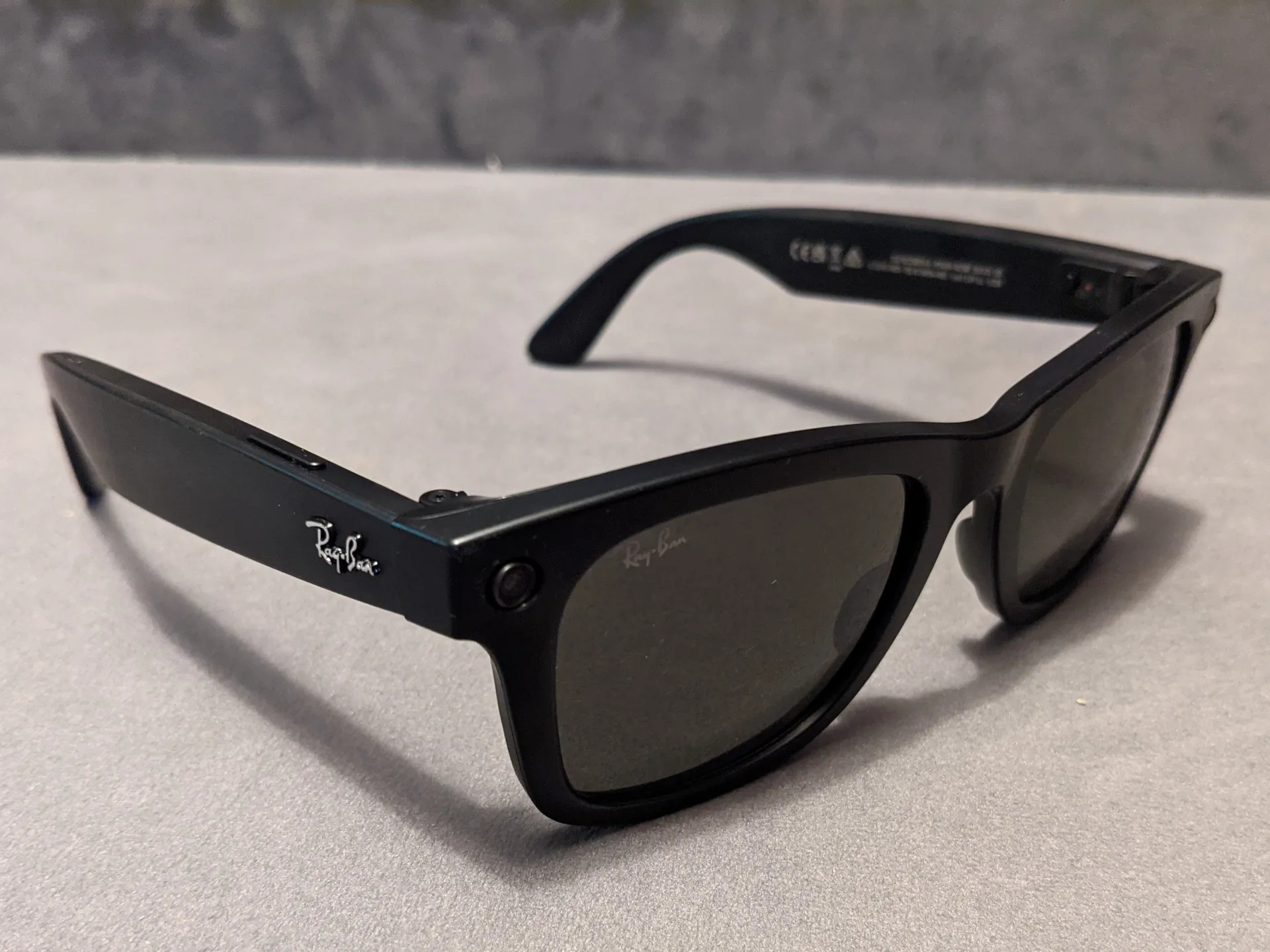
The core of the problem lies in the insidious discretion of these devices. Meta's smart glasses, developed in collaboration with Ray-Ban and Oakley, are designed to be fashionable, looking almost exactly like regular eyewear. Their built-in cameras are tiny, circular, black, and glossier in the center, measuring only a few millimeters in diameter, often resembling mere embellishments on the frames. This inherent camouflage makes their cameras easy to miss.
While Meta states their smart glasses have an LED light that activates during recording to signal others, and features tamper detection technology, this safeguard has proven insufficient. Online sellers readily offer stickers and covers specifically designed to conceal this recording indicator, and some methods have been demonstrated to bypass the recording indicator during video capture, directly challenging Meta's safety claims. This capability completely undermines the notion of informed consent and turns public interactions into potential surveillance opportunities.
The result is a growing wave of non-consensual filming incidents. Women like Dilara, a 21-year-old London store worker, found herself secretly filmed, with the video of her receiving 1.3 million views on TikTok and leading to a "constant" barrage of calls and messages after her phone number was visible. Kassy Zanjani, a social worker, was filmed in a fast-food restaurant, and the video was later posted on Instagram. Toluwa from Washington, DC, and Millie from Britain, both experienced similar violations, with their secretly recorded interactions amassing millions of views online. These incidents are not isolated; they reflect a disturbing trend where "manfluencers" — male social media influencers — secretly record women, often during attempted pick-up scenarios, and upload the content online, frequently attracting misogynistic comments.
Tech's Double-Edged Vision: Meta's Smart Glasses and Their Competitors
The current market for smart glasses offers a spectrum of devices, from mainstream fashion-tech hybrids to more covert surveillance tools.
Meta's Ray-Ban and Oakley smart glasses are arguably the most prominent and popular models on the market, having sold approximately 9 million pairs since their launch in October 2023, with 7 million of those sold in 2025 alone. They offer decent image quality and integrate an AI assistant, making them appealing to a broad consumer base. However, this mainstream appeal, combined with their discreet design and the ease with which their recording indicator can be bypassed, makes them a prime tool for non-consensual filming.
This stands in contrast to the initial public backlash against Google Glass, which faced bans in bars and restaurants and ultimately saw sales in the UK end in 2015 due to privacy concerns. While Google plans to re-enter the market with AI-powered smart glasses in 2026, we must question whether the industry has learned from past mistakes or if the push for "frictionless" technology will again override fundamental privacy rights.
The Consent Conundrum: When Public Filming Becomes Private Violation
The widespread misuse of smart glasses introduces a profound power imbalance in dating and social interactions. One person can subtly record information, moments, or even entire conversations without the other's knowledge or consent. Research indicates that the mere perception of being recorded by smart glasses can significantly reduce attraction and emotional openness. More than 60% of adults do not wish to use or be around devices that can record them without their consent. This sentiment reveals a clear clash with the "overly optimized, overly documented, and emotionally distant" version of romance that smart glasses represent, particularly for a Gen Z generation seeking "slowness, softness, and sincerity".
Meta's response to these concerns has been inadequate. While the company released a video in May 2024 about privacy while using their glasses, it primarily focused on user control rather than strong protections for those unknowingly filmed. Meta's terms of service place responsibility on users to comply with laws and avoid harmful activities like harassment; yet, this corporate stance feels disingenuous when third-party sellers on their own platforms offer tools to circumvent the very privacy features Meta highlights.
The legal situation offers little solace. Laws in many countries, including the United Kingdom and the United States, generally permit the filming of people in public spaces without their consent. Privacy lawyer Jamie Hurworth notes that while no specific UK law prohibits filming in public, it doesn't mean it's 'fair game,' and intrusion of privacy rights can occur. This situation allows this behavior to thrive. Charities like the End Violence Against Women Coalition (EVAW) have voiced strong concerns, stating that manufacturers are "prioritising profit over women’s safety and wellbeing".
The Human Cost: Unease, Harassment, and Exploitation
The personal stories of those secretly filmed paint a grim picture of the real-world consequences. Beyond Dilara, Kassy, and Toluwa, Kim, a 56-year-old woman, was secretly filmed on a beach, with videos posted online under the guise of dating advice, leading to thousands of sexual messages. Kate from London was recorded at a gym, with the video garnering 50,000 views in six hours and attracting offensive comments. These experiences leave victims feeling "humiliated," "embarrassed," "distraught," "violated," and "powerless".
Stephanie Wescott, a feminist academic, emphasizes that in online spaces, women are often reduced to "a conquest, prize or reward". Smart glasses exacerbate this, conveying a message of power that men can control women’s images in public without their knowledge. This dynamic is further intensified by male social media influencers who monetize their content, creating a profit motive for covertly filmed videos.
Alarmingly, the potential for advanced AI integration amplifies these threats. Cyber security experts warn that smart glasses can be rigged for live feeds into facial recognition software to quickly gather extensive personal information about individuals. Such a feature carries immense risks of mass surveillance and discrimination.
Regulatory Roadblocks and the Path Forward
The current legal frameworks are clearly struggling to keep pace with rapid technological advancements. The relatively light penalties for voyeurism may send a "bad message" to potential perpetrators. Privacy lawyer Jamie Hurworth notes that while no specific UK law prohibits filming in public, it doesn't mean it's 'fair game,' and intrusion of privacy rights can occur. However, the British Online Safety Act has been criticized for not adequately defining categories of unlawful content that would cover many smart glasses videos.
The UK Home Office is examining how technology like smart devices is used to harm victims, with measures to be included in an upcoming Violence against Women and Girls (VAWG) Strategy. This acknowledgement is a start, but the urgency demands more. We are concerned that without clearer, more effective legislation and stricter enforcement, the problem will only grow.
We must also question the ethical obligations of tech manufacturers. Rebecca Hitchen of EVAW rightly points out that smart glasses manufacturers are "prioritising profit over women’s safety and wellbeing". The widespread availability of online tutorials demonstrating how to disable or hide the LED recording light directly undermines Meta's safety claims. This is not simply a problem of user misuse; it's a design flaw that facilitates harm, driven by a desire for discreet, "frictionless" adoption.
The Unseen Threat
Smart glasses, in their current iteration and without more stringent regulation, represent a clear and present danger to personal privacy and safety, fundamentally undermining the notion of consent in public and private spaces. The technology itself is powerful, but its deployment, coupled with easy circumvention of privacy safeguards and an outdated legal system, creates a deeply troubling environment. We believe that the tech industry, led by Meta, has a moral and ethical obligation to do more than simply state terms of service; they must actively implement tamper-proof recording indicators and explore technological solutions that prioritize the privacy of bystanders over user convenience.
For consumers, the practical takeaways are grim: exercise extreme caution around individuals wearing smart glasses, especially in dating scenarios. Assume you might be recorded. For legislators, the message is equally clear: the time for thorough, forward-looking privacy laws that address non-consensual filming and the potential for AI-driven surveillance is now. Anything less is an abdication of responsibility, allowing technology to further erode the foundational trust and safety of our public interactions.











Comments