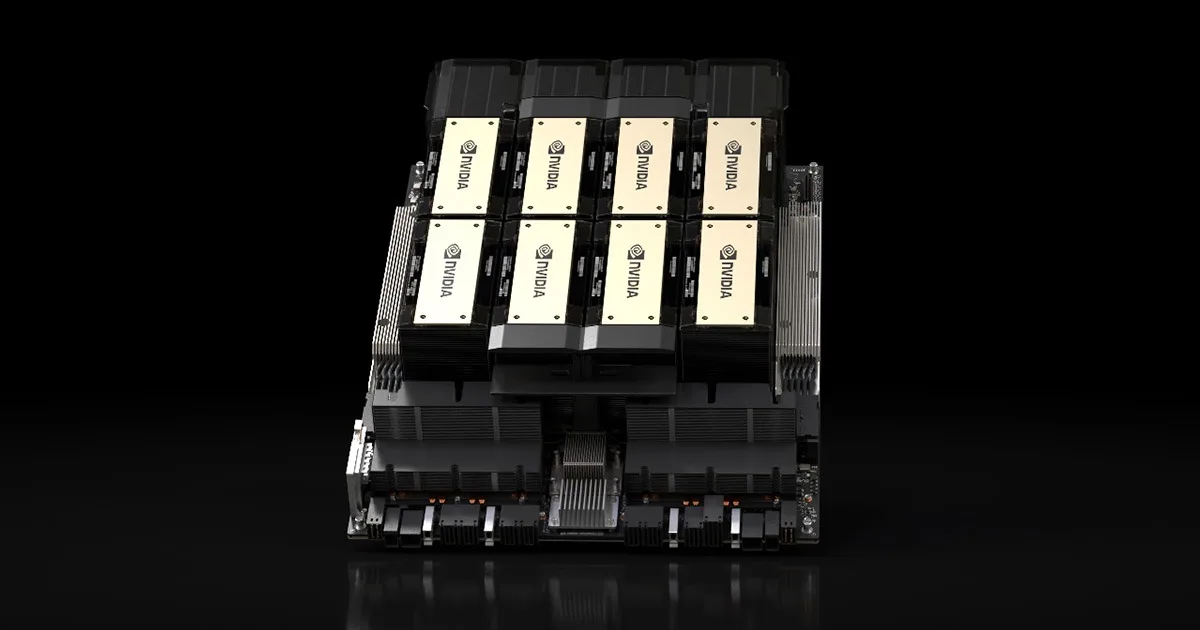
For months, the tech world has watched a tense geopolitical chess match unfold, with Nvidia's advanced H200 AI chips caught squarely in the middle. Now, China has reportedly given the green light for the first significant imports of these powerful processors, a move we view as a pragmatic pivot by Beijing, born more out of immediate necessity than a softening stance on technological self-reliance. Initial clearances cover over 400,000 H200 chips, with major players like ByteDance, Alibaba, and Tencent poised to benefit from this crucial injection of processing power.
This policy shift, coinciding with Nvidia CEO Jensen Huang's visit to China in late January, provides a much-needed, albeit potentially temporary, reprieve for a Chinese tech sector whose ambitious AI deployment plans have been hampered by import uncertainty. Huang arrived in Shanghai on Friday, January 23, for annual celebrations with Nvidia's China employees before traveling to Beijing and other cities.
Why China Couldn't Afford to Wait: The H200's Critical Advantage
The Nvidia H200 isn't just another chip; it's a cornerstone for large-scale AI development. Designed specifically for training and running massive AI models in data centers, it stands as the second-most powerful AI processor globally, offering a performance leap critical for the most demanding AI workloads. We see this as a clear acknowledgement from China that its domestic alternatives, while progressing, simply aren't ready to compete at this level. The H200 significantly outperforms older chips previously available in China, including Nvidia's own H20.
While homegrown chipmakers such as Huawei have made strides in developing competing AI processors, our analysis suggests they generally trail Nvidia's H200 in raw performance for these intensive tasks. For instance, Huawei's Ascend 950 targets 1 PFLOP in FP8 performance, while the Nvidia H200 reaches 2 PFLOPs. This substantial gap highlights why, despite its long-term goals of domestic chip self-reliance, China is making a short-term strategic compromise.
Note: Performance metrics can vary based on specific benchmarks and configurations. FP8 performance is generally for inference, while FP16 is often used for training.
A Conditional Truce: Navigating US-China Tech Tensions
This decision arrives after a period of considerable friction and mixed signals. The H200 chip had received U.S. export clearance in December 2025, but Chinese authorities had retained final control over whether the chips could physically enter the country. Indeed, Chinese customs authorities had previously indicated that H200 chips were not permitted to enter China. This reversal highlights the H200's status as a major flashpoint in U.S.-China relations.
We are, however, deeply skeptical that this marks a true turnaround in geopolitical tech tensions. Demand for advanced AI hardware in China has surged, with technology firms heavily investing in data centers. By December 2025, Chinese technology firms had placed orders for more than two million H200 chips, a quantity that far exceeds Nvidia's near-term production capacity and available inventory. Can Nvidia even deliver on China's massive orders, or is this setting up a global supply chain nightmare, particularly when Nvidia only held roughly 700,000 units in late December?
The Catch: Beijing's Strings Attached and Nvidia's Global Balancing Act
While the approvals are a positive step for Nvidia's access to a critical market, sources indicate that the Chinese government is granting them with conditions that are still being decided upon. When we hear "conditions still being decided upon," we raise an eyebrow. One report suggests that some of the initial licenses were too restrictive, leading to customers not yet converting these approvals into actual purchase orders. This directly challenges the narrative of a clear green light and suggests a continued cautious approach from Beijing.
Additional companies are reportedly awaiting clearance in later rounds or are now joining a queue for subsequent approvals. However, it remains unclear how quickly further approvals will be issued or what specific criteria regulators are applying. Previous discussions among Chinese authorities have even included proposals that might require H200 purchases to be bundled with a set ratio of domestic chips, reflecting Beijing's ongoing commitment to fostering its native semiconductor industry and potentially limiting Nvidia's market share.
Furthermore, the U.S. Commerce Department has a stipulation that exports to China and Macau cannot exceed 50% of what is sold to U.S. customers, which may ultimately limit the total number of H200s entering China, regardless of Chinese demand. For Nvidia, access to the Chinese market represents a significant growth opportunity amid intense global competition for AI processors. However, the availability of H200 chips may remain tight globally due to demand far exceeding Nvidia's near-term production capacity. It appears Nvidia is attempting a delicate balancing act, navigating both immense market demand and complex geopolitical restrictions.









Comments