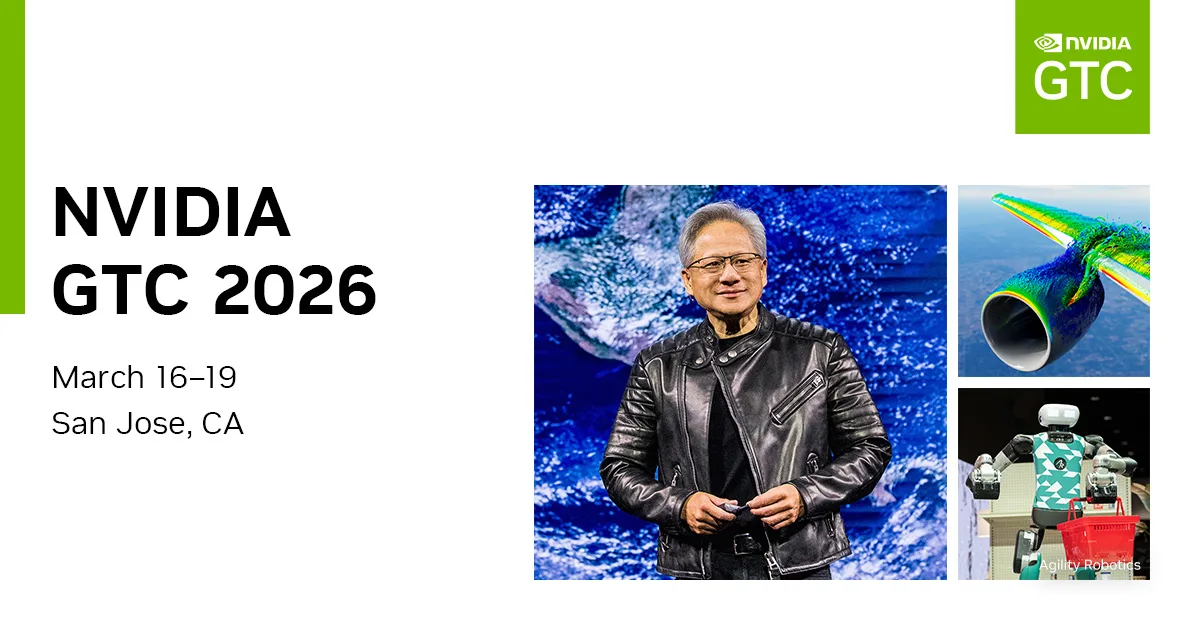
NVIDIA GTC 2026: Setting the Stage for the Next AI Era (Again?)
NVIDIA GTC, often dubbed the "Woodstock of AI", is gearing up to once again transform San Jose, California, into the epicenter of artificial intelligence innovation. Scheduled from March 15 to March 19, 2026, this annual pilgrimage for developers, engineers, researchers, and IT professionals promises to unpack the "next chapter in AI." While we appreciate the consistent ambition in NVIDIA's messaging, we can't help but approach such bold declarations with a healthy dose of critical analysis. Every year brings claims of the "next chapter," and while NVIDIA consistently delivers pivotal advancements, the true measure will be in the tangible, real-world impact beyond the keynote stage.
For those converging on San Jose or plugging into the global livestream, navigating the dense schedule of GTC 2026 will be crucial. This guide aims to help you cut through the noise and identify the sessions that genuinely matter for understanding where AI is truly headed.
Jensen Huang's Keynote: The AI Oracle Speaks
The gravitational center of any GTC conference is undeniably the keynote address by NVIDIA CEO Jensen Huang. His presentations have become an industry ritual – part product launch, part strategic insight, and often surprising in their scope. This year, Huang's address is poised to dissect the "evolving world of artificial intelligence," and we'll be watching closely for concrete announcements that move beyond rhetoric.
Key Details:
- Date: Monday, March 16, 2026
- Time: 11:00 a.m. to 1:00 p.m. PDT
- Speaker: NVIDIA CEO Jensen Huang
- Location (Live): SAP Center, San Jose
- Topic: Exploring the next chapter in AI
This two-hour presentation is expected to illuminate future directions in accelerated computing, a core NVIDIA strength. Beyond the hardware, the broader conference content will tackle concepts such as agentic AI, AI factories, AI for science, and physical AI. We view these topics as critical indicators of where NVIDIA believes the market is moving, and understanding their nuances is key for any tech professional.
Dissecting the Core AI Trends:
- Agentic AI: This isn't just about chatbots anymore. Agentic AI refers to intelligent systems that can set goals, plan, and execute multi-step tasks autonomously with minimal human intervention. We anticipate a focus on how these "digital collaborators" will redefine workflows across industries, from healthcare to finance and cybersecurity, by automating complex processes and optimizing decision-making. The real challenge, in our view, will be moving from experimental agents to production-ready, governed systems that can seamlessly interact with existing enterprise tools.
- AI Factories: NVIDIA has been a proponent of the "AI factory" concept, which essentially envisions a scalable, automated system for continuously developing, training, deploying, and improving AI models. These "factories" are designed to transform raw data into valuable insights and intelligent applications efficiently and at scale. We'll be looking for detailed architectures and real-world implementations that prove these aren't just data centers with GPUs, but true production lines for intelligence.
- AI for Science: The integration of AI into scientific discovery is rapidly accelerating. This trend goes beyond data crunching, with AI actively participating in hypothesis generation, experimental design, and interpretation of results in fields like climate science, chemistry, and drug discovery. We expect to see how NVIDIA's platforms are enabling researchers to combine AI with supercomputers and even quantum processors for breakthroughs once thought impossible.
- Physical AI: This refers to the integration of AI with robotics, sensors, and autonomous systems, essentially bringing intelligence into the real world. We're tracking the developments in areas like autonomous vehicles, robotic surgery, and advanced logistics, where AI enables robots to perceive, plan, and act instantly, often without constant cloud connection. The next evolutionary leap, including humanoid robots navigating human spaces, will heavily rely on advances showcased here.
The Pregame Show: Hype or Substance?
NVIDIA is rolling out a dedicated Keynote Pregame for GTC 2026, scheduled from 8:00 a.m. to 11:00 a.m. PDT on Monday, March 16. This three-hour pre-show promises to feature hosts and industry leaders "breaking down the latest AI advances" and "exploring real-world use cases."
While we appreciate the effort to provide context, the value of such a pre-show often hinges on the caliber and independence of its hosts and guests. The specific lineup is "yet to be announced," which gives us pause. Is this a genuine deep dive into critical industry trends, or a heavily curated marketing lead-up to Huang's main event? We'll reserve our full judgment until we see who's on stage, but we advise viewers to approach with a discerning eye, looking for genuine analysis rather than just product promotion.
Navigating GTC 2026: In-Person vs. Online Experience
NVIDIA GTC 2026 offers both a comprehensive in-person experience in San Jose and a convenient global livestream. Deciding which avenue is best depends on your goals and budget.
For Those Making the Trip to San Jose
The in-person conference spans downtown San Jose, primarily utilizing the San Jose Convention Center and SAP Center, from Sunday, March 15, to Thursday, March 19, 2026. Workshops kick off bright and early on Sunday, March 15, with registration opening at 7:00 a.m. PDT.
Unpacking the In-Person Offerings:
- Sessions: With nearly 1,000 dynamic sessions, covering everything from accelerated computing and computer graphics to data science, machine learning, and autonomous machines, the sheer volume can be overwhelming. A critical point to remember: attendance to sessions is on a first-come, first-seated basis. This means strategic planning and early arrival for popular talks are paramount to avoid disappointment.
- Exhibit Hall: Over 300 innovative exhibits await. We view the Exhibit Hall Receptions (Monday, March 16; Tuesday, March 17; and Wednesday, March 18) as prime networking opportunities, often where the most organic and valuable industry connections are forged.
- Training Labs: For an additional $500, attendees can access over 70 hands-on training lab sessions, each lasting 1 hour and 45 minutes and led by NVIDIA experts. Considering the cost, we believe these labs offer a tangible skill-building advantage, especially for those looking to directly apply NVIDIA technologies. This is a reasonable investment compared to external, multi-day training courses, especially given the direct access to NVIDIA's own specialists.
- Certifications: Validating expertise with proctored NVIDIA technical certification exams is included at no extra cost with a conference pass. In our view, these certifications, particularly in areas like AI infrastructure, generative AI, and accelerated data science, are becoming increasingly valuable in the competitive AI job market. They offer tangible proof of practical skills, and certified professionals often see enhanced job opportunities and salaries. It's worth noting that associate-level exams typically cost around $125, while professional exams can be up to $400 if taken outside the conference.
- Important Caveat: Sessions, Training Labs, and Certifications are explicitly not included with an 'Exhibits Only' pass. This distinction is crucial for attendees to ensure they purchase the appropriate pass for their desired level of engagement.
Networking & Social Events:
GTC provides ample opportunities for informal and structured networking:
- Welcome Reception & Poster Reception: Sunday, March 15.
- Exhibit Hall Receptions: Monday, March 16; Tuesday, March 17; and Wednesday, March 18.
- Day Markets & Park Night Markets: Entertainment at Cesar Chavez Park from Monday, March 16, to Wednesday, March 18.
- Attendee Lunches: Available daily from Monday, March 16, to Thursday, March 19, in downtown San Jose.
These events are where much of the unscripted magic of a conference happens. Connecting with peers and experts in a less formal setting can often lead to unexpected insights and collaborations.
For the Global Online Audience
For those unable to travel to San Jose, NVIDIA offers a valuable online alternative. Both Jensen Huang's keynote address and the Keynote Pregame will be livestreamed, providing worldwide access to the event's central announcements and initial analysis.
While the livestream ensures broad accessibility to the main events, we believe NVIDIA could do more to extend the virtual experience beyond just the keynote. Many other major tech conferences offer a wider selection of sessions on-demand or even live virtual tracks, a feature that could significantly enrich the experience for remote participants. While the GTC website will host direct links and platform details closer to the date, we hope to see more comprehensive virtual offerings in future iterations.
A Word on Event Dynamics
As with any large-scale event, NVIDIA reserves the right to terminate, modify, or suspend GTC 2026 for any reason, at any time, and without liability. This is a standard organizational clause, but it underscores the importance for attendees to always cross-reference the official NVIDIA GTC website for the most current information, especially for travel and scheduling.
Ultimately, GTC 2026 presents itself as a critical juncture for AI development. While we remain cautiously optimistic about the "next chapter" rhetoric, we are eager to see the concrete technologies, applications, and collaborative efforts that emerge from San Jose. We will be looking beyond the marketing to assess the genuine innovations that promise to reshape the industry.


Comments