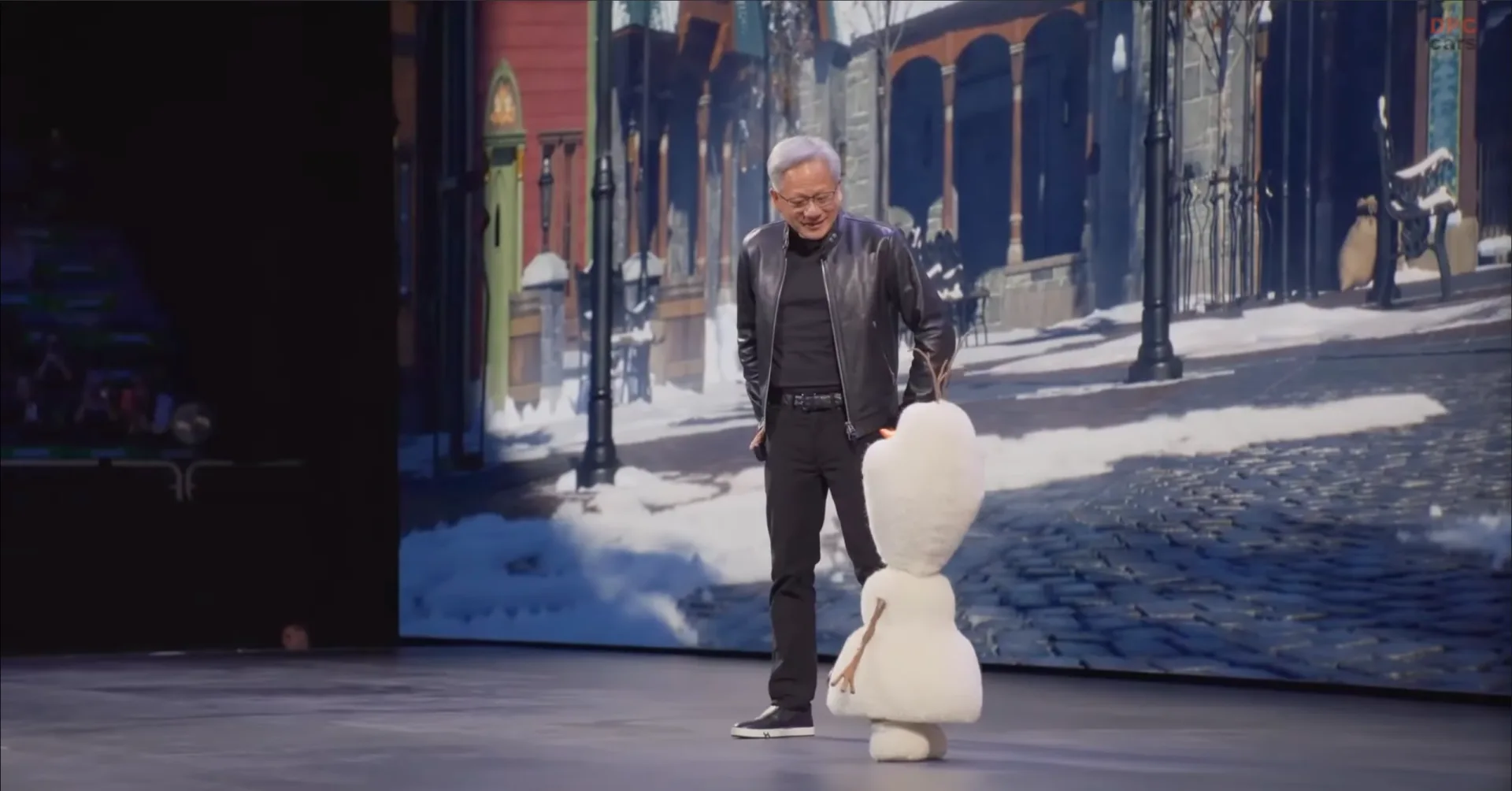
Nvidia CEO Jensen Huang has spent the better part of the last week telling critics they were "completely wrong" about DLSS 5. But as of today, the tone at the top of the $4 trillion company has shifted from defiance to something closer to damage control.
During an appearance on the Lex Fridman Podcast on March 23, 2026, Huang admitted he is "empathetic" to the concerns of players who have spent the last few days mocking the new technology as "AI slop." It is a major shift for a CEO who, just days ago at GTC 2026, dismissed the backlash entirely.
While Huang is still defending the technical backbone of DLSS 5, he now says he doesn't like "AI slop" himself, noting that much of the AI-generated content online is beginning to look the same.
What DLSS 5 Is (And Why It’s Messy)
DLSS 5 moves beyond the frame-generation or upscaling tech found in previous iterations. Nvidia is calling this "neural rendering." Instead of filling in pixels, the software uses machine learning to generate lighting and material details in real time.
The goal is to move away from brute-force cinematic lighting, which currently eats up massive amounts of GPU power. By using generative AI fused with game geometry, Nvidia hopes to deliver photorealistic visuals that don't require the hardware overhead of traditional ray tracing.
The technology performs well on inanimate objects like metal and water, but early demos show that the "neural" aspect of the rendering struggles with humans.
The Yassification Problem
The backlash Huang is now acknowledging stems from how DLSS 5 handles artistic intent. In titles like Resident Evil Requiem and Starfield, the technology has been accused of "yassifying" characters—smoothing out skin textures and altering facial features until they hit the uncanny valley.
Critics have also pointed to an "overcooked" HDR effect, where the AI’s aggressive tone mapping distorts the original color palette of a scene. The result is often a look that feels disconnected from the game’s original art direction.
The tension goes beyond a spat between Nvidia and gamers; the friction is internal to the industry. Reports indicate that developers at major studios like Ubisoft and Capcom were not informed about the DLSS 5 demos before they were shown to the public. If the people making the games feel blindsided by how their work is being "enhanced," it raises questions about how much control artists actually have over this process.
Technical Discrepancies
There is also a growing gap between how Jensen Huang describes the technology and how Nvidia’s own engineers talk about it.
- Huang's Claim: He describes DLSS 5 as "3D-conditioned" and "3D-guided," meaning it uses the game’s actual 3D structure to ensure accuracy.
- The Technical Reality: Nvidia’s Jacob Freeman confirmed the tech actually uses a 2D frame plus motion vectors as input.
This might seem like a minor technicality, but it is the core of the "slop" argument. If the AI is primarily working off 2D data rather than "ground-truth" 3D geometry, it is more likely to hallucinate details that weren't there to begin with—leading to the very distortions players are complaining about.
Market Lock-ins and the Fall 2026 Release
Nvidia currently holds roughly 95% of the discrete GPU market, meaning DLSS 5 is likely to become an industry standard whether people like the current demos or not. For those looking at an upgrade this fall, the value proposition is currently tied to a few conditions:
- RTX 50 Series is a requirement: If you want DLSS 5, you'll need the new hardware. There is no word on backward compatibility for RTX 40 series cards.
- Artistic Control is a toggle: Nvidia claims the system is "integrated with the artist" through Streamline. This suggests that if a developer finds the effect too aggressive, they can theoretically mask it or dial it back—assuming they are given the time to do so.
- Wait for the "Custom" Era: Huang teased that future versions of DLSS 5 might allow for prompts or custom-trained models. For those who hate the "photoreal" AI look, the ability to prompt for a specific style (like a toon shader) might be the only way to avoid the "slop" effect.
For now, the technology is scheduled for a public release in the fall of 2026. Whether Nvidia can bridge the uncanny valley before then is the main concern ahead of the launch, but Huang’s shift in tone suggests the company at least realizes that "you're wrong" isn't a winning marketing strategy.




Comments