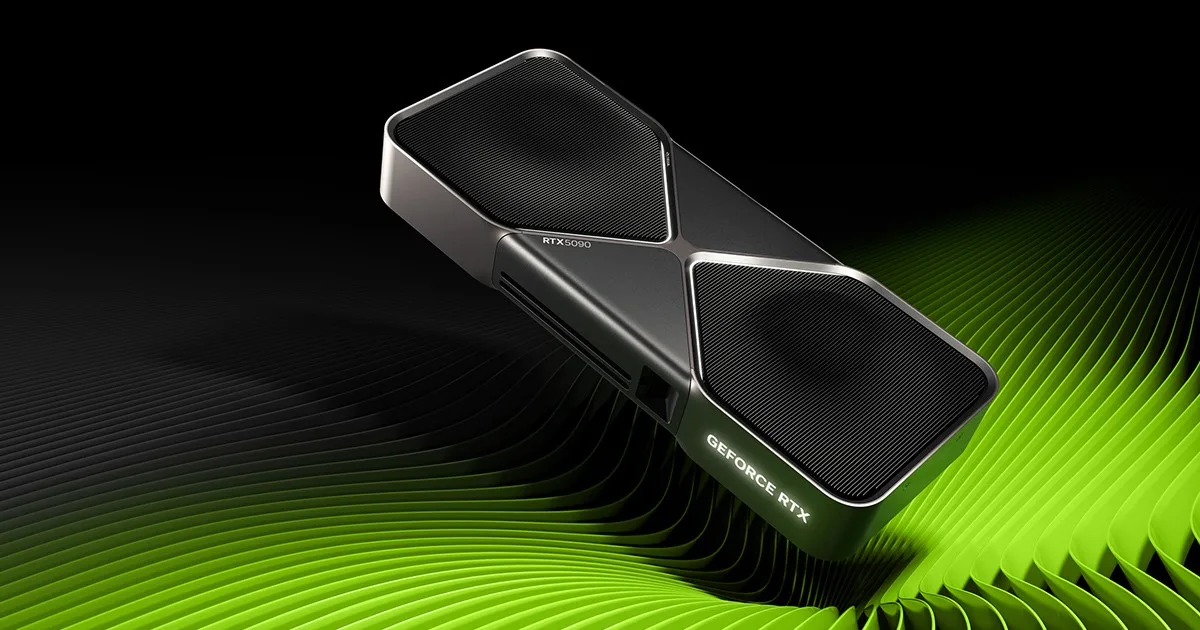
The dream of "affordable" high-end PC gaming is not just taking a hit; it appears to be actively under siege. Today, MSI initiated a sweeping round of price hikes across its GeForce RTX 50 series lineup, abruptly signaling the end of the brief stability that supposedly marked the beginning of the Blackwell era. With industry giants ASUS and Gigabyte expected to follow suit by the end of the month, the chasm between NVIDIA’s suggested retail prices and the harsh market reality has widened into a canyon. This shift, in our view, is less of a perfect storm and more of a predictable confluence, driven by global trade policy, a seismic pivot in semiconductor manufacturing, and an AI industry that is relentlessly siphoning the gaming market's lifeblood.
The Memory Tax: Why Our Wallets Are Weeping
The most immediate catalyst for today’s price surge was a quiet notification from NVIDIA to its Add-in Board (AIC) partners on January 16, 2026. The memo confirmed what many in the community feared: the cost of bundled GDDR6 and GDDR7 memory packages has significantly increased. While NVIDIA reportedly absorbed some of these costs to stabilize partner pricing during the initial launch window, that buffer, we are told, has now entirely evaporated.
This isn't just a slight increase; the upstream supply price for GPUs bundled with this memory has jumped by an estimated 10% to 15%. The reason is painfully clear: major DRAM manufacturers like Samsung, SK hynix, and Micron are prioritizing the production of High Bandwidth Memory (HBM) and DDR5 to feed the insatiable demand from the AI and data center sectors. For traditional gamers, this means GDDR7—the very backbone of the RTX 50 series—is not only in short supply but now carries a substantial premium. We are witnessing a clear shift in priorities, where gaming's needs are simply being outmaneuvered by the exponentially growing demands of AI.
The Blackwell Price Chasm: MSRP as a Myth
While NVIDIA maintains a suggested retail price (MSRP) of $1,999.00 for its flagship RTX 5090, that figure has become largely symbolic, if not outright misleading. In the current market, finding a flagship card at its "suggested" price is virtually impossible, and community reactions on platforms like Reddit consistently express frustration over these inflated costs.
The RTX 5070 remains the lone survivor for the budget-conscious gamer, with models like the ASUS Prime and MSI Shadow 2X still clinging near the $549.00 mark. However, for those aspiring to high-end performance, the situation is grim. Premium editions such as the ASUS Astral Dahab are reportedly fetching near five figures, while the MSI Suprim Liquid SOC and ASUS ROG Astral LC are being treated more like speculative luxury assets than readily available computer hardware. This makes us question if NVIDIA’s MSRP is anything more than a marketing anchor, designed to make the outrageous street prices seem less egregious by comparison. Previous generations, like the RTX 4090, also saw significant markups above their launch MSRP, indicating this trend is not entirely new for flagship cards.
Geopolitical Headwinds and the Tariff Hammer
Beyond memory costs, external political forces are applying significant pressure to the hardware market, further inflating costs. Current administration tariffs of 10% on Chinese imports are already "baked into" today's pricing, a cost that, predictably, lands squarely on the consumer.
More concerning is the looming specter of 25% to 100% tariffs on TSMC-made chips, a threat that has sent jitters throughout the industry. Given that NVIDIA’s cutting-edge Blackwell architecture relies heavily on TSMC's advanced manufacturing nodes, any escalation in these trade policies could propel the retail price of an RTX 5090 toward a "permanent" $5,000.00 floor by late 2026. While finished semiconductors have occasionally seen exemptions from some tariffs, components and the broader supply chain from Taiwan and China are still very much in the crosshairs, creating significant unpredictability for manufacturers and investors alike. This volatile policy landscape makes long-term investment and stable pricing a near-impossible task.
Artificial Scarcity and the Scalper Economy's Embrace
Inventory at major retailers like Newegg continues to evaporate within minutes of any restock, fostering an environment of desperation. This scarcity is exacerbated by a predicted 15% to 20% reduction in GPU supply to partners, a direct consequence of the aforementioned memory shortages and a broader shift in production priorities.
This vacuum has created a fertile ground for the secondary market to thrive. On platforms like eBay, Blackwell flagship GPUs are regularly listed between $7,000.00 and $9,999.00. Even more controversially, accusations of "internal scalping" within official channels are mounting. Retailers and board partners are alleged to be raising prices up to 70% above MSRP within weeks of a product's debut, effectively capturing margins that would otherwise go to third-party resellers. Some in the community argue that manufacturers benefit from this situation, as it makes their already high MSRPs appear more reasonable and allows them to gauge how much consumers are willing to overpay. We find it concerning that such practices, if true, further erode consumer trust and blur the lines between legitimate retail and opportunistic exploitation. The historical context of scalpers even buying entire pre-built PCs just to strip out and resell GPUs, especially into markets like China affected by sanctions, highlights the sheer desperation and profit motive driving this segment.
Analysis: A Bifurcating Gaming Market
We are unequivocally witnessing the bifurcation of the PC gaming market into distinct tiers. The RTX 5070 and 5070 Ti (which ASUS officially confirmed on January 16, 2026, is not end-of-life) are emerging as the last bastions for the traditional gamer. These cards offer a respectable 12GB to 16GB of GDDR7 and still hover near a digestible price point for many enthusiasts.
However, the RTX 5080 and especially the 5090 are increasingly being redefined, not as pure gaming hardware, but as prosumer or AI-development tools. With 32GB of VRAM on the 5090, the card possesses immense value for AI training workloads. In this scenario, the gaming community is simply being outbid by industrial demand, where the return on investment for an AI company far outweighs a gamer's desire for higher frame rates. Indeed, GDDR7, traditionally a gaming memory, is now being integrated into high-performance AI chips, further cementing this shift.
As MSI leads the charge with these new price hikes, and ASUS and Gigabyte prepare their own updates, the message from manufacturers is stark: if you want the best Blackwell has to offer, the MSRP is no longer the entry fee—it is merely the starting point for a very expensive conversation, and one that fewer and fewer gamers will be able to afford. The era of the mainstream flagship GPU seems to be drawing to a close, replaced by a specialized, AI-driven market where gamers are an afterthought.





Comments