ASUS's "Not EOL" Declaration: Damage Control in a Memory-Starved Market?
ASUS has stepped forward to deny reports that its popular GeForce RTX 5070 Ti (16 GB) and RTX 5060 Ti (16 GB) graphics cards have been discontinued or designated End-of-Life (EOL). This clarification, issued on January 16, 2026, comes after a confusing situation where an ASUS PR representative reportedly gave conflicting statements to several prominent tech outlets, including Hardware Unboxed, PCWorld, and Tom's Hardware, leading to widespread speculation of their retirement.
The company's official stance is clear: both GPUs remain in active production and are not EOL. ASUS asserts that current stock shortages are merely a consequence of "temporary memory supply constraints," rather than any planned product discontinuation.
ASUS has stated it has "no plans to stop selling" either model and claims to be actively working with partners to stabilize supply chains.
The PR Fiasco and Community Fallout
The initial reports stemmed from a conversation Hardware Unboxed allegedly had with an ASUS PR representative, who reportedly confirmed the RTX 5070 Ti and RTX 5060 Ti (16 GB) were indeed EOL and that review samples were unavailable. This kicked off a firestorm across the tech media landscape, prompting significant concern among the PC gaming community. Many users on platforms like Reddit expressed dismay, with some quickly surmising that the initial EOL claims, even if walked back, highlighted a grim reality for these cards.
ASUS's subsequent clarifying statement acknowledged that "certain media may have received incomplete information from an ASUS PR representative," attributing the confusion to internal miscommunications. While this offers an explanation, such a high-profile PR misstep on product availability is rarely a good look for a major manufacturer.
NVIDIA itself weighed in, echoing a familiar tune: "demand for GeForce RTX GPUs is strong, and memory supply is constrained." The GPU giant added that it "continues to ship all GeForce SKUs while working with suppliers to maximize memory availability." This statement, while reassuring on the surface, still leaves room for interpretation, as "shipping all SKUs" could mean anything from substantial quantities to a trickle.
The True Culprit: A Deepening Memory Crisis
The truth, in our view, likely lies in the severe global memory shortage currently gripping the industry. This isn't just a minor blip; it's a structural imbalance driven largely by the insatiable demand for High Bandwidth Memory (HBM) from the booming AI sector. Memory manufacturers are reportedly prioritizing higher-margin AI and server-class products, which means fewer wafers are allocated to consumer-grade components like the GDDR7 memory found in these gaming GPUs.
Reports indicate that NVIDIA itself might cut RTX 50-series GPU supply by 30-40% in the first half of 2026 due to these memory shortages, specifically affecting midrange models like the RTX 5070 Ti and RTX 5060 Ti 16GB. We're even hearing whispers that 2026 might be the first year in three decades without a new NVIDIA gaming GPU launch, with the RTX 50-series "Super" and next-gen RTX 60-series facing delays as AI accelerators take priority.
Current Hurdles for These 16GB GPUs
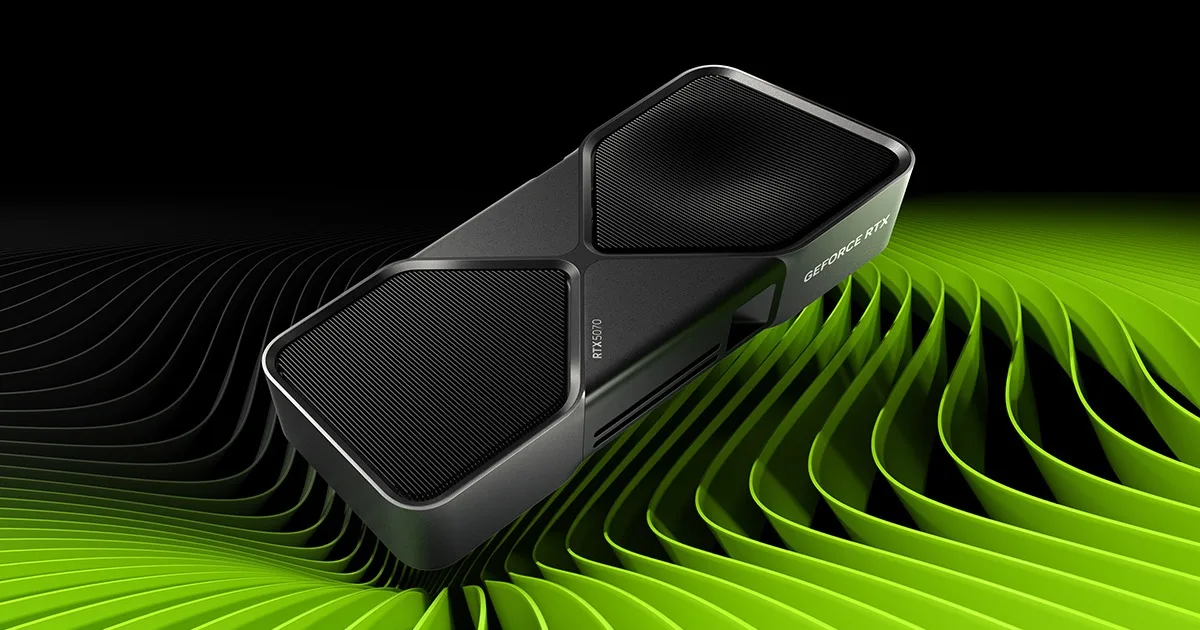
- Pervasive Supply Constraints: Both the RTX 5070 Ti and RTX 5060 Ti (16 GB) models are facing reduced production output and restocking delays. This isn't unique to ASUS; it's an industry-wide problem stemming from memory supply issues.
- Empty Shelves: Multiple retailers have indeed reported limited or no available stock for RTX 5070 Ti SKUs in certain regions, which was a key factor fueling the initial discontinuation rumors. Consumers looking for these cards have found them either absent or subject to significant price increases over MSRP.
- The PR Paradox: ASUS's internal miscommunication created a cloud of uncertainty. While officially denied, the initial EOL claims resonated with a community already wary of GPU availability.
- No Refreshes in Sight: The absence of any new versions or refreshes of these models, nor any announced replacement plans, only adds to the sense of an uncertain future.
ASUS explicitly warned that "limited availability should not be interpreted as a production halt or product retirement." While we acknowledge the official denial, the reality of the supply situation, driven by the AI boom, suggests that "limited" could mean extremely limited for the foreseeable future.
ASUS's Stated Path Forward: Can They Deliver?
ASUS states it is actively:
- Working with partners to stabilize supply for both the RTX 5070 Ti and RTX 5060 Ti (16 GB).
- Continuing to support the products through warranty coverage, driver updates, and customer service channels.
- Asserting that memory supply constraints are "temporary" and they are working to resolve component sourcing bottlenecks.
- Confirming that manufacturing has not been halted and the models remain on ASUS's product roadmap.
While these are the right things to say, we remain skeptical about the "temporary" nature of these memory supply issues. Industry analysts suggest that DRAM and NAND supply growth will be below historical norms well into 2026 and potentially 2027, with new fabrication capacity not coming online until late 2026 at the earliest. Given that the global memory crunch is not a quick fix, ASUS, and by extension NVIDIA, will face an uphill battle in restoring consistent supply.
Our Take: Proceed with Caution
ASUS has officially confirmed that the RTX 5070 Ti (16 GB) and RTX 5060 Ti (16 GB) are not discontinued. However, the underlying issue of memory supply remains a significant challenge, making these cards difficult to find. For gamers who were eyeing these particular 16GB options—which were seen as offering excellent value—this situation is particularly frustrating.
If you're determined to buy one of these models, availability will almost certainly vary wildly by retailer and region. We recommend checking directly with ASUS's official partner retailers and monitoring official ASUS and NVIDIA communications for any legitimate restock signals. As one industry observer wisely noted, "Proof will be in the supply." Until consistent stock returns and prices stabilize, buyers should approach these GPUs with a healthy dose of skepticism and caution, recognizing that a "not EOL" status doesn't necessarily translate to readily available stock. The market conditions suggest that 16GB VRAM cards may become increasingly scarce as NVIDIA prioritizes AI and potentially lower-VRAM consumer options.





Comments