This article received a follow-up here
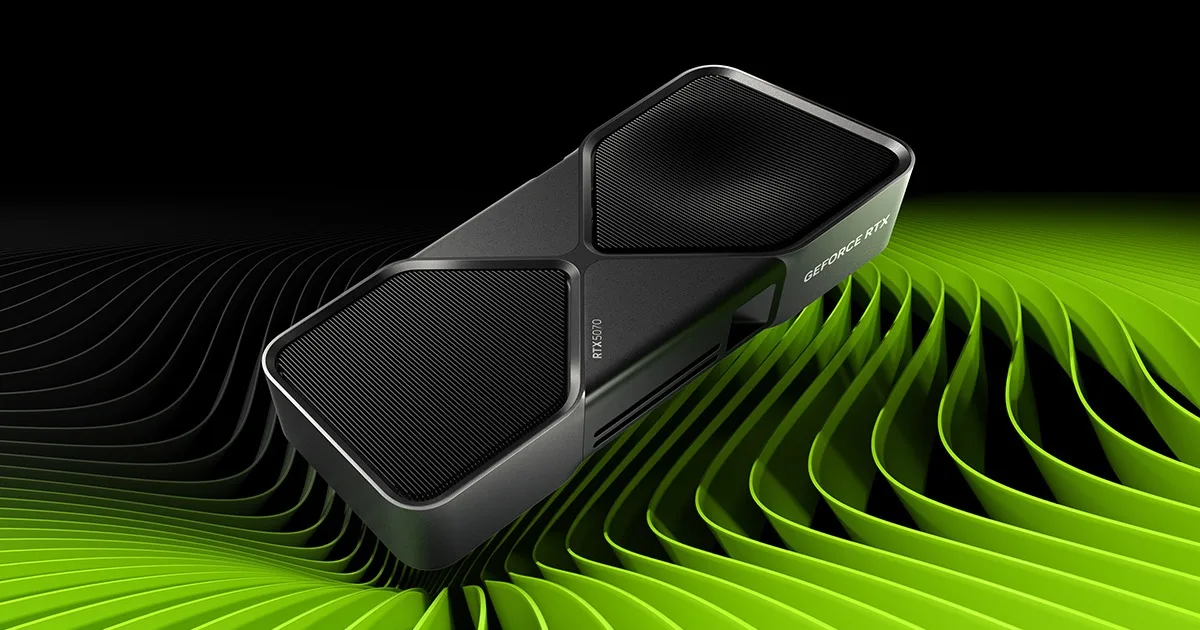
As of January 16, 2026, the GPU market has been dealt another blow. Industry reports confirm Nvidia has discreetly pulled the plug on its RTX 5070 Ti and RTX 5060 Ti 16GB models, doing so without an official announcement. This silent discontinuation is not just a footnote in a product catalog; it's a stark reminder of how memory supply chain constraints are reshaping the very dynamics of the GPU market, with immediate and concerning implications for consumers and competitors alike.
Nvidia's Silent Retreat: 16GB Mid-Range Cards Face the End-of-Life Status
Sources across the industry are unequivocally pointing to Nvidia placing both the RTX 5070 Ti and the RTX 5060 Ti 16GB models into an end-of-life status, halting all production. Australian retailers, for instance, are already reporting an inability to procure new units, anticipating existing stock will be fully depleted by April 2026. Hardware Unboxed's extensive reporting, echoed by publications like TechRadar and PC Gamer, aligns with accounts from both retailers and AIB partners regarding this quiet sunsetting. While Nvidia itself remains conspicuously silent, this consistent corroboration from independent industry sources leaves us with little doubt about the status change. We find it concerning that a company of Nvidia's stature would allow such a significant market shift to unfold without direct communication, leaving consumers and partners in a state of uncertainty. Indeed, the very effort by Hardware Unboxed to arrange an RTX 5070 Ti roundup was met with refusals from manufacturers, who cited a lack of available supply—a telling sign of a de facto discontinuation, regardless of any official labels.
The AI Gold Rush Strikes Again: GDDR7 Scarcity Reshapes the Stack
The core issue driving these discontinuations stems directly from severe supply chain disruptions impacting GDDR7 VRAM, a component critical for higher-VRAM mid-range GPUs. Industry sources consistently attribute the constrained GDDR7 production to its early manufacturing phase and, more critically, to the overwhelming demand from data centers rapidly building out AI infrastructure. It appears Nvidia is strategically prioritizing higher-margin products, such as the RTX 5080 and RTX 5090, alongside its 8GB variants like the RTX 5060 Ti 8GB. These choices, in our view, are more economically viable under the current memory supply constraints.
An industry insider's comment, "16GB VRAM in mid-range consumer GPUs no longer makes sense in today’s memory-constrained environment," rings with a blunt pragmatism that we must challenge. While understandable from a supply-side perspective, for the consumer, 16GB of VRAM in a mid-range card often means better future-proofing and performance in VRAM-intensive titles. To suggest it "no longer makes sense" glosses over the tangible benefits for gamers and indicates a clear shift in priority away from these segments. AI infrastructure is projected to consume nearly 20% of global DRAM wafer capacity by 2026, leading to a significant tightening of supply for consumer-grade memory. Samsung has already escalated prices on select memory chips by as much as 60% since September, and American memory giant Micron has even exited the direct-to-consumer memory market entirely. This "RAMageddon," as some analysts term it, is expected to continue impacting memory supply until at least 2027.
The Scarcity Surcharge: Paying a Premium for What's Left
With production halted, we are already seeing the predictable and unwelcome consequence of rising prices for existing RTX 5070 Ti and RTX 5060 Ti 16GB units. Prices have reportedly jumped 10–15% in the US and Australia, with projections of up to 20% increases as remaining stock dwindles. For instance, RTX 5070 Ti prices in the US have climbed from roughly $730 to around $830, with some Canadian retailers listing the card as high as $1400 CAD (approximately $1030 USD).
Meanwhile, the RTX 5070 (12GB) remains in production, but at "significantly reduced volumes," with reports describing it as increasingly scarce at its initial $540 price point. While its MSRP might be $549, some retailers are now selling variants for significantly more, ranging from $619 to even $889. This ripple effect clearly demonstrates how memory shortages are altering pricing dynamics across the board, even for models not directly affected by the discontinuation. We believe this is a concerning trend, forcing consumers to pay a premium for diminishing stock, and it raises questions about how long these price hikes will persist.
AMD's Unexpected Windfall: RDNA 4 Gears Up for a Mid-Range Takeover
This void in Nvidia's mid-range, 16GB offerings presents a clear opportunity for AMD. Their upcoming RDNA 4 GPUs, such as the RX 9070 XT, utilize GDDR6 VRAM, which currently faces fewer supply constraints compared to GDDR7. The RX 9070 XT, launched on March 6, 2025, with 16GB of VRAM, was priced competitively at $599. The standard RX 9070, also with 16GB VRAM, entered the market at $549.
These cards are positioned to capitalize on Nvidia’s self-created mid-range vacuum, particularly for consumers who prioritize high VRAM capacity over raw performance metrics. While AMD's RDNA 4 series has made significant strides in ray tracing, it still generally lags behind Nvidia in this specific area. However, its rasterization performance is quite strong, making cards like the RX 9070 XT a compelling alternative for many gamers. The current gap in availability highlights how memory economics now dictate competitive dynamics as much as, if not more than, pure technical innovation in the GPU market. This could be a much-needed lifeline for consumers desperately seeking a capable 16GB mid-range card.
The New Reality: Memory, Not Performance, Dictates Your GPU Future
For buyers seeking 16GB VRAM in the mid-range segment, the reality is stark: existing stock of the discontinued Nvidia models is finite and will likely vanish entirely within months. We urge consumers considering these cards to act immediately if they hope to secure them before supplies deplete. This situation underscores a broader trend: external factors like memory supply chains now exert a profound influence on GPU availability and pricing, often outweighing traditional performance metrics.
As data center demand for GDDR7 and HBM continues its seemingly insatiable growth, we anticipate the industry may see more mid-range consumer GPUs adopt lower-VRAM configurations or alternative, less constrained memory technologies. While GDDR7 production is expected to scale "over time," the exact timeline remains vague, and the current reality is clear: GPU buyers must adapt to a market where supply constraints dictate strategy as much as innovation. We harbor a healthy skepticism about how quickly "over time" truly translates into widespread consumer availability and more reasonable pricing. This isn't just a blip; it's a fundamental shift in the landscape of PC gaming hardware.



Comments