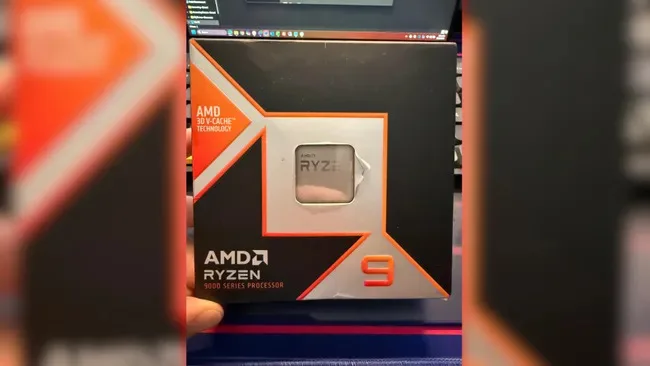
Image: u/Leviathon6425 on Reddit
A PC enthusiast's quest for a top-tier AMD Ryzen 9 9900X3D processor from Amazon this week exposed the dark underbelly of online retail. Instead of the advanced Zen 5 chip, the shopper reportedly received a much older and less powerful Ryzen 9 3900X. This classic "bait-and-switch" scam spotlights Amazon's ongoing struggles with fraudulent returns. The incident, occurring just as the Ryzen 9000 series is hitting its stride, reveals a critical lapse in quality control for "like new" items, leaving consumers to question the reliability of major online marketplaces for high-value components.
The victim ordered a Ryzen 9 9900X3D, a CPU that launched in retail on March 12, 2025, with an MSRP of $599. This chip, part of AMD's latest Zen 5 (Granite Ridge) architecture, packs 12 cores and 24 threads, featuring clock speeds up to 5.5 GHz and a hefty 128 MB of 3D V-cache. It is optimized for premier gaming and content creation on the AM5 platform with DDR5 memory and PCIe Gen 5 support. The listed price for the 9900X3D today is around $529.99.
What arrived, however, was a Ryzen 9 3900X, a 12-core, 24-thread processor from AMD's Zen 2 (Matisse) generation, originally released on July 7, 2019. While a flagship in its day, the 3900X operates on the older AM4 socket, uses DDR4 memory, and supports only PCIe Gen 4. Its top boost clock hits 4.6 GHz, and it features 64 MB of L3 cache, half of what the newer chip offers. The performance gap between a 2019 Zen 2 chip and a 2025 Zen 5 X3D processor is vast, constituting both a generational leap and a dramatic difference in current market value. The Ryzen 9 3900X today fetches roughly $150, meaning the shopper effectively received a component worth $380 less.
The Deception Unpacked: A Tale of Two CPUs
This wasn't a simple shipping error; it was a deliberate bait-and-switch, swapping a top-tier component for a dated one. The core specifications reveal the extent of the downgrade:
For anyone building a new PC, this substitution is catastrophic. The 9900X3D requires an AM5 motherboard and DDR5 RAM, completely incompatible with the AM4 platform and DDR4 memory needed for the 3900X. The buyer thus received a far inferior CPU and incompatible hardware that would prevent their system from even booting. The difference in performance for modern gaming and demanding applications is considerable, leaving the user with an effectively worthless "upgrade."
Amazon's Recurring Nightmare: A System Exploited
This is not an isolated incident; it reflects a deeply rooted problem within Amazon's fulfillment ecosystem. Incidents of customers receiving incorrect or substituted CPUs, GPUs, and other high-value electronics from Amazon are commonplace, often stemming from the retailer's generous returns policy. Scammers exploit this by purchasing new products, swapping their contents with older or less valuable items, and then returning the package for a full refund. These "like new" or "open box" items then re-enter Amazon's inventory, sometimes through Amazon Warehouse, and are resold to unsuspecting buyers without adequate inspection.
Numerous reports across online communities like Reddit document similar experiences, with users receiving everything from empty boxes to wrong-generation processors or even entirely different products. While Amazon claims to have dedicated teams and invested over a billion dollars in 2024 to combat organized retail crime and refund fraud, including legal actions against criminal networks, the persistent nature of these scams suggests their efforts are not fully protecting consumers at the point of sale.
Amazon's apparent failure to implement rigorous verification processes for returned high-value electronics, especially when reselling them as "like new," remains a critical concern. It seems the company prioritizes a frictionless return experience over a stringent inspection process, leading to situations where legitimate customers are left holding the bag. Some in the community even suggest that Amazon "doesn't lose enough money issuing double refunds to justify taking any action" that would stem the tide of these fraudulent activities. This editorial stance highlights a concerning perceived apathy, or at least inefficiency, in tackling an issue that erodes consumer trust.
What This Changes for PC Builders
For PC builders, particularly those looking for deals on "like new" or open-box components, this incident changes everything. The allure of a discount on a powerful chip like the Ryzen 9 9900X3D becomes a high-stakes gamble.
- Erosion of Trust: This scam severely damages confidence in purchasing high-value PC components from Amazon, especially anything not directly "sold and shipped by Amazon" from a new listing. The "like new" designation is now deeply suspicious.
- Increased Vigilance Required: Buyers must now be hyper-vigilant when receiving packages. Checking serial numbers, CPU markings, and even recording unboxing videos is becoming a necessary, albeit inconvenient, step to protect against fraud.
- Platform Choice: This pushes consumers to reconsider where they buy their components. Reputable brick-and-mortar stores or online retailers with a more rigorous return inspection process might become preferred, even if it means sacrificing some potential savings.
- Refund Headaches: While Amazon often issues refunds for these scams, the process can be arduous, involving customer service interactions and potential delays, as some users have reported issues with serial number discrepancies in returns. We think the inconvenience and wasted time are significant costs to the consumer.
Why This Matters for Online Retail Integrity
This incident extends beyond one unlucky shopper and a swapped CPU; it concerns the broader integrity of online retail, particularly for the enthusiast PC market. When a major platform like Amazon consistently allows these bait-and-switch scams to occur, it sends a clear message: the system is vulnerable, and consumers are on their own to verify their purchases.
The Ryzen 9 9900X3D represents a major investment for PC builders, a cornerstone of a high-performance system. Receiving a six-year-old chip in its place is a betrayal of trust that goes beyond financial loss, disrupting build plans and causing immense frustration. Amazon's role as a dominant force in e-commerce comes with a responsibility to ensure the authenticity and accuracy of products sold, even those processed through its returns system. Until Amazon can guarantee that "like new" actually means "like new" and not "like old, much less valuable, and completely incompatible," we will continue to advise extreme caution. The ease with which scammers can exploit the system, coupled with the recurring nature of these incidents, suggests a fundamental flaw that needs a far more aggressive and transparent solution than what we've seen to date.





Comments