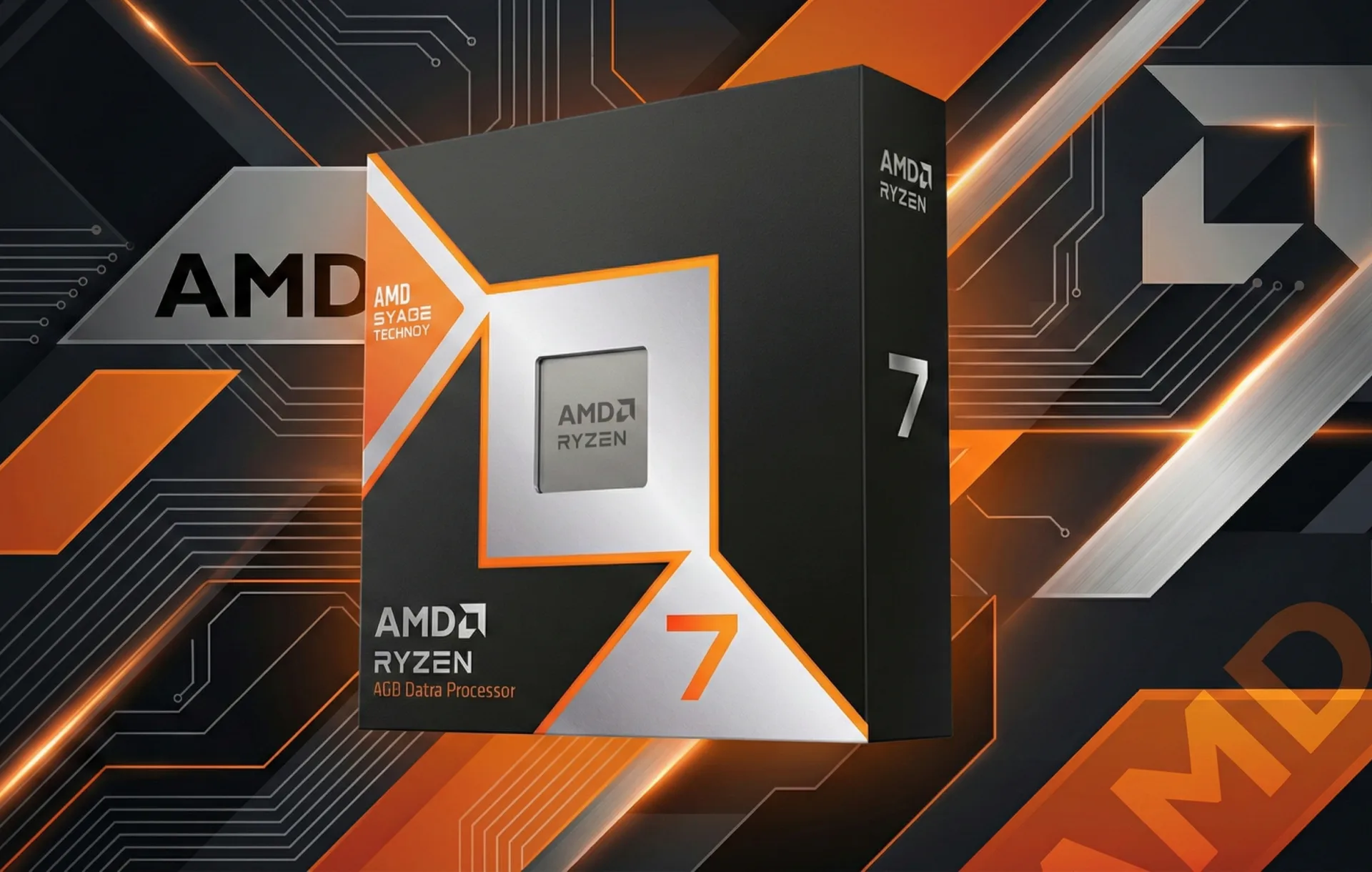
AMD's Ryzen 7 9850X3D: A Pre-Launch Release Raises Eyebrows
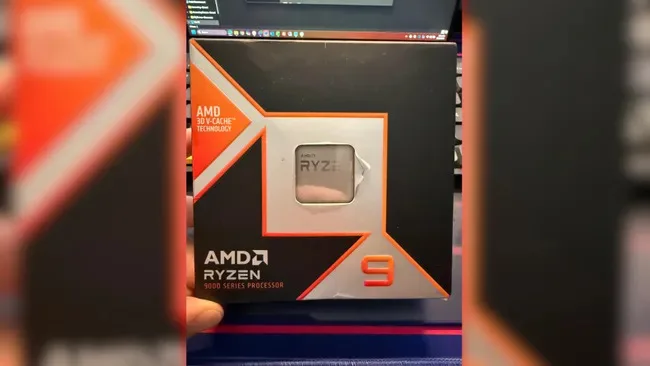
AMD's latest gaming flagship, the Ryzen 7 9850X3D, is officially slated for a global launch on January 29, 2026, with a US Manufacturer's Suggested Retail Price (MSRP) of $499. However, as of Friday, January 23, 2026, we've observed the processor already available for purchase on Amazon at its official US price, with initial deliveries anticipated in the first weeks of February. This early availability, days before the stated global launch, is an interesting move. While some might view it as a pleasant surprise for eager consumers, we find ourselves questioning AMD's strategy and the potential implications for retail partners and the management of initial stock.
The Ryzen 7 9850X3D, first showcased at CES 2026 and positioned by David McAfee, Vice President and General Manager of Client Channel Business, as AMD's new top-tier gaming chip, is a significant addition to the Zen 5-based lineup. Its placement directly above the Ryzen 7 9800X3D in the 3D V-Cache-augmented processor stack clearly signals AMD's intent to dominate the high-performance gaming segment.
Launch Price and Market Positioning Under the Microscope
At $499, the Ryzen 7 9850X3D commands a slight premium over its predecessor, the Ryzen 7 9800X3D, which launched at an MSRP of $480. This incremental price increase for a generational uplift is not unexpected, but we're left to speculate on the value proposition without official performance reviews or non-US regional pricing. The absence of details regarding the rumored Ryzen 9 9950X3D2 SKU in AMD's launch messaging also suggests a focused, albeit potentially limited, initial rollout. In our view, a global launch should ideally be accompanied by comprehensive regional pricing to offer a clearer picture to the international audience.
Challenging the "World's Fastest" Claims: Performance and 2nd Gen 3D V-Cache
AMD is marketing the Ryzen 7 9850X3D aggressively, with bold declarations of it being "the world's most advanced gaming processor" and the "world's fastest gaming CPU." While these claims are certainly attention-grabbing, we approach them with a healthy dose of skepticism, as is our prerogative. Such superlatives are common in pre-launch marketing, and the real-world performance will ultimately be judged by independent testing and user experience.
The core of these performance claims lies with the 2nd Gen 3D V-Cache technology. This innovation boosts gaming performance by stacking an additional layer of L3 cache directly onto the CPU die, a proven method for enhancing frame rates in cache-sensitive titles.
AMD's internal tests suggest up to a 7% improvement in games compared to the Ryzen 7 9800X3D, alongside a 400 MHz higher boost clock, reaching 5.6 GHz. A 7% generational improvement is certainly respectable, though whether it constitutes a compelling upgrade for existing 9800X3D owners will depend heavily on individual gaming habits and expectations. For those coming from older generations or building a new system, this could represent a more significant leap. The company also states an average of 27% faster gaming performance than Intel's Core Ultra 9 285K, a direct challenge to its primary competitor.
One of the more practical benefits of 2nd Gen 3D V-Cache technology, as highlighted by AMD, is its reduced dependency on high-frequency memory. The company indicates that the Ryzen 7 9850X3D can be paired with entry-level DDR5 kits without sacrificing significant performance, with internal tests across over 30 games showing less than a 1% FPS difference between DDR5-4800 and DDR5-6000 memory. This is a welcome point for budget-conscious builders, as it potentially lowers the overall platform cost without compromising the gaming experience.
Under the Hood: Specifications and Zen 5 Refinements
The Ryzen 7 9850X3D is described as a "meticulously higher-binned variant" of the Ryzen 7 9800X3D. This suggests that AMD is utilizing chips that demonstrate superior electrical characteristics and can reliably hit higher clock speeds and maintain stability, essentially hand-picking the best silicon for its top-tier offering.
Here's a look at the key specifications, alongside its immediate predecessor for context:
The continued compatibility with existing AM5 motherboards is a consumer-friendly decision, simplifying upgrades for current AMD users and extending the longevity of the platform. We appreciate AMD's commitment to socket longevity, which stands in contrast to frequent platform changes seen elsewhere.
The Reality Check: Important Considerations for Prospective Owners
While the Ryzen 7 9850X3D is poised to be a top contender, potential buyers should temper their expectations with a few important considerations. Historically, the launch of its predecessor, the Ryzen 7 9800X3D, faced supply constraints, leading to scalping and difficulties for retailers to maintain suggested price levels. Given the current early Amazon availability, we anticipate a similar scenario could unfold with the 9850X3D, potentially making it challenging to acquire at MSRP in the initial weeks.
Furthermore, users upgrading to the Ryzen 7 9850X3D with an existing AM5 motherboard may need to perform a BIOS update to ensure full compatibility. This is a standard procedure for new CPU launches on existing platforms, but it's an extra step that new owners should be aware of. Finally, while the chip is marketed for its overall gaming prowess, it's worth remembering that some game titles may see minimal performance gains with this specific CPU. This "your mileage may vary" caveat is crucial for gamers with specific libraries, as not all engines benefit equally from increased cache or clock speeds. Buyers should research performance in their favorite titles before making the leap.





Comments