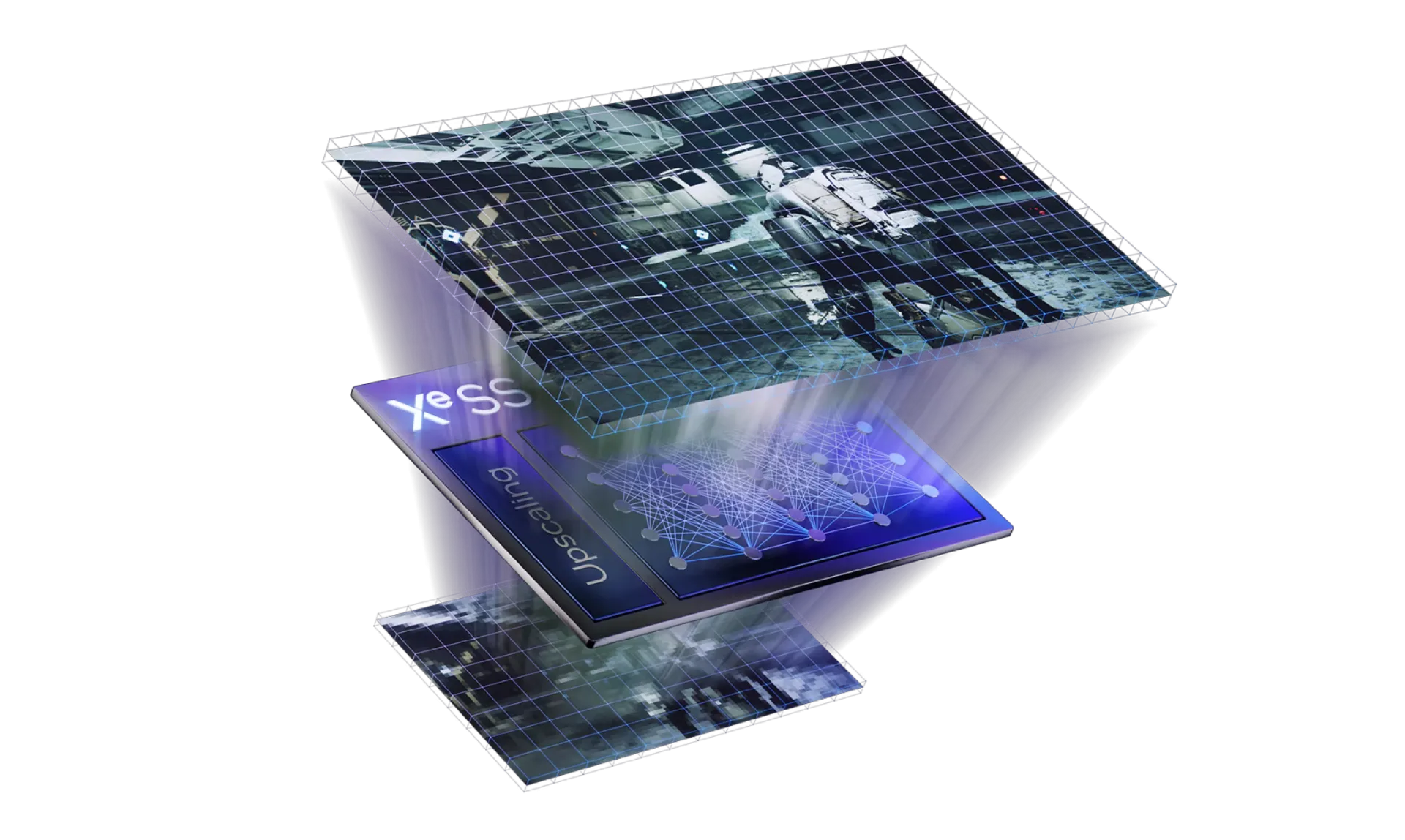
Intel pulled a fast one on the competition, releasing XeSS 3 Multi-Frame Generation across a wide array of its Arc discrete GPUs and Core Ultra integrated graphics solutions. The new WHQL graphics driver version 32.0.101.8509 unlocks the advanced frame generation technology for Alchemist, Battlemage, Meteor Lake, Lunar Lake, and Arrow Lake platforms, a strategy that clearly differentiates Intel from its rivals.
This update is a clear statement. While initial drivers brought XeSS 3 Multi-Frame Generation to newer Panther Lake CPUs, Intel has now extended this high-performance feature to nearly its entire modern GPU lineup, including the entry-level Arc A380 and the potent Arc B580. The technology is set to dramatically boost perceived smoothness and frame rates, potentially escalating performance from a respectable 60 FPS to over 200 FPS in compatible titles.
Dissecting Intel's Multi-Frame Leap
This update primarily focuses on XeSS 3 Multi-Frame Generation, which supercharges Intel's existing XeSS Frame Generation. Instead of generating a single AI-interpolated frame between two rendered ones, XeSS 3 can insert up to three, shifting the generation ratio from 1:1 to a staggering 3:1. This results in a significantly higher perceived frame rate without the GPU needing to render every single frame, a critical advantage for maintaining fluidity in graphically intensive games.
The key change lies in Intel's approach to accessibility. Unlike NVIDIA's DLSS 4.5, which reserves its enhanced multi-frame generation for the shiny new GeForce RTX 50 Series, or AMD's AI-powered Frame Generation, exclusive to its RDNA 4-powered Radeon RX 9000 Series, Intel is making the tech widely accessible. The company is providing multi-frame generation support across older GPU series and integrated graphics, a feature unmatched by other GPU vendors. This strategy means that a wider range of users, from those with first-generation Arc Alchemist cards to owners of Core Ultra laptops, can now tap into these performance gains. For users, this translates to extended longevity for their existing hardware and a potentially smoother gaming experience on more affordable systems.
Intel claims its multi-frame generation technique uses a single optical flow pass, which it states improves efficiency compared to competitors' multi-pass approaches. This could translate to lower latency or better resource utilization, though real-world testing will be essential for verifying these efficiency claims in diverse gaming scenarios. To clarify, XeSS 3 does not introduce a new AI upscaling model; it continues to use the same upscaling algorithms as XeSS 2. The innovation lies purely in the density of frame generation.
Users can enable XeSS 3 Multi-Frame Generation across existing XeSS-enabled games through a simple driver toggle or the 'XeSS Override' option in Intel's control panel. This backward compatibility is a clear win for the user base.
Key Changes at a Glance
The Promise and the Pitfalls
On paper, Intel's XeSS 3 rollout is a powerful play. The Intel Arc B580, for instance, already offers superior performance to the GeForce RTX 4060 in most titles and is positioned as an affordable mainstream GPU. Adding official XeSS 3 Multi-Frame Generation support makes an already competitive card even more enticing. This frame generation boost could solidify its position in the mainstream market.
The rollout, however, isn't without its glaring red flags. Although the entry-level Arc A380 officially supports XeSS 3 Multi-Frame Generation, performance with 4x multi-frame generation on entry-level Arc A380 has been noted as not optimal for fast-paced games. This is a crucial detail for budget-conscious gamers: high frame generation ratios might not deliver the smooth, low-latency experience desired in competitive titles, potentially leading to increased input latency and ghosting. We saw similar reports from gamers who, before official support, found workarounds to enable XeSS 3 on handhelds like the MSI Claw, reporting higher input latency and some ghosting at 4x frame generation. This indicates that while the raw FPS numbers may be impressive, the feel of the game could suffer, especially at higher generation multipliers.
Furthermore, the new driver comes with an alarming list of known issues across various Intel GPU products and Core Ultra processors. From application crashes in John Carpenter’s Toxic Commando and Naraka Bladepoint with ray tracing, to intermittent corruptions in Call of Duty Black Ops 6 and Dune: Awakening, the stability concerns are considerable. Even professional applications like PugetBench for Davinci Resolve Studio may experience intermittent crashes while running the benchmark. Intel's commitment to broad support is commendable, but a feature is only as good as its stability. The sheer volume of acknowledged bugs suggests that while the technology is officially 'rolled out,' it might still be very much a work in progress from a user experience perspective.
The Stakes of Intel's Frame Generation Strategy
Intel's expansive XeSS 3 Multi-Frame Generation rollout launches a major offensive in the frame generation wars. By extending this performance-enhancing technology across its entire modern GPU stack, including integrated graphics, Intel is directly challenging the exclusivity strategies of NVIDIA and AMD. This move could redefine expectations for entry-level and mainstream gaming, offering a path to higher frame rates without requiring an upgrade to the latest, most expensive hardware. For consumers, this potentially means greater value from their current Intel-powered systems and a more competitive GPU market.
However, the numerous reported bugs and performance caveats, particularly for fast-paced gaming on lower-end hardware, remind us that 'support' does not always equate to a flawless experience. While we appreciate Intel's ambition to make this technology widely accessible, the long list of known issues is a stark reminder that software stability is essential. Intel has demonstrated its ability to 'cook' impressive new features, but the real challenge will be how quickly and effectively they address these stability issues to ensure that the promise of ultra-smooth gameplay translates into a consistent, enjoyable reality for all users. Until then, we recommend cautious optimism, particularly for those relying on their systems for competitive gaming or mission-critical creative work.




Comments