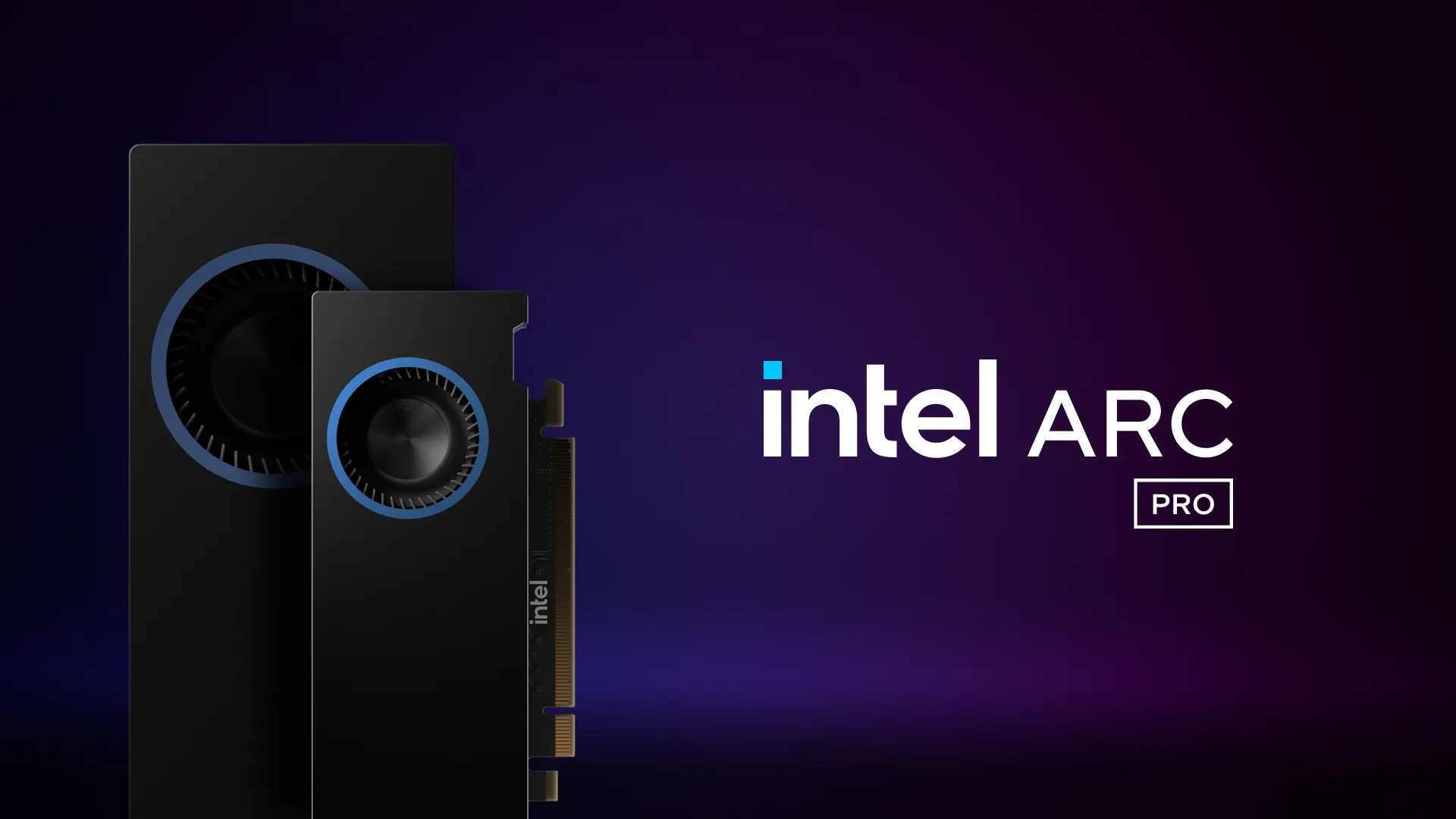
Intel's Pro-Grade Gambit: The Arc Pro B70 and "Big Battlemage" Draw Near
We've been closely tracking Intel's professional GPU endeavors, and it's becoming increasingly clear where their focus lies. The highly anticipated Arc Pro B70, armed with the new BMG-G31 GPU, appears to be on the cusp of release, targeting the demanding workstation market. While Intel remains tight-lipped, the sheer volume of software updates and leaks leaves little doubt that the "Big Battlemage" is almost ready for its moment.
Intel's own development tools, notably the VTune Profiler software (updated November 4, 2025) and XPU Manager (V1.3.5), now officially support the BMG-G31 GPU. This isn't just a casual mention; it's a clear signal that the company is actively laying the groundwork for its debut. We recall the brief social media tease for a potential CES 2026 unveiling, followed by a swift retraction – a curious move, leaving us to wonder if Intel simply jumped the gun or if there was a strategic decision to temper expectations before a proper reveal. The GPU's subsequent driver references during CES further solidified its existence, even without a grand stage moment.
Unpacking the "Big Battlemage": BMG-G31 Specifications and Ambitions
The codename "Big Battlemage" isn't just marketing fluff; it suggests a significant leap. The BMG-G31 GPU is reportedly 60% larger than its predecessor, the BMG-G21, which powers the existing Arc B580. This increase in die size, coupled with the anticipated Battlemage Xe2-HPG architecture and TSMC's N5 manufacturing process, points to Intel's serious intent for performance.
Preliminary specifications, leaked from various sources, paint a picture of a potent professional offering. We're looking at a staggering 5,120 FP32 cores, 360 texture units, 160 render output units, and 40 ray tracing units. These numbers, if accurate, suggest a card built for heavy lifting in complex rendering, simulation, and design tasks. The expected inclusion of Matrix Cores for AI acceleration further solidifies its workstation pedigree, positioning it against competitors in the rapidly growing AI-driven professional landscape. Prominent hardware leakers have directly linked the BMG-G31 die to unreleased professional-grade reference card designs, making the speculation around the Arc Pro B70 almost a certainty.
The Arc Pro B70: What Professionals Can Expect (And Why It Matters)
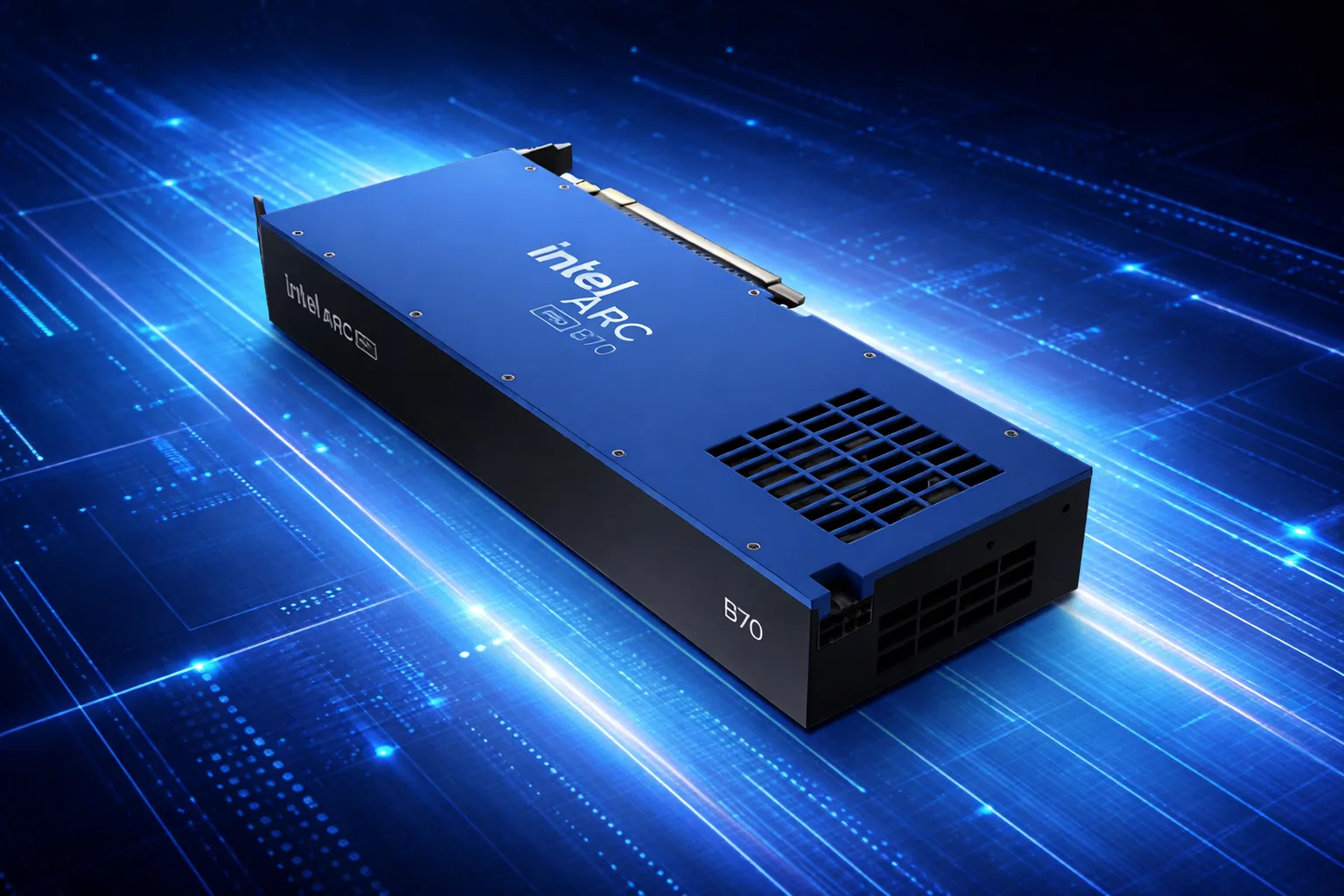
The upcoming Intel Arc Pro B70 is shaping up to be a serious contender for professional workloads. Its most striking rumored feature is an alleged 32 GB of GDDR6 VRAM, initially reported by leaker Jaykihn and subsequently by Wccftech. In our view, this enormous memory capacity is the real headline here. For professionals dealing with massive datasets, intricate 3D models, high-resolution video editing, and complex simulations, VRAM capacity is often a bottleneck. A 32 GB framebuffer, paired with an expected 256-bit bus width, would provide a substantial advantage, allowing for larger projects and smoother workflows without constantly offloading data to slower system RAM.
Additional anticipated specifications include a PCIe 5.0 x16 interface, ensuring maximum bandwidth with modern workstations, and four DisplayPort 2.1a outputs, catering to multi-monitor setups common in professional environments. While these specifications are currently based on rumors, as VideoCardz.net notes, the high VRAM capacity is particularly appealing to the professional segment, where memory bandwidth and capacity are critical. Wccftech also reports a TDP nearing 300W, which for a professional card of this rumored caliber, seems within expected parameters for high performance. Leaker Jaykihn indicates a launch is "soon," which aligns with the mounting evidence. Intel is also rumored to be preparing an Arc Pro B65, also based on the BMG-G31 GPU, though specific details remain scarce. We wonder how Intel plans to differentiate the B65 to avoid cannibalizing sales of the higher-end B70.
Consumer Battlemage: A Clouded Future?
In stark contrast to the clear path of the professional BMG-G31 variants, the future of a consumer-focused Arc B770 based on the same chip appears increasingly uncertain. Despite the BMG-G31 GPU appearing in Intel driver files and Linux logs, hinting at a consumer card like the B770 (which would feature 16 GB GDDR6 VRAM and a 256-bit bus), its actual launch seems doubtful.
The Arc B770, long-rumored as a potential step up from the Arc B580 and a solid 1440p gaming option, was notably absent from CES 2026. More concerning are reports from Intel's board partners, which indicate no current plans to launch this higher-end Battlemage GPU. The ongoing computer memory crisis and rising VRAM prices are making the introduction of new gaming graphics cards in Q1 or Q2 2026 a "challenging prospect," according to industry analysts. This market reality could make it exceedingly difficult for Intel to price a consumer B770 competitively against existing and upcoming offerings from AMD and NVIDIA. Claims of more than 16 GB of VRAM for a consumer card are now described as highly unlikely due to the DRAM shortage, which, while plausible, also sounds like a convenient reason to push a less ambitious consumer product. Intel's refusal to provide any launch date for a consumer B770 model only adds to our skepticism. We're not holding our breath for a robust consumer Battlemage launch anytime soon.
The Professional Arc Strategy: A Path to Market Share?
Intel's undeniable focus on professional-grade GPUs is a calculated choice, and frankly, a shrewd one given their current market position. The company has already launched workstation-grade offerings under the Xe2 family, including the Arc Pro B50 and B60, in recent months. The Arc Pro B50 (16 GB), priced at $450, is currently a "best seller" on Newegg in the US. This success, alongside Intel's overall GPU market share dropping to a mere 1%, clearly demonstrates the wisdom of prioritizing a segment where they can carve out a niche and demonstrate value.
The current market environment might also present an opportune window. Both AMD and NVIDIA have largely refreshed their current lineups, with NVIDIA's RTX 50 SUPER reportedly pushed back and no signs of Radeon launches planned for CES 2026. While this isn't an open field, it offers Intel a chance to establish its presence in the professional graphics market with the Arc Pro B70 and B65 without immediate, direct competition from brand-new, top-tier professional offerings. In our view, this strategic pivot towards professional dominance, even as a consumer Battlemage release remains elusive, could be Intel's most viable path to regaining some lost ground in the discrete GPU arena.




Comments