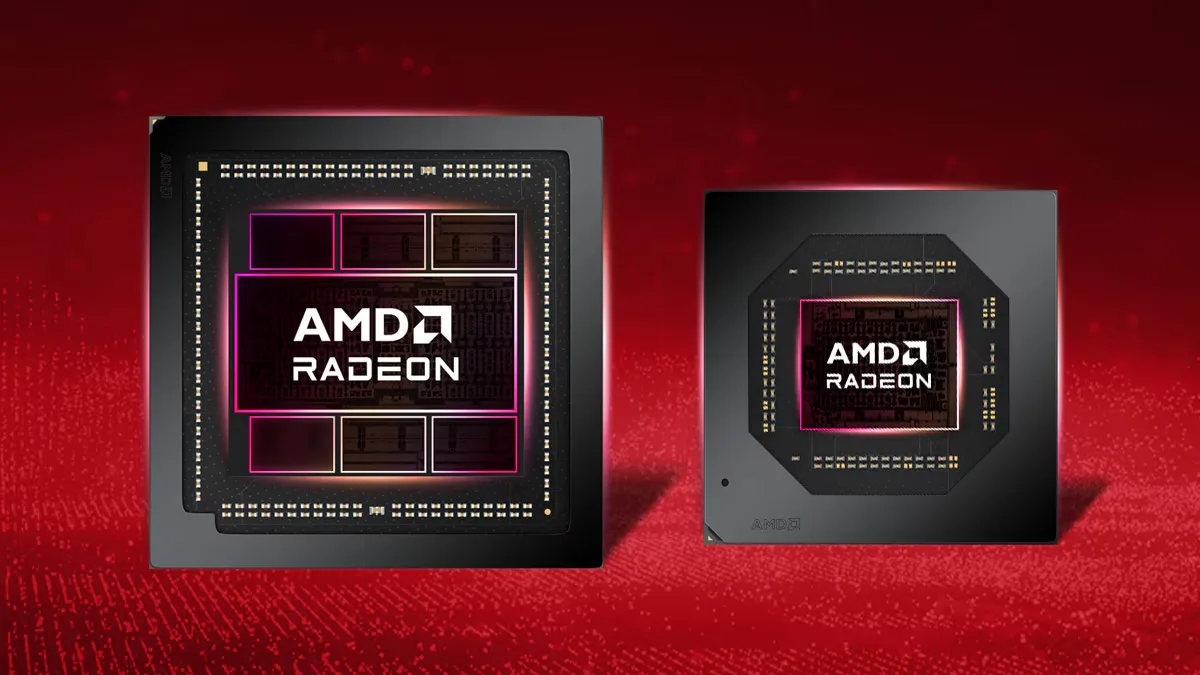
AMD appears to be walking a tightrope, reportedly prioritizing the production of 8GB VRAM graphics cards, particularly for the crucial mainland China market. This strategic pivot, seemingly driven by soaring GDDR6 memory costs, suggests a focus on models like the upcoming Radeon RX 9060 XT 8GB and the existing Radeon RX 7650 GRE. While understandable from a profitability standpoint, we view this as a potentially short-sighted move that could leave many gamers wanting more, especially given recent community sentiment on VRAM limitations.
This shift comes hot on the heels of AMD board partners already implementing GPU price increases in January 2026, with further hikes looming for February or March. Industry whispers point to a dramatic surge in video memory prices as the primary catalyst, making higher-VRAM configurations increasingly uneconomical to produce.
The VRAM Squeeze: Why AMD is Reportedly Shifting Focus
Reports from Board Channels, citing multiple sources, indicate AMD's intent to ramp up production of the Radeon RX 9060 XT 8GB and Radeon RX 7650 GRE for the mainland China market. The RX 7650 GRE, notably, initially launched as a China-exclusive GPU, underscoring the regional focus of these adjustments.
Conversely, we hear that output for several higher-VRAM models, including the Radeon RX 9070 with 16GB VRAM and the Radeon RX 9070 GRE with 12GB VRAM, is expected to be reduced for the Chinese market. Production levels for the Radeon RX 9060 XT 16GB and Radeon RX 9070 XT are said to remain at current levels, offering some balance. Meanwhile, the Radeon RX 9060, an 8GB card primarily designed for OEMs, is also slated for a $10 upstream price increase.
However, a contradictory report from Benchlife, echoed by Wccftech and TechRadar, suggests AMD will actually prioritize the 16GB variant of the RX 9060 XT for retail availability, citing concerns about potential consumer dissatisfaction with lower VRAM cards. This conflicting information leaves us skeptical about the clarity of AMD's strategy and highlights the fluid nature of these market dynamics, particularly in the Chinese sphere, where many of these reports originate and often remain unofficial.
The Alarming Reality of Soaring Memory Costs
The undeniable driving force behind these reported adjustments is the escalating cost of GDDR6 memory. Data from DRAMeXchange reveals the stark reality: the spot price of 8GB of GDDR6 memory surged by a staggering 61% between July 1, 2025 ($19.54), and December 2, 2025 ($31.52). The broader AI boom is widely cited as a significant contributor to these growing pressures on the industry.
This surge in memory prices has undeniably made 8GB GPU variants cheaper to manufacture, helping AIB partners preserve profit margins that would otherwise be decimated without substantial price increases. We've already seen AMD respond, raising prices for its Radeon RX 9000 series graphics cards, with board partners reportedly paying an extra $10 for every 8GB of VRAM. This aligns perfectly with earlier warnings from AMD to partners about at least a 10% graphics card price increase for 2026. The memory market is in a "Hyper-Bull" phase, exceeding 2018 peaks, with GDDR6 and GDDR7 facing significant supply constraints. DRAM contract prices are projected to rise a shocking 90-95% quarter-over-quarter in Q1 2026, with PC DRAM potentially doubling in price. These shortages are expected to persist until at least Q4 2027, signalling sustained high prices throughout 2026-2027.
Distributors reportedly stocked up on cards following the January 2026 price increase, a move that could lead to uneven availability as inventory is potentially held back for future price adjustments.
Navigating the Price Hikes: AMD's Strategy and Market Impact
AMD board partners implemented a 5-10% price increase on many Radeon GPU models in January 2026 and are planning another for February or March. Specifically, the Radeon RX 9060 XT 8GB and RX 9060 are expected to see an upstream price increase of $10. Higher-VRAM cards like the Radeon RX 9060 XT 16GB, RX 9070 XT, and RX 9070 are anticipated to face a more substantial $20 upstream price increase. For context, the Radeon RX 9070 XT has not been consistently available at its $599 MSRP in the US for some time.
The current strategy, as described by Board Channels, appears to be an attempt to align Radeon GPU pricing more closely with comparable NVIDIA models. It's clear that the challenging DRAM market is making it exceptionally difficult for both AMD and NVIDIA to deliver GPUs at their stated MSRPs.
AMD's Shifting VRAM Philosophy: A Question of Consistency
This reported prioritization of 8GB cards marks a notable shift from AMD's previous public stance. The company notably advocated for higher VRAM capacity with its RX 7000 series. Furthermore, we recall AMD famously removed a blog post that claimed 4GB VRAM was insufficient for games, just prior to the launch of its own RX 6500 XT, which shipped with only 4GB and no 8GB option. This historical context makes us question the consistency of AMD's messaging around VRAM sufficiency.
Frank Azor, AMD's Chief Director of Gaming Solutions, stated on May 22, 2025, that 8GB of VRAM is "sufficient for the majority of gamers playing 1080p esports games." While perhaps true for esports, recent community reactions paint a very different picture for modern AAA gaming. Many gamers and reviewers believe 8GB is increasingly insufficient, even for 1080p in some titles, and certainly for 1440p and future-proofing. NVIDIA's RTX 5060 Ti 8GB, for instance, has faced significant criticism for performance drops, stutters, and texture issues due to its VRAM limitations, even when the GPU itself had more horsepower. Our own tests, and those from other outlets, show that the 16GB RX 9060 XT often outperforms the 8GB RTX 5060 Ti at 1440p, and even the 8GB RX 9060 XT can struggle with ray tracing compared to its 16GB counterpart, experiencing notable stuttering and lower frame rates. The "sweet spot" for VRAM, particularly for those dabbling in AI or seeking future-proof performance, is increasingly cited as 12GB or 16GB.
The Radeon RX 9060 XT series, part of the current RDNA 4 architecture, was expected to be unveiled at Computex, with a potential May 21 launch and sales commencing in June 2025. AMD had previously recommended the RX 9060 XT for 1440p gaming in a May 2025 press release – a recommendation that becomes problematic if 8GB is indeed prioritized and struggles with higher resolutions or demanding titles.
The Broader GPU Arena: Where Do Competitors Stand?
In the broader market, Intel has already raised prices on some previous-generation CPUs, though Ryzen CPU pricing remains unchanged as of today, February 3, 2026. Nvidia's recently launched RTX 5060 Ti with both 8GB and 16GB variants has already set a precedent; its 8GB model received widespread criticism for its VRAM capacity, highlighting a clear consumer sensitivity to this specification. We also note reports suggesting Nvidia may no longer be supplying VRAM to its board partners as a set, forcing vendors to source memory independently – a move that could further complicate the market for all players. Interestingly, Intel has been making efforts in the budget segment, with GPUs like the Arc A580 offering 12GB of VRAM for around $250, a strategy that stands in contrast to the VRAM reductions seen elsewhere.



Comments