GIGABYTE and AMD Double Down on AI: A Critical Look at Their Expanded Partnership
GIGABYTE and AMD are deepening their strategic collaboration, with a strong focus on on-device AI acceleration across a range of hardware and a promise to enhance gaming for consumers. The initial announcement of this intensified AMD integration for AI capabilities came from GIGABYTE on January 29, 2026. While both companies tout fast, smooth performance for gaming and content creation, alongside "reliable stability" for PC builds, we at TTEK2 are always curious about what these buzzwords truly deliver in the real world. This partnership aims to keep more AI workloads local, a clear move to differentiate against cloud-centric AI solutions and provide a "full-stack experience" for users.
AI Acceleration: Is It More Than Just Marketing?
The core of this expanded partnership targets on-device AI acceleration across four key product lines: AI gaming laptops, X870E X3D series motherboards, high-refresh OLED gaming monitors, and new Radeon RX 9070 Series Graphics Cards. While the integration sounds promising, we need to examine if these optimizations translate into tangible benefits or if they're simply a response to the growing market pressure to brand everything with "AI."
Powering Next-Gen Laptops with AMD Ryzen AI
GIGABYTE's new AI Gaming Laptops, like the AORUS MASTER 16, are set to feature AMD Ryzen™ 9 9955HX3D processors with AMD 3D V-Cache™ technology. AMD claims the Ryzen 9 9955HX3D is the fastest mobile gaming CPU, a bold statement we'd love to put to the test. Early benchmarks show impressive multi-core scores in Cinebench 2024, outperforming some Intel counterparts, and strong single-core performance that should benefit gaming. The 3D V-Cache, in particular, has a proven track record of accelerating demanding 3D games on desktop, and we expect similar benefits here. The AORUS MASTER 16 also integrates GiMATE, GIGABYTE's "exclusive AI agent" for streamlined power, performance, and AI feature controls. While GIGABYTE positions GiMATE as an intuitive, voice-driven tool for optimizing settings and enhancing productivity, we're always cautious about proprietary AI agents that promise to "anticipate your needs". The effectiveness of such an agent often comes down to its actual intelligence and integration, not just the marketing claims.
The GIGABYTE AERO X16, marketed as a Copilot+ PC, utilizes AMD Ryzen™ AI 400 Series processors, including the AMD Ryzen™ AI 9 HX370. These chips boast a built-in NPU, designed to efficiently handle select AI tasks on-device. This is crucial, as Microsoft's Copilot+ PC designation requires an NPU capable of at least 40 TOPS (trillion operations per second), along with 16GB of RAM and 256GB of storage. AMD's Ryzen AI 400 Series, specifically the flagship Ryzen AI 9 HX 475, claims up to 60 NPU TOPS, exceeding this requirement. Preliminary analysis suggests the Ryzen AI 400 series could offer superior performance to Intel's upcoming Core Ultra Series 3 in content creation, gaming, and AI workloads. We anticipate that offloading AI tasks to a dedicated NPU should indeed enhance everyday AI experiences and potentially improve battery life. However, the actual real-world impact on most users will depend heavily on how many applications truly leverage these NPU capabilities effectively, beyond basic Windows features.
Motherboards and Graphics: Incremental Gains or Essential Upgrades?
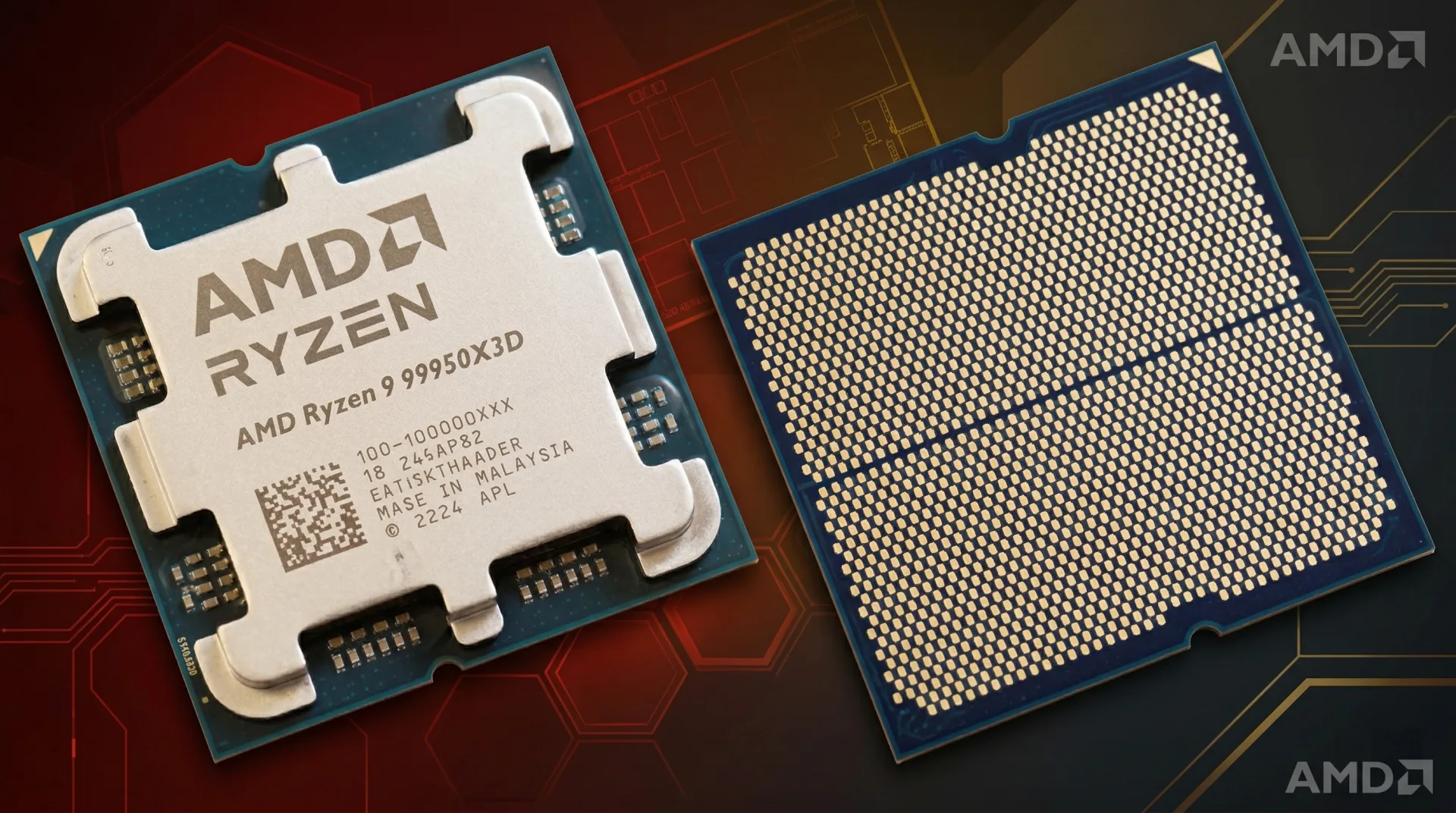
The new X870E X3D Series Motherboards are engineered to unlock the performance of AMD Ryzen™ 9000 Series Processors, especially those with AMD 3D V-Cache™ Technology. A notable inclusion is the "exclusive AI-powered X3D Turbo Mode 2.0," a hardware-software fusion designed to optimize AMD 3D V-Cache™ behavior. While X870E chipsets offer guaranteed USB4 (40 Gbps) and potentially higher memory overclocking speeds up to 8400 MHz or more, compared to the X670E's typical 6400-6800 MHz, the overall connectivity and PCIe lane count remain similar. Some community discussions suggest that while X870E boards carry a premium for these additions like USB4 and WiFi 7, the real-world benefit might be more about standardization than a drastic performance leap for most consumers. Given that the X870E chipset itself is technically the same as the X670E, with the memory controller residing in the CPU, we remain somewhat skeptical that the "AI-powered X3D Turbo Mode 2.0" will be a truly transformative feature rather than a minor refinement, especially for those not engaging in extreme overclocking.
GIGABYTE's new Radeon™ RX 9070 Series Graphics Cards, built on AMD RDNA™ 4 architecture and featuring AMD FSR™ 'Redstone' technology, aim to boost frame rates and reduce latency. The RDNA 4 architecture itself brings significant improvements, including 3rd-gen Raytracing accelerators with double the raytracing throughput over RDNA 3, and 2nd-gen AI accelerators offering up to 8x higher AI performance. These architectural changes also promise improved rasterization and compute efficiency, with some reports indicating a nearly two-fold uplift in rasterization performance per Compute Unit compared to RDNA 2, and around 40% vs RDNA 3. The addition of FSR 'Redstone' technology, which optimizes integrated Radeon graphics for near-native image quality, should further enhance the gaming experience. GIGABYTE's WINDFORCE cooling system, known for its multi-fan design, composite copper heat pipes, and large vapor chamber, should competently handle the thermal demands of these new GPUs.
The High-Refresh OLED Gaming Monitors, like the MO27Q28GR, MO34WQC36, and MO32U24, come certified with AMD FreeSync™ Premium Pro. This technology ensures variable refresh rate (VRR) smoothness, syncing the refresh rate to frame output for tear-free, stutter-free gameplay. While FreeSync Premium Pro offers excellent HDR gaming by reducing latency and optimizing tone mapping, it's worth noting that NVIDIA's G-SYNC Ultimate also aims for a similar high-end experience, often with a higher price tag due to proprietary hardware. GIGABYTE's inclusion of "Tactical Features" like Tactical Switch 2.0 and Aim Stabilizer sounds like a clear play for the competitive gaming market, but the actual impact of these features can vary greatly among players and specific game titles.
Finally, the AORUS PRIME 5 Gaming Desktop incorporates an AMD Ryzen™ 7 9700X processor and GIGABYTE's "omni cooling design." While a Ryzen 7 9700X and comprehensive cooling are solid foundations for a gaming PC, without more specific details on the graphics card and other components, it's hard to assess how this pre-built solution truly stands out in a crowded market.
Crimson Desert Game Bundle: A Smart Incentive?
To sweeten the deal, GIGABYTE and AMD are offering a game bundle for the highly anticipated title Crimson Desert. This promotion allows gamers who purchase eligible GIGABYTE graphics cards, laptops, or desktops, or select AMD Ryzen™ 9 and Ryzen™ 7 X3D processors with compatible GIGABYTE motherboards, to receive a Crimson Desert redeem code. The promotion runs from February 10, 2026, through April 25, 2026, with codes valid for activation until May 23, 2026.
Crimson Desert itself is scheduled for an official launch on March 19, 2026, for macOS, PlayStation 5, Windows, and Xbox Series X/S. The game has garnered positive early previews, with critics highlighting its world-building, combat mechanics, and attention to detail, positioning it as one of the most anticipated open-world games of 2026. This bundle is a straightforward way to add value to new hardware purchases and capitalize on the significant hype surrounding Crimson Desert. While game bundles are a common marketing tactic, this particular title's high anticipation could make it a compelling reason for some consumers to choose GIGABYTE and AMD hardware over competitors. We think this is a clever move, tying cutting-edge hardware to a major upcoming release, but consumers should always factor in the game's actual value to them when considering a purchase.





Comments