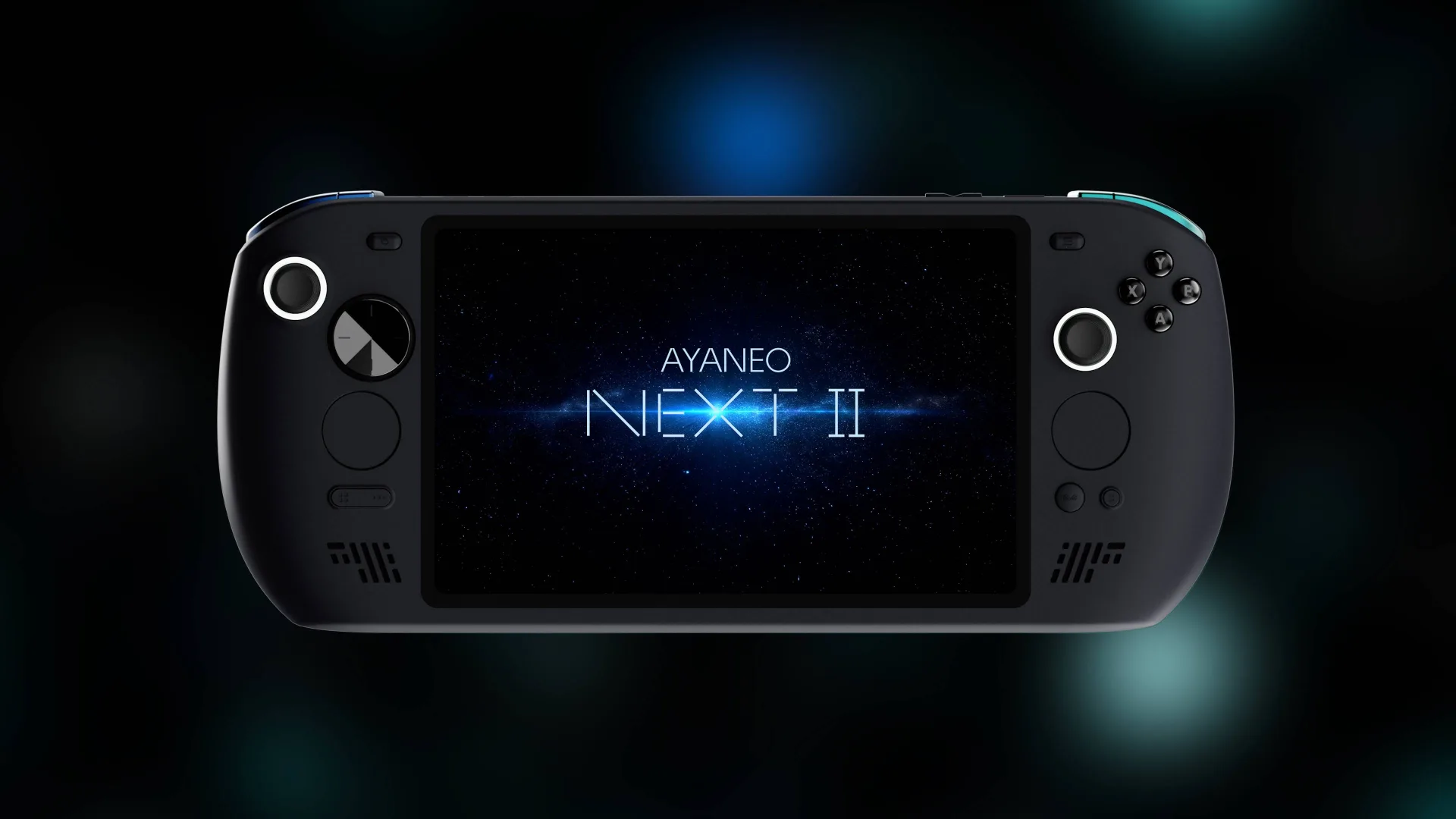
Ayaneo, the often ambitious Chinese hardware manufacturer, has officially thrown its hat into the ring for the next generation of Windows handhelds with the launch of its highly anticipated Ayaneo Next 2 on February 9, 2026. This isn't just another incremental update; it's Ayaneo's inaugural product to integrate AMD's powerful Ryzen AI Max+ 395 APU, built on the Strix Halo architecture. While preorders are set to kick off this week on Indiegogo, with shipments projected for June 2026, we at TTEK2 are closely watching to see if this handheld lives up to its hefty aspirations and price tag.
The Ayaneo Next 2 is clearly gunning for the title of the most powerful Windows handheld on the market. It boasts a next-generation processor, a massive high-resolution OLED display, and what Ayaneo claims is an industry-leading internal battery. But as always with such bold declarations, we’re looking past the marketing speak to see what this beast truly delivers for its premium cost.
Strix Halo Unleashed: Next-Generation Performance with Ryzen AI Max+ 395
At the core of the Ayaneo Next 2's ambition lies the AMD Ryzen AI Max+ 395 processor. This is a 16-core, 32-thread Zen 5 APU fabricated using TSMC's cutting-edge 4 nm manufacturing process, with the top-tier Strix Halo SKU capable of hitting a boost clock of 5.1 GHz. For a handheld device, that's an incredible amount of raw CPU power, suggesting it won't be easily bottlenecked by processor-intensive games or demanding applications.
The integrated Radeon 8060S GPU is equally eye-catching, featuring 40 RDNA 3.5 Compute Units clocked at 2.9 GHz. This more than doubles the compute units found in current Ayaneo handhelds, which, in our view, is the real headline for gaming performance. This kind of graphical horsepower, especially for an integrated solution, promises a substantial leap in what's possible on a portable device. Ayaneo will also offer a configuration with the 8-core AMD Ryzen AI Max 385 processor, which comes with a Radeon 8050S integrated GPU.
The processor also includes an XDNA 2 NPU delivering 50 AI TOPS, with total system AI performance reaching 126 AI TOPS. While the raw numbers are impressive, we remain somewhat skeptical about the immediate practical benefits of such high AI TOPS for a gaming handheld. For now, it feels like a specification designed more for future-proofing and marketing than for tangible, day-one gaming advantages.
Early performance tests are certainly promising, with Ayaneo claiming performance that significantly surpasses other non-discrete setups. Reviewers have reportedly seen excellent performance at 1080p and even most upscaled 1440p targets. Perhaps most interestingly, these tests suggest it can beat Intel's new Panther Lake integrated graphics by 54–86% in gaming and potentially deliver gaming performance comparable to a laptop RTX 4060. If these numbers hold up in real-world scenarios, the Ayaneo Next 2 could genuinely redefine expectations for integrated graphics. To keep this powerhouse cool, the device is designed for a sustained TDP of 85 watts, supported by a dual-fan thermal solution with dual exhaust airflow and a beefy heatsink array. This level of thermal design is critical for sustaining peak performance, but we anticipate it will inevitably lead to audible fan noise under heavy loads.
An Immersive (and Massive) Display Paired with Thoughtful Controls
The Ayaneo Next 2 isn't shy about its visual ambitions, featuring a large 9.06-inch OLED display with a crisp 2400x1504 pixel resolution. The screen supports multiple refresh rates, including 60 Hz, 120 Hz, 144 Hz, and 165 Hz, offering flexibility for different game types. A peak brightness of 1155 nits, 100% DCI-P3 color gamut coverage, and high-frequency 5280 Hz PWM dimming all point to a truly premium visual experience. For a handheld, these display specifications are truly top-tier, promising vibrant colors and deep blacks.
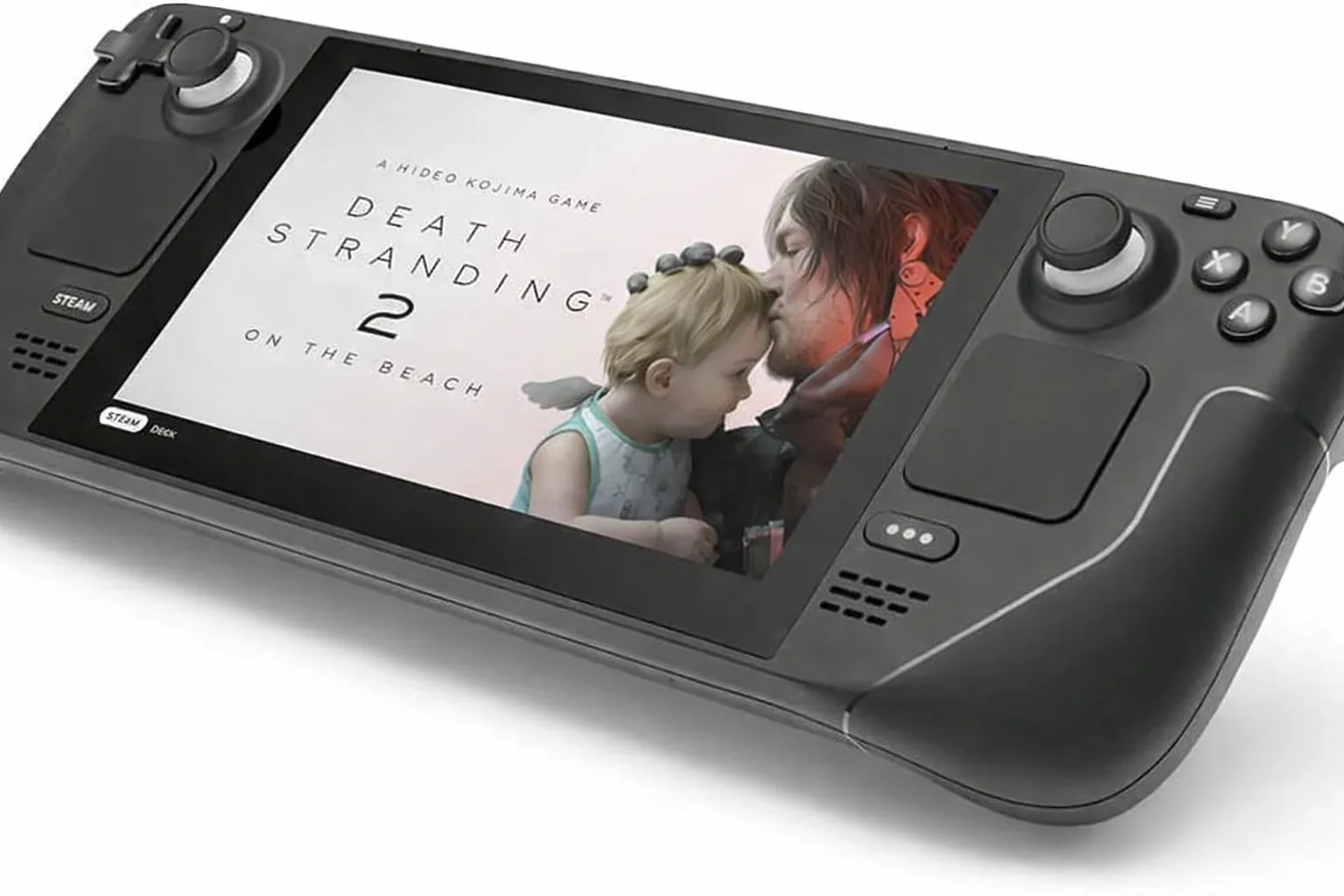
However, the pursuit of a larger display and extreme power comes with a significant trade-off in portability. Measuring 13.45 inches wide and 5.43 inches high, and weighing 3.14 lbs (1.4 kg), the Ayaneo Next 2 is considerably larger and heavier than its current-generation rivals.
Handheld Dimensions Comparison
This dramatic increase in size and weight makes us question the "handheld" designation; it feels more like a small, portable gaming laptop with integrated controls. While the large display is undeniably appealing, the sheer bulk may deter many looking for true on-the-go gaming.
On the input side, Ayaneo continues its tradition of premium controls. The Next 2 includes adjustable-torque TMR Hall-effect joysticks with ring lighting – a first for a Windows handheld, which we think is a clever and welcome addition. Hall-effect linear triggers with dual-mode trigger locks, a floating 8-way D-pad, dual smart touchpads, and four customizable rear buttons, plus additional customizable keys, provide a comprehensive control suite. New stereo front speakers are also a welcome upgrade, promising a more immersive audio experience.
Memory, Storage, and a Power Source That's Almost Too Big
The memory and storage configurations are as ambitious as the rest of the device. The Ayaneo Next 2 offers LPDDR5X RAM at 8000 MT/s in 32 GB, 64 GB, and an impressive 128 GB configurations. The 128 GB model allows for a maximum VRAM allocation of 96 GB, which, while technically impressive, seems like overkill for any current or near-future handheld gaming scenario. We suspect this top-tier RAM option is aimed more at productivity or specific professional workflows than at pure gaming. Storage options are robust, with 1 TB and 2 TB SSDs available, featuring a dual M.2 2280 interface with PCIe 5.0x4 support, ensuring extremely fast load times.
Perhaps the most talked-about feature for power users will be the internal 116 Wh battery. Ayaneo founder Arthur Zhang has confirmed this capacity contributes to "breakthroughs in battery life," a claim we are eager to independently verify given the sheer power demands of the Strix Halo APU. This capacity significantly exceeds that of most portable machines and other handhelds on the market, aiming to set it apart from competitors that might rely on external power packs. However, this massive battery size comes with a significant caveat: it exceeds the 100 Wh airline carry-on limit in the US. This means air travelers will require special airline approval paperwork, transforming what should be a portable device into one that requires pre-planning for travel – a distinct disadvantage for a product designed for mobility.
Connectivity and Software: Standard Fare with an Ayaneo Twist
For connectivity, the Ayaneo Next 2 includes two USB4 Type-C ports supporting up to 40 Gbps, charging, and DisplayPort 1.4 output. It also has a microSD card slot for expandable storage and a 3.5 mm headphone jack, thankfully preserving a crucial analog audio option. Wireless capabilities are up-to-date with Wi-Fi and Bluetooth 5.4. The device runs on Windows 11, which offers maximum compatibility with PC games, and includes Ayaneo's proprietary AYASpace software for device management and game launching. While AYASpace has improved over time, Ayaneo's software suite has historically been a point of contention for some users, and we hope the Next 2 iteration offers a more refined experience.
Pricing and Availability: A Luxury Segment Play
The Ayaneo Next 2 will initially be available in Polar Black. The early bird pricing for the initial configurations is as follows:
- Ryzen AI Max 385, 32 GB RAM, 1 TB SSD: $1799 (Retail: $1999)
- Ryzen AI Max+ 395, 64 GB RAM, 1 TB SSD: $2299 (Retail: $2699)
- Ryzen AI Max+ 395, 128 GB RAM, 1 TB SSD: $3499 (Retail: $4299)
These prices firmly place the Ayaneo Next 2 in the luxury segment of handheld gaming, particularly the top-tier configuration which ventures into high-end gaming laptop territory. Preorders are scheduled to begin this week on Indiegogo, a platform Ayaneo frequently uses, with initial shipments planned for June 2026. It's worth noting that the Ayaneo Next 2 is the third Strix Halo-based handheld to reach the market, following releases from GPD and OneXPlayer, which we think puts a bit of pressure on Ayaneo to truly stand out. Despite this, with its extreme specifications, the Ayaneo Next 2 is expected to outperform nearly every handheld gaming console currently available, offering a glimpse into the cutting edge of portable PC gaming.






Comments