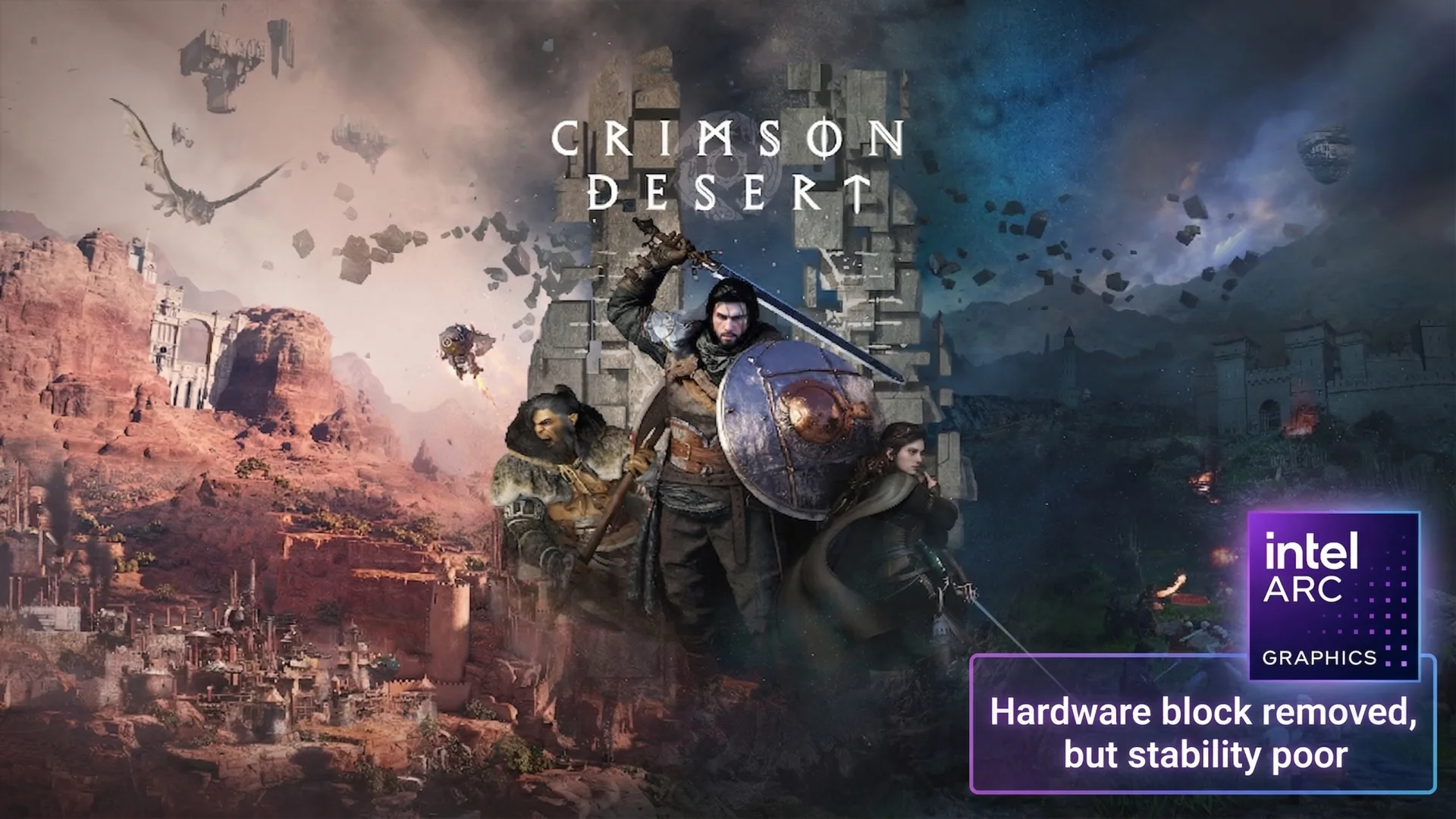
After a launch period where Intel Arc users were greeted by an outright hardware block, Pearl Abyss has finally opened the door. The developer released update v.1.00.03 today, March 23, 2026, removing the "graphics device is currently not supported" error that had effectively blacklisted Intel’s discrete and integrated GPUs from Crimson Desert.
The patch notes suggest the game is now playable, but for Arc owners, the reality remains complicated. Reports are surfacing that while the game now boots, it is nowhere near a smooth experience. Users are flagging broken rendering, performance drops, and the blue or white screen bugs that often haunt unoptimized drivers.
Pearl Abyss Reverses Stance on Intel Support
The situation around Intel support has been unusually messy for a high-profile release. Before this update, Pearl Abyss took the extreme step of recommending that Intel Arc users simply seek refunds. That stance has now been retracted, with the developer issuing an apology for the "confusion" surrounding hardware compatibility.
This change follows some pointed public comments from Intel. The chipmaker recently revealed it had offered engineering resources, early hardware, and validation support to Pearl Abyss for several years, covering everything from the original Alchemist cards to the new Battlemage discrete line and Panther Lake integrated graphics. According to Intel, these offers were initially not accepted.
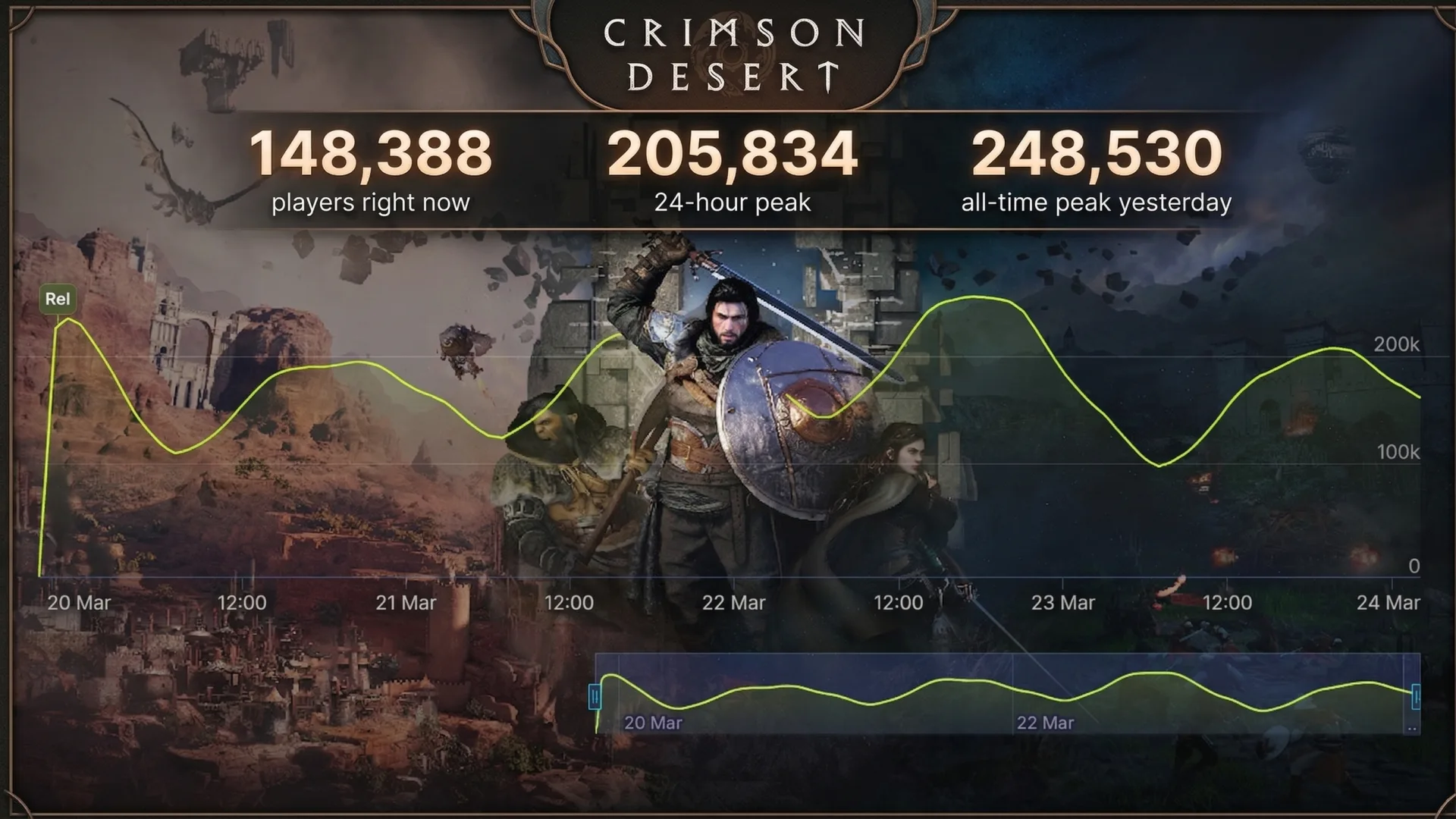
The sudden release of v.1.00.03 suggests a change in priority, likely driven by the fact that Crimson Desert has already moved over 2 million units and currently sits near the top of the Steam best-seller charts. Leaving a growing segment of the GPU market—particularly those on Lunar Lake and Panther Lake handhelds or laptops—unable to even launch the title was becoming a PR liability.
The Performance Gap: Intel vs. Nvidia and AMD
Intel users are only just getting the game to boot; meanwhile, those on Nvidia and AMD hardware are looking at a much more mature feature set. Crimson Desert was clearly built to showcase the latest from the "big two," leaving Intel’s XeSS in the shadows for now.
The contrast is particularly sharp when looking at the RTX 50 series, which uses 4x Frame Generation to push the game’s heavy visuals. Meanwhile, even users with the new Intel Arc B580 are reporting that the game remains functionally unplayable due to rendering artifacts and system crashes.
Navigating the Buggy State of Arc Support
If you have been holding off on a refund in hopes of a fix, today’s update is a step forward, but it isn’t a fix in the traditional sense. The hardware block is gone, but the engineering work required to make the game run well on Intel's architecture is clearly still in progress.
Aside from GPU issues, the community is still wrestling with some of the game's core quirks. Reviews, such as the 8/10 from GamingBolt, have been generally positive, but players are vocal about complex console controls, the lack of permanent mounts, and bugs involving dragon cooldowns and the UI.
For now, Intel users should remain cautious. Pearl Abyss has not provided an official ETA for a finished optimization update.
Current Takeaways for Intel Users:
- Check the Boot: If you already own the game, v.1.00.03 should at least let you reach the main menu.
- Watch the Clock: Steam’s two-week refund window is still your best safety net. If the rendering issues aren't resolved within that timeframe, the "retracted" refund advice from Pearl Abyss might still be the most practical path.
- Monitor Drivers: Given the history of Intel’s involvement here, a driver update from Intel will likely be just as important as the game patches themselves.


Comments