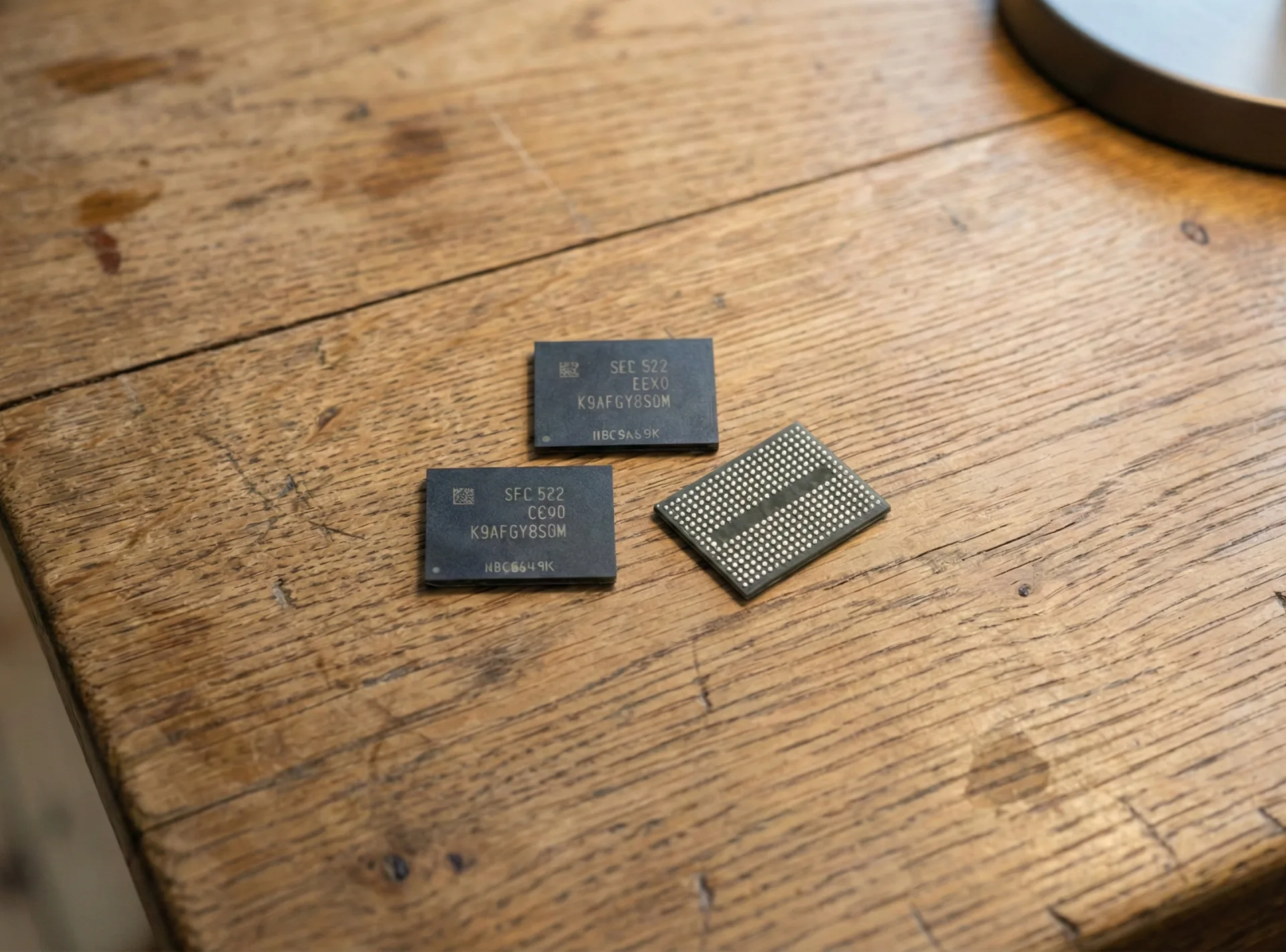
NANDageddon: Why Your Next SSD is About to Cost a Fortune
The tech world is in for a rude awakening. Major memory manufacturers, including giants like Samsung Electronics, SK Hynix, and SanDisk, are not just raising prices on NAND flash memory — they're reportedly doubling them throughout 2026. This aggressive strategy, which began kicking off in Q1 2026, signals a chilling new era of scarcity and soaring costs for everything from our smartphones and PCs to the very infrastructure powering the AI revolution.
The Memory Manufacturers' Bold Gamble: Price Hikes Hit Hard
Reports from various industry sources confirm that a dramatic price hike for NAND flash memory is now unequivocally underway. Samsung, the reigning champion of NAND manufacturing, has reportedly inked contracts for Q1 2026 with increases approaching or even exceeding an eye-watering 100%. Strategic partners such as Apple, NVIDIA, and AMD have been informed of these steep adjustments. While Samsung has pushed back on a generalized 80% increase across all its memory products, the specifics of these confidential contract negotiations hint at an even more severe, targeted escalation for key clients.
SK Hynix, the second-largest player in the market, is reportedly following suit with similar increases, mirroring Samsung's aggressive stance. Not to be outdone, SanDisk, the No. 5 player, is also on track to double the price of its high-capacity 3D NAND memory devices, particularly for enterprise-grade SSDs, in Q1 2026. Analysts at Nomura Securities suggest these increases could even surpass 100% quarter over quarter.
We're already seeing the brutal reality of these shifts in retail. The WD BLACK SN850X 2TB SSD, a drive we fondly remember finding for around $150 in summer 2025, skyrocketed to over $250 by the end of 2025 and is now listed on Amazon for a staggering $499.99. Similarly, a Samsung T7 1TB portable drive in South Korea has seen its price balloon from approximately 140,000 won to over 280,000 won in just a few months. Price tracking platforms are actively registering daily increases for numerous popular SSD units, with an average 18% increase observed in best-selling models since October 2025. This isn't just a market correction; in our view, it feels more like an orchestrated squeeze.
It's worth noting that Micron Technology, another significant player in the NAND market, has also announced memory price increases extending through 2025 and 2026, citing persistent supply constraints and accelerating demand, particularly from the AI sector. UBS analysts, for instance, forecast NAND prices to increase by approximately 40% quarter-over-quarter in Q1 2026.
The AI Gold Rush: Why Your Storage Is Paying the Price
This massive price increase isn't a random market fluctuation; it's a calculated response to a perfect storm of unmatched demand and deliberately constrained supply. The primary catalyst for this tectonic shift is the explosive growth of AI. Companies like NVIDIA, Google, and Amazon have dramatically ramped up their memory requirements for new AI chips and infrastructure. The expansion of AI infrastructure amplifies demand for high-speed storage, with high-performance NAND for enterprise storage and AI-oriented eSSDs experiencing skyrocketing demand. AI servers alone often require 8-10 times more storage than traditional servers.
Even High Bandwidth Memory (HBM), specifically HBM3E chips—crucial for AI accelerators—has seen price hikes of 20% from Samsung and SK Hynix, with deliveries expected throughout 2026. NVIDIA's Inference Context Memory Storage Platform (ICMSP), for instance, utilizes BlueField-4 DPUs equipped with 512 GB SSDs, amounting to 9.216 TB of 3D NAND per rack in its GB200 NVL72 system. This sheer scale of demand is creating immense pressure across the entire memory market, diverting resources and focus.
A Manufactured Crisis? The Supply Squeeze Conundrum
This isn't just about demand; it's also about a calculated tightening of the spigot. Memory manufacturers are actively shaping the supply picture. Following a previous period of oversupply and depressed prices (as seen in Q1 2025 where NAND prices plunged and manufacturers like Micron implemented strategic production cuts to stabilize pricing), these companies have become extremely cautious about expanding production capacity. In a move that we find difficult to overlook, some manufacturers are reportedly cutting production deliberately to maintain high prices and improve profitability.
Furthermore, equipment and wafer input have been concentrated on high-bandwidth memory (HBM) and server DRAM to cater to the AI boom, inadvertently curtailing effective NAND production capacity. This strategic shift means that while there's an urgent need for more NAND, the industry's focus is squarely elsewhere, creating a bottleneck that Nomura Securities describes as both a "short-term shortage and mid-term growth of demand driven by AI."
This strategy has already delivered significant financial gains for manufacturers. Samsung's revenues for Q4 2025 were up by over 22% to roughly $71.5 billion, and its profits for the same quarter tripled, reaching approximately $15.4 billion. These figures undeniably highlight the immediate benefits of a tighter supply and higher pricing.
Broader Implications: Everyone Pays More
The ripple effect of these price increases will be felt across the entire technology supply chain, ensuring that almost everyone, from the casual consumer to massive data centers, will feel the pinch.
- Consumers: For the average consumer, the general trend points to significantly higher prices throughout much of 2026 for everything from building a powerful PC to buying a high-end smartphone. The increased cost of NAND chips will directly raise the cost of SSDs and internal storage systems in mobile devices. In regions like Europe, any sharp increase in basic component costs is multiplied through the supply chain, further inflating retail prices. Smaller capacity SSDs (e.g., 128GB-512GB) are seeing larger percentage price increases as manufacturers prioritize higher-capacity NAND chips for data centers. Many in the PC building community are expressing dismay, with advice circulating to buy storage now rather than wait. As one PC vendor warned, they will be forced to pass these increased costs onto customers once existing inventory depletes.
- Enterprises and Data Centers: Businesses, particularly those investing heavily in AI and data infrastructure, will face considerably higher capital expenditures. The cost of enterprise SSDs and storage for data centers will climb, potentially slowing down some expansion projects or forcing budget reallocations. Enterprise SSDs are projected to face the steepest price hikes due to relentless AI-driven demand.
- Market Stability: The NAND market is described as "on the verge of collapse" due to Samsung's decisive influence. While manufacturers are currently enjoying boosted profits, such aggressive pricing can lead to long-term market instability and potentially stifle innovation if costs become prohibitive for smaller players. Samsung's co-CEO, TM Roh, acknowledged earlier in 2026 that "everything is getting more expensive" in consumer electronics, directly attributing this to the pressure on memory chips caused by AI data centers.
A Long, Expensive Road Ahead
The current memory crunch is not a fleeting phenomenon. Industry experts paint a sobering picture of a prolonged period of high prices and potential shortages. While Samsung Electronics plans a 50% HBM capacity surge in 2026, major increases in overall memory production capacity, particularly for NAND flash, are not expected until 2028 or 2029. Moreover, the CEO of Phison, a major SSD controller manufacturer, has warned that the memory shortage could last well into the next decade, potentially until 2035, if massive and sustained investments in new production facilities are not made. This is a stark warning that we believe should not be taken lightly. Micron's CFO has also affirmed that demand significantly outpaces supply, with tightness expected to persist beyond 2026.
With over 800 exabytes of NAND produced annually, the sheer volume required by modern computing, let alone the expanding AI sector, is immense. The current strategy of limiting supply while demand soars is undeniably a profitable one for memory giants in the short term. However, it raises critical questions about accessibility, innovation, and the long-term health of the global tech economy. As January 2026 draws to a close, it's clear that the price of progress in the age of AI will, for the foreseeable future, be borne by us all.





Comments