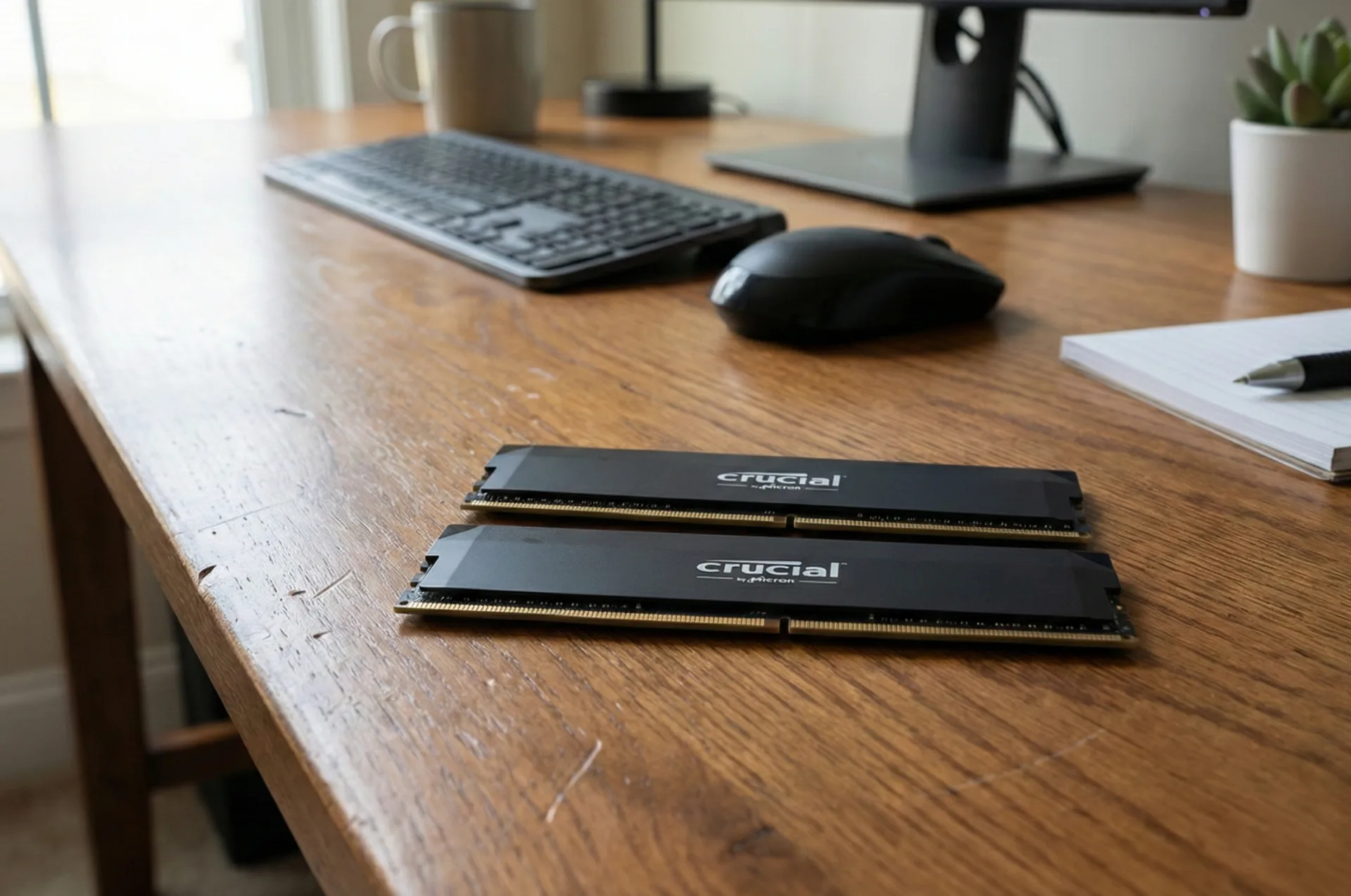
The world of computing hardware is currently navigating a period of significant turmoil, but few sectors are experiencing more dramatic upheaval than Random Access Memory (RAM). In a shocking market shift, a high-quality 64GB kit of DDR5 RAM now commands a price tag that can exceed a brand-new, M4-powered Apple MacBook Air. A brand-new MacBook Air can even be cheaper than 64GB of DDR5 RAM. This situation isn't just an inconvenience for enthusiasts; it's a clear indicator of a deeper, systemic issue impacting the entire tech industry.
Prices for 64GB DDR5 memory have surged from the low $200s in mid-2025 to well over $1,000 in early 2026, a 300% increase within a six-month span. Just a few months ago, this same amount of RAM could be acquired for under $250. Now, products like the G.SKILL Trident Z5 Neo RGB series 64GB DDR5-6000 memory kit, which once hovered around $205-$220, are listed at $599, even with "discounts" applied. One particularly alarming instance is a Corsair RGB 64GB DDR5 6000mhz CL30 kit, bought for $280 CAD in November 2024, now retailing for a staggering $1500 CAD.
The Dramatic Rise: A Snapshot
To highlight the sheer absurdity of the current market, consider these comparisons:
The Root Cause: AI's Insatiable Hunger and Production Bottlenecks
This dramatic price escalation isn't a random market fluctuation; it's a symptom of a powerful confluence of factors. The primary driver is the surging demand for memory from artificial intelligence (AI) applications. AI data centers are consuming vast quantities of DDR memory, and the high-performance GPUs used in AI often rely on High Bandwidth Memory (HBM).
Manufacturers, facing insufficient production capacity for DRAM chips, have been compelled to shift focus. They are prioritizing newer, higher-margin memory types for enterprise and server markets, including HBM, to keep pace with AI demand. This production shift means less capacity is allocated to the DDR memory used in consumer devices, making it increasingly scarce. Reports even indicate that major players like Samsung are struggling to secure enough RAM for their own internal needs due to this scarcity.
Who Gets Hit Hardest?
The immediate impact of this memory crunch is disproportionately felt by DIY PC builders. Unlike large Original Equipment Manufacturers (OEMs), individual consumers and small system integrators do not have the bargaining power to negotiate long-term contracts or maintain large inventories. This leaves them exposed to the full brunt of market volatility, leading to dramatic price increases for essential components.
While OEMs are expected to raise their prices in response to the tightening supply, we don't anticipate hikes to the same degree as seen in the DIY segment, thanks to their existing supply agreements. However, the ripple effect extends beyond standalone RAM modules; the shortages are already driving up the costs of graphics cards and other DRAM-dependent devices, squeezing the budgets of anyone looking to build or upgrade a PC.
Apple: A Temporary Sanctuary?
In this chaotic market, Apple products appear to be an anomaly. Despite the widespread RAM inflation, prices for Apple devices, including the M4 MacBook Air (which saw a price cut in 2025 with the M4 model's arrival) and the M5 iPad Pro, have remained relatively stable.
This apparent immunity stems from Apple's considerable market power. The company negotiates massive, long-term contracts for components, often locking in prices months or even years in advance. With high profit margins, particularly on high-end Macs (estimated 20-30%), Apple has a cushion to absorb some cost increases without immediately passing them on to consumers. In fact, Apple's notoriously high RAM upgrade costs, which once seemed excessive (e.g., $200 for an 8GB upgrade that might cost $20 in raw materials), now appear almost "normal" compared to the current open market prices for DDR5.
However, we believe this stability is precarious. Industry observers suggest Apple is "best positioned to weather the next few quarters," but this insulation may not last indefinitely. Industry analysts predict memory prices will increase by 90-95% by the end of Q1 2026 compared to Q4 2025. If this trend continues through the fall 2026 product cycle, Apple's long-term supply agreements could lose their weight. Should this happen, Apple would likely be forced to raise memory prices on specific SKUs to protect its margins, potentially with the M6 Mac family, which could debut as early as summer 2026. We've seen Apple hike prices mid-cycle before, notably with the G4 iMac in March 2002, citing "significant increases in component costs for memory and LCD flat-panel displays." History, as they say, often rhymes.
The Broader Implications and Bleak Outlook
The DDR5 price surge is more than a blip; it reflects a fundamental shift in the memory market driven by the profound power of AI. The demand is so intense that experts predict a return to stable, "normal" RAM pricing is a considerable distance away, with some estimates suggesting shortages could persist until 2028. Further price increases are expected across the board for anything with DRAM inside, beginning in 2026.
The consumer is caught in the crossfire between growing AI requirements and insufficient manufacturing capabilities. What was once a relatively minor component cost is now becoming a major barrier for PC builders and a lurking threat for OEM device purchasers.
TTEK2 Verdict
The current state of DDR5 RAM pricing is nothing short of alarming. For years, memory has been a relatively predictable expense, often dropping in price over time. Now, driven by the insatiable demands of AI and a lagging production infrastructure, we're witnessing a fundamental change where a single memory module can eclipse the cost of an entire functional laptop. This highlights a fragile supply chain vulnerable to sudden, massive demand shocks.
For DIY PC builders, our practical takeaway is clear: if you need a high-capacity DDR5 RAM kit, the evidence suggests buying sooner rather than later. Prices are "still on the up," and experts recommend securing components like GPUs and RAM now before further 2026 increases. For Apple users, while you might feel shielded for the moment, we advise caution. If you are considering a Mac with a higher memory configuration, purchasing it before potential M6 Mac family launches or mid-cycle price adjustments could save you money. The notion that "Apple's previously negotiated supply agreements might not carry weight throughout the rest of the year" is a clear warning sign that cannot be ignored. The memory market is in a tumultuous state, and consumers must adapt their buying strategies to navigate this expensive new reality.




Comments