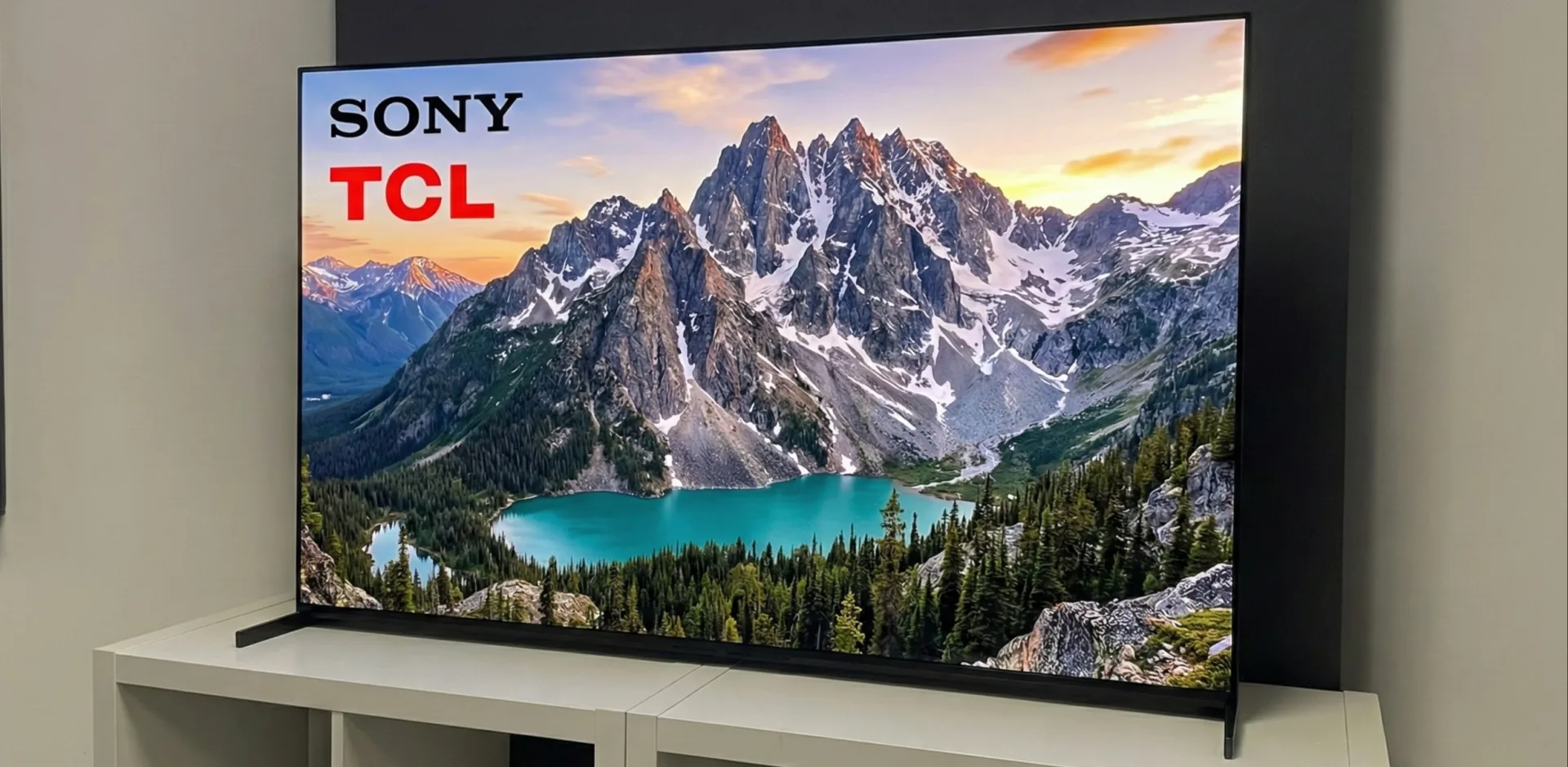
Sony's Risky Bet: Ceding Bravia Control to TCL
In a move that caught many off guard, Sony Corporation has formalized a strategic partnership with TCL Electronics Holdings Limited, effectively handing over majority operational leadership of its television and home audio equipment divisions. This isn't just a collaboration; it's a significant shift, with Chinese electronics giant TCL taking a 51% majority stake in a newly formed joint venture, while Sony retains 49%. The Memorandum of Understanding (MOU) was signed on January 20, 2026, with definitive binding agreements expected by the end of March 2026 and operations slated to commence in April 2027, pending regulatory approvals.
For TTEK2, this announcement feels less like a conventional partnership and more like a soft exit for Sony from a segment it once dominated. As some industry observers note, it appears Sony is effectively "renting out the Bravia brand" while stepping back from the more challenging aspects of the business. We're witnessing a historic pioneer, a brand synonymous with television innovation, cede control in a hardware market where it has struggled with declining market share and profitability. Conversely, for TCL, already the world's second-largest TV shipper, this is a clear opportunity to elevate its premium market presence and capitalize on Sony's globally recognized brand value.
The New Power Structure: What TCL's Majority Stake Means
The joint venture will oversee the entire lifecycle of Sony's Bravia TVs and home audio equipment, from product development and design to manufacturing, sales, logistics, and customer service. Critically, products will continue to bear the iconic 'Sony' and 'BRAVIA' branding.
Key aspects of this surprising new venture include:
- Ownership Split: TCL Electronics will hold a 51% majority stake, with Sony Corporation holding 49%.
- Global Reach: The venture is designed for global operations, leveraging Sony's brand and existing operational expertise, including supply chain management.
- Technological Fusion: Future Sony Bravia TVs are promised to combine TCL's display technology with Sony's high-quality picture and audio technology.
- Strategic Direction: The joint announcement emphasizes a focus on bigger TVs, higher-resolution displays, and advanced smart features, aiming to "create new customer value."
- TCL's Core Contributions: TCL is expected to contribute its global scale advantages, vast industrial footprint, end-to-end cost efficiency, and vertical supply chain strength.
While the idea of combining Sony's legendary image processing and audio engineering with TCL's display technology and manufacturing scale sounds promising on paper, we remain cautiously optimistic. The claim of "creating new customer value" feels a bit like marketing speak without more concrete details. The real test will be whether this fusion can deliver superior products at more competitive price points without diluting the premium experience Sony buyers expect.
Sony's Long Retreat from Hardware
This partnership is a stark reflection of Sony's ongoing strategy to reduce its exposure to lower-margin hardware businesses. The Japanese conglomerate has seen its global market share in televisions diminish over the years, with TV sales for the fiscal year ending March 2025 reportedly falling 9.6% from the previous year, reaching 564.1 billion yen ($3.6 billion).
Sony has been steadily divesting or scaling back other hardware ventures over the past decade. This includes its VAIO PC business in 2014, and more recently, its involvement in smartphones, portable music players, and Blu-ray media production in 2025. The company is increasingly pivoting its focus towards its intellectual property (IP) businesses, such as anime and movies, where it sees stronger growth and profitability. This strategic shift has been evident for some time; as one analyst pointed out, the moment Sony exited panel manufacturing, it signaled a retreat from fighting at scale.
Historically, Sony has been a trailblazer in television technology. We recall the world's first direct-view portable transistor TV in 1960 and the global success of its Trinitron cathode-ray tubes in 1968. Sony also introduced the world's first OLED television in 2007 and pioneered advancements in LED backlighting and quantum dot technology. However, it's been some time since Sony manufactured its own LCD and OLED panels, relying instead on outside suppliers. This dependence on third-party panels has been a critical disadvantage against vertically integrated competitors.
TCL's Ascent: From Budget to Global Powerhouse
Headquartered in Huizhou, China, TCL Electronics has rapidly cemented its position as a dominant force in the global television market, ranking second worldwide in TV shipments. In 2024, TCL shipped an impressive 29 million televisions, capturing approximately 14% of the global market share, according to its 2024 financial report.
TCL has masterfully transformed its brand perception, moving beyond its initial reputation for budget-friendly, Roku-embedded smart TVs to become a formidable premium competitor, directly challenging established giants like Samsung and LG. A key reason for TCL's success lies in its vertical integration; it manufactures its own display panels through its arm, CSOT (China Star Optoelectronics Technology). This ownership allows TCL to significantly cut costs, as display panels can account for 60-70% of a TV's total price. This vertical integration gives them a significant edge in controlling costs and technological development that Sony, relying on external suppliers, simply cannot match. TCL further strengthened its market position by acquiring LED technology patents from Samsung and taking over a Samsung plant in China in 2022.
The Bleeding Edge: TV Market Woes and Investor Reactions
The broader television industry continues to contend with decreasing margins, intense competition, the proliferation of cheaper devices, and consumers extending the lifespan of their TVs before replacement. We've seen several other Japanese electronics companies, including Toshiba and Sharp, either exit or drastically scale back their television businesses, with Panasonic also maintaining a significantly reduced presence. This trend underscores the brutal economics of the modern display manufacturing market.
Following the announcement, shares of TCL Electronics surged more than 16% in Hong Kong trading, marking its biggest intraday gain since April 2025. Conversely, Sony's stock dipped 0.9% in Tokyo on Wednesday. This market reaction clearly indicates investor sentiment: confidence in TCL's increased scale and premium brand access, and a more neutral, perhaps even wary, outlook for Sony's strategy.
The global television market itself, while projected to grow from an estimated USD 63.89 billion in 2025 to USD 93.46 billion by 2033, faces challenges like security vulnerabilities in smart TVs and content piracy. Yet, the market is also driven by increased consumer spending on home entertainment and the rising demand for smart TVs with advanced display and connectivity features, with the smart TV segment accounting for 83.37% of the market in 2025.
The Elephant in the Living Room: What it Means for Your Next Bravia
While the joint venture promises to blend the strengths of both companies, we at TTEK2 see potential implications for the consumer experience that demand scrutiny. Rick Ellis, founder and managing editor at AllYourScreens.com, highlighted a significant difference in current smart TV offerings: "TCL-branded smart televisions are notoriously filled with promotional content, including recommended programming and product advertising. This can't be disabled on current TCL sets, though users can limit some personalization features." Ellis contrasted this with Sony's existing approach, noting that while Sony-branded smart TVs have some similar features, "they tend to be a lot less intrusive."
This is where our skepticism firmly plants its flag. TCL is known for leveraging a "data-subsidy model" where advertising and data collection contribute significantly to their profits, making hardware more affordable. Texas Attorney General Ken Paxton has even expressed concerns about TCL and Hisense's use of Automated Content Recognition (ACR) technology, which collects user viewing data every 500 milliseconds and transmits it to servers, raising privacy alarms. There have also been past security vulnerabilities identified in some TCL Android TV models.
Future Sony Bravia products developed under this new joint venture will undoubtedly integrate TCL's underlying display technology, and we have serious concerns this could influence the smart TV platform experience. Will Sony's historically less intrusive Google TV interface be replaced or heavily augmented by TCL's ad-heavy approach? While current Sony Bravia models offer a "Basic TV mode" that can disable Wi-Fi, the Google Play Store, and personalized tracking, effectively turning the smart TV into a "television" again, it remains to be seen if this option will persist or be equally effective under TCL's operational leadership. Consumers who value their privacy and a clean, ad-free interface should pay close attention to the smart TV platforms on new Bravia models once the joint venture fully commences operations in April 2027. We hope the "Sony" branding will mean a continued commitment to a less cluttered user experience, but history suggests that when a company focused on scale and cost efficiency takes the reins, user data monetization often follows.



Comments