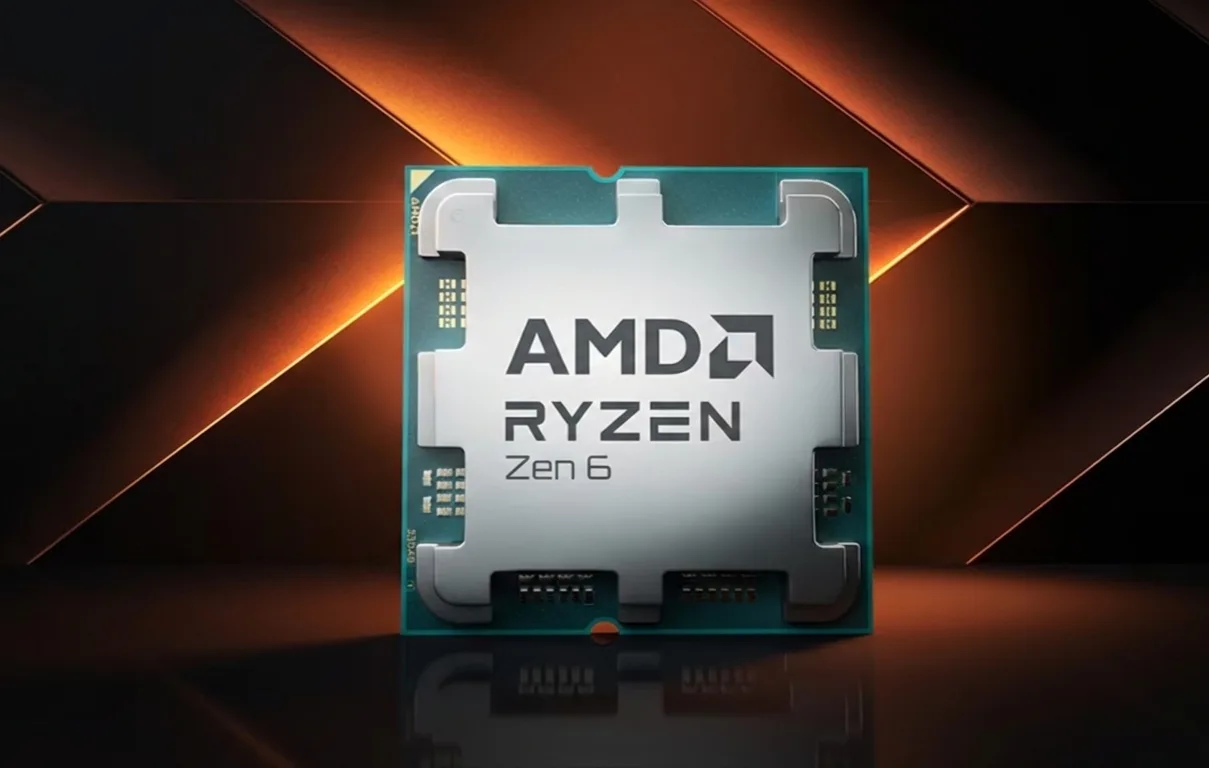
In a bold declaration of unity, AMD's forthcoming Zen 6 CPUs are set to integrate Intel's Flexible Return and Event Delivery (FRED) interrupt handling mechanism. This isn't just a minor tweak; it's a foundational reshaping of how CPUs manage system events, aiming to drag the x86 architecture, steeped in decades of accumulated technical debt, into the modern era. We view this as a pragmatic embrace of a cleaner, shared foundation, promising performance uplift and enhanced stability, though we can't help but wonder if "genuine industry-wide cooperation" is perhaps too rosy a term for a move that seems born of necessity.
The decision for AMD to implement FRED on its Zen 6 chips, anticipated in late 2026, signals a commitment to a unified x86 future. This represents a rare moment where competitors agree on a critical architectural shift, suggesting the stakes are high enough to overcome individual ambitions.
Retiring a Relic: The IDT's Four-Decade Reign Ends
For over four decades, the Interrupt Descriptor Table (IDT) has been the unquestioned monarch of x86 interrupt management. Originating with the Intel 80286 processor in 1982, the IDT has dutifully managed every system event, from mundane mouse clicks to critical network data streams. Yet, in our view, this venerable system has transformed from a loyal servant into a glaring bottleneck in the demanding landscape of modern computing.
The IDT's multi-step, manually intensive approach to interrupt management feels like an artifact from a bygone era. While it performed admirably for its time, its inherent complexities are a drain on CPU cycles and introduce latency, particularly when systems are under heavy load. As our computing demands escalate, from high-refresh-rate gaming to complex virtualization, the need for a more efficient and streamlined interrupt handling mechanism became not just apparent, but critical.
Unpacking FRED: The Atomic Advantage
Intel's Flexible Return and Event Delivery (FRED) is poised to completely supersede the IDT, rethinking interrupt processing from the ground up. The 'F' in FRED, once signifying 'Fast', now more accurately reflects its 'Flexible' and adaptable design. So, what makes FRED such a big deal, and why should we care?
At its core, FRED tackles the IDT's inefficiencies head-on. Below, we break down the key differences:
FRED's atomic operations mean interrupts are handled in a single, indivisible action, drastically cutting down on the overhead of the IDT's multi-step approach. Additionally, its "one-shot instructions" ensure clean transitions between kernel (ring 0) and application (ring 3) code, simplifying privilege level management that has historically been notoriously complex.
We expect a notable performance uplift, particularly in scenarios rich with event handling such as large network transfers, demanding gaming sessions, intricate audio processing, and especially virtualization workloads where frequent context switching is paramount. However, we must caution against immediate expectations. The full benefits of FRED may not materialize instantly; real-world gains will likely be most visible in software specifically compiled to support FRED, rather than magically accelerating existing applications. This means a transition period where its impact might feel incremental, a point we believe warrants a healthy dose of skepticism regarding overnight performance miracles.
A Unified x86: Cooperation, or Just Good Business?
AMD's adoption of FRED is a direct outcome of the x86 Ecosystem Advisory Group's collaborative efforts. This group, formed in October 2024 with both AMD and Intel as members, was established to ensure a unified instruction set architecture (ISA). AMD's agreement, reached in October 2025, a year after the group's inception, certainly signals a strong commitment to this shared vision.
While the rhetoric speaks of a "mature shift for the industry" and preventing ecosystem fragmentation, we can't help but view this as a shrewd business decision for both parties. In an increasingly competitive landscape, standardizing foundational elements like interrupt handling benefits everyone by simplifying development and reducing fragmentation risks that could otherwise leave the x86 architecture vulnerable to alternatives like ARM. This move ensures a consistent path for modernization, with AMD's Zen 6, and Intel's upcoming Panther Lake (a mobile CPU) and Nova Lake lineups, expected to be among the first production chips to support this critical advancement.
AMD's Retreat: Abandoning SEE for the FRED Standard
Before FRED entered the picture, AMD had developed its own solution to the IDT's limitations: Supervisor Entry Extensions (SEE). This was a viable workaround, designed to minimize changes to legacy software. This approach stood in stark contrast to Intel's FRED, which Linus Torvalds famously lauded for its "clean-room solution" that "gets rid of legacy cruft entirely." Torvalds reportedly further emphasized that FRED introduces an "entirely new model" for interrupt handling, while AMD's SEE was "meant to explicitly interface with existing code."
This distinction highlights a fundamental philosophical difference: SEE represented a patch-up job, whereas FRED proposed a complete rebuild. Ultimately, the industry consensus, we believe, favored Intel's more radical, full-scale FRED replacement, recognizing its long-term advantages for the x86-64 architecture's survival and its potential for improving exception handling and performance. AMD's decision to pivot to FRED, despite having invested in SEE, is a powerful demonstration of their commitment to this unified vision. This wasn't an easy choice, but a necessary one to ensure architectural harmony.
Here's how FRED and SEE stack up:
The Software Challenge: Paving the Way for FRED
The arrival of FRED-enabled CPUs naturally dictates corresponding updates in low-level software. Fortunately, this groundwork is already underway. The Linux kernel has included provisional support for FRED since version 6.9, and we anticipate future versions of both desktop and server Windows will also enable the feature. It's crucial for users to understand that FRED is an architectural concern primarily for operating systems and drivers; it won't directly impact applications. Instead, applications will benefit indirectly from the underlying system improvements—a subtle but important distinction.
AMD has proactively released documents, such as '69191-PUB', on its website, providing developers with the essential technical information to prepare for FRED's widespread adoption.
As we look toward the release of Zen 6 and other next-generation processors later in 2026, the industry is on the verge of a significant modernization. The unified adoption of FRED is a potent statement about collaboration—or perhaps, intelligent self-preservation—and the sustained vitality of the x86 architecture. By replacing a four-decade-old relic with a flexible, high-performance mechanism, AMD and Intel are collectively enabling faster, more efficient computing experiences, ensuring the x86 platform remains competitive for the foreseeable future.




Comments