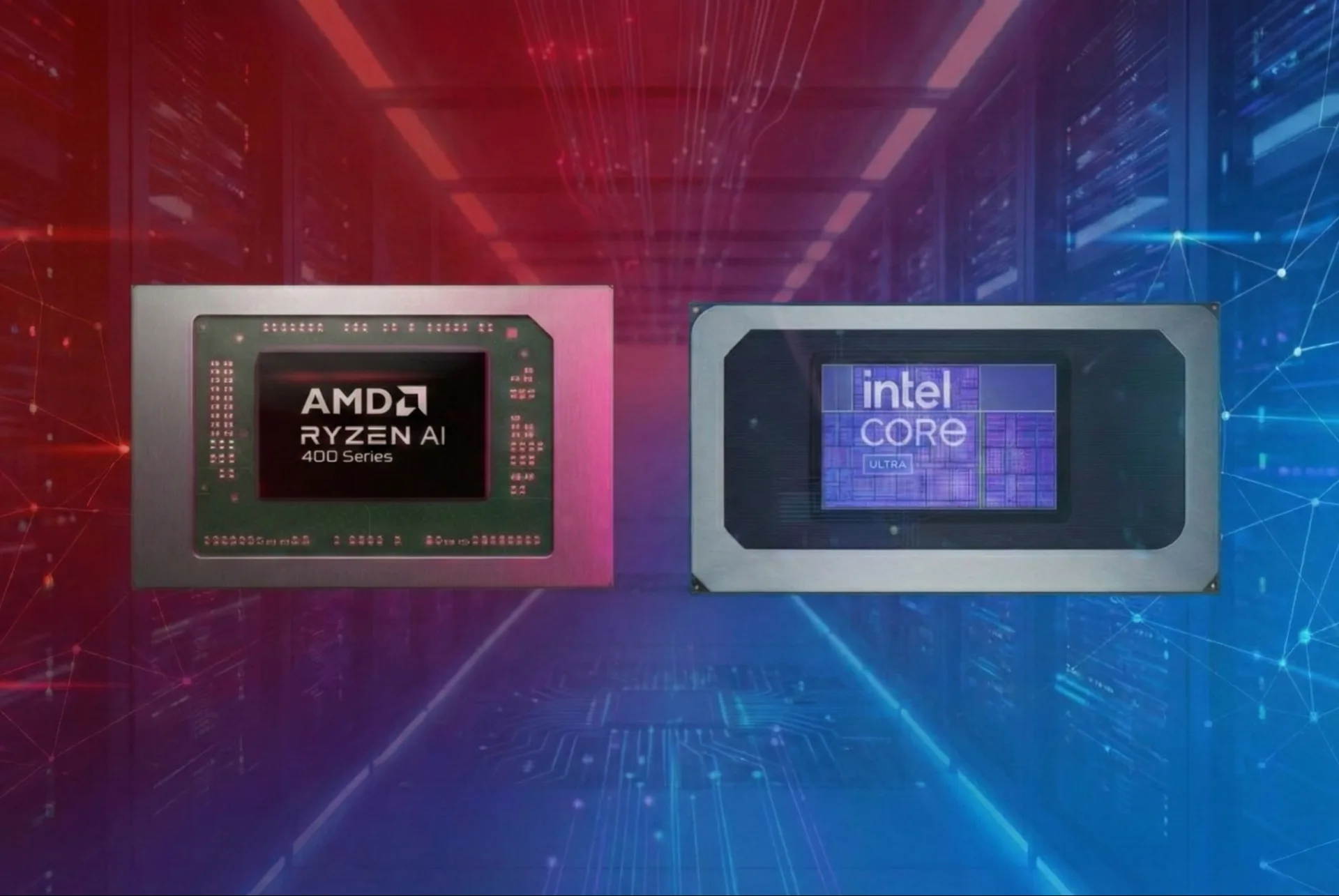
The dust has barely settled from CES 2026, but the battle for laptop supremacy, particularly in the realm of integrated graphics, is already reaching a fever pitch. Intel, fresh off its Panther Lake (Core Ultra Series 3) debut, declared a new era of performance and efficiency. However, AMD was quick to launch a direct and unusually pointed counter-attack, asserting that its Ryzen APUs are "still faster" and that its upcoming high-end chips will "kill" Intel's latest. This isn't just a strategic clash; it carries deeper implications for the future of computing, especially in the growing AI PC and handheld markets, where integrated graphics are becoming increasingly critical.
Intel's Panther Lake Roars: Bold Claims Meet Skepticism
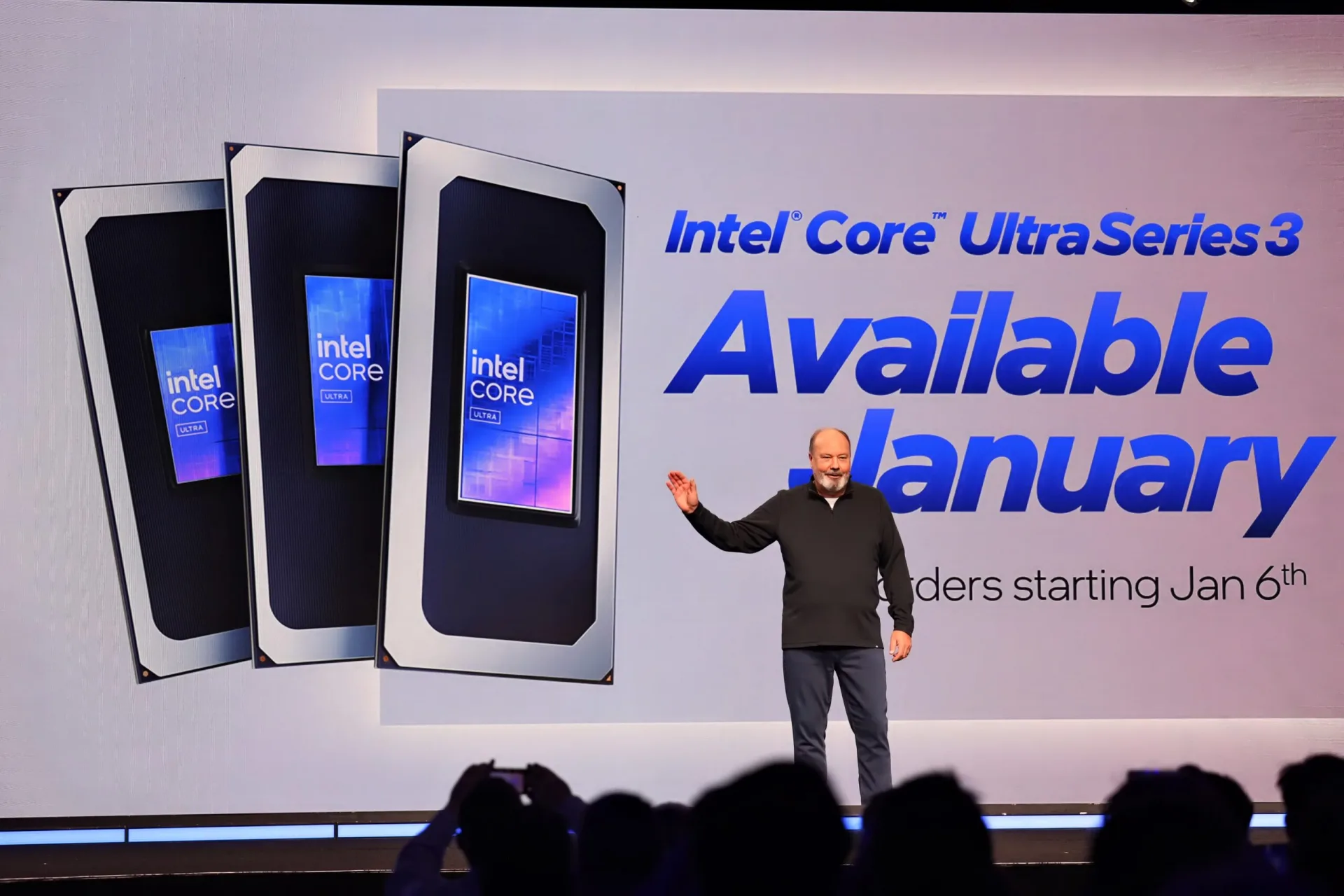
Intel rolled out Panther Lake, specifically the Core Ultra X9 388H and Core Ultra Series 3, at CES 2026 with considerable fanfare. This new generation of chips is undoubtedly critical for Intel, following recent disappointments with Meteor Lake and Arrow Lake, and a rocky period with Raptor Lake's stability issues that even plagued some users a year later. Built on the advanced Intel 18A process node, featuring gate-all-around transistors and backside power delivery, Panther Lake represents a significant technological investment, and in our view, a clear effort by Intel to regain lost ground and market confidence.
Intel's message was clear: Panther Lake is designed for a stronger push into efficient laptops, promising big improvements in integrated graphics. Key claims included:
- Significant Performance Leaps: Intel reports its Core Ultra Series 3 chips are up to 77% faster in gaming performance than Lunar Lake. We find this impressive if true, signaling a meaningful generational uplift.
- Direct AMD Confrontation: Intel claims an 82% performance bump over AMD Ryzen AI 9 HX 370 with native rendering and 73% with 2x upscaling. These are aggressive figures, directly challenging AMD's perceived lead.
- Gaming Prowess: The Core Ultra X9 388H reportedly achieved 28 FPS in Cyberpunk 2077 at 1080p 'Ultra' with ray-traced shadows and reflections enabled, a claim Digital Foundry reported. This is purportedly twice as fast as AMD's Strix Point Ryzen AI 9 HX 370 (Radeon 890M) under the same demanding settings. However, other CES demos showed Cyberpunk 2077 running at over 80 FPS with XeSS upscaling and high settings, suggesting Intel is keen to highlight best-case scenarios.
- Discrete GPU Parity: Intel even suggested its integrated Xe3 Arc B390 graphics are comparable to a discrete AMD Radeon RX 6600 GPU, scoring 27 FPS in Cyberpunk 2077 with specific settings.
- Upscaling Advantage: With XeSS3 multi-frame generation upscaling technology, supported by Cyberpunk 2077 from day one, Intel claims frame rates can increase by approximately 3x compared to XeSS2, potentially surpassing NVIDIA's DLSS with the RTX 4050, as XeSS3 supports multi-frame generation, unlike the RTX 4050.
- Efficiency and Architecture: Utilizing LPE cores and a chiplet design, Panther Lake is touted as more efficient than Lunar Lake, with X-branded Core Ultra 7 and 9 trims featuring Intel's fastest integrated graphics to date. These are already being adopted in systems like Dell XPS laptops.
These bold statements positioned Panther Lake as a serious contender, aiming to redefine expectations for integrated graphics performance in the laptop market. Community reactions have been mixed but generally positive about the potential for integrated graphics, though many echo our sentiment that independent reviews are crucial.
AMD's Blistering Counter: "Ryzen APUs Are Still Faster"
AMD's response to Intel's CES barrage was swift, direct, and unusually aggressive, reflecting the high stakes. Rahul Tikoo, AMD's Senior Vice President and General Manager of the Client Product Group, minced no words, stating that "Strix Halo or Ryzen AI Max will kill it" and that Intel's comparison was "not even a fair fight". We see this as a clear sign that AMD feels genuinely threatened, or perhaps confident enough to directly challenge Intel's narrative head-on.
AMD quickly released a four-page "Positioning vs. Intel Panther Lake" slide deck, directly refuting Intel's narrative. Key points from AMD's counter-claims include:
- Unfazed by Panther Lake: AMD maintains its Ryzen APUs are "still faster" than Intel Panther Lake.
- Graphics Superiority: Specifically, AMD claims its Ryzen AI Max 395+ offers 37% faster graphics performance than Intel's Core Ultra X9 388H, while also offering twice the processing threads.
- Internal Wins: AMD's internal competition slides show their top-end chips winning in most notebook stack tiers, with only one tier offering similar performance.
- Questioning Intel's Benchmarks: Tikoo alleged that Intel's benchmark comparisons for Panther Lake were against "lower-end and older Ryzen chips," specifically "their highest-end to our midpoint," suggesting a deliberate imbalance in the comparison.
- Efficiency Debunked: AMD refutes Intel's efficiency narrative regarding Lunar Lake, arguing that Intel's own data shows little to no advantage in power efficiency and battery life for the Core i7 Lunar Lake in DC Mode.
- Pricing and Handhelds: AMD also hinted at a high price point for Panther Lake and claimed it has "too much baggage" for purpose-designed handheld PC use, where AMD believes its dedicated chips have a higher chance of success by prioritizing graphics performance. This touches on a growing segment where AMD has historically performed well.
This direct rebuttal highlights the intense rivalry and the high stakes involved in dominating the critical laptop and AI PC segments.
Beyond the Benches: Deconstructing the Marketing Melee
While the claims from both sides paint a picture of impressive performance, a deeper analysis reveals a complex field of marketing tactics and unverified assertions. As of January 23, 2026, no independent reviews of Intel's Panther Lake platform are available, making it impossible to verify the claims from either company. This crucial lack of third-party validation casts a shadow of skepticism over both narratives, and we urge consumers to await objective testing before making purchasing decisions.
A primary point of contention lies in the "apples-to-apples" comparison, or lack thereof. AMD's bold claim of 37% faster graphics for the Ryzen AI Max 395+ over Intel's Core Ultra X9 388H comes with a significant caveat: the Ryzen AI Max series operates within an 80-120W TDP range. This is a much higher power envelope than typical mobile Core Ultra parts, which often operate in the 25-30W range, suggesting the comparison might not be entirely fair in terms of power efficiency or target form factors. Reddit users have also questioned the fairness of comparing a likely 120W CPU to an Intel part that may operate at a significantly lower TDP, such as 25W.
Furthermore, both companies have a history of employing confusing marketing tactics. Intel's latest claims echo past strategies, and its criticism of AMD's "ancient silicon" (referring to some Ryzen Z2 series chips) seems hypocritical given Intel's own historical use of refreshes and similarly confusing naming schemes, like the "14th Gen" that was more of a 13th Gen refresh. Conversely, AMD's own naming conventions, particularly across its Ryzen Z2 series and the multiple 300/400 series refreshes, have "muddied the waters," making it challenging for consumers to discern new hardware from minor updates. We find both companies equally guilty of obscuring the true generational leaps through opaque branding.
The discussion around specific gaming benchmarks like Cyberpunk 2077 also highlights the need for independent verification. While Intel claims 28 FPS at Ultra RT and double the performance of AMD's Strix Point Ryzen AI 9 HX 370, AMD's Rahul Tikoo suggests these comparisons were against AMD's "midpoint" chips, not its highest-end offerings. Intel's reference platform for Panther Lake also reportedly used LPDDR5X-9000 RAM, leading to skepticism among users about whether OEMs will actually implement such high-spec, potentially costly memory configurations in retail laptops. This is a valid concern, as component costs can significantly impact the final product's price and availability.
Ultimately, the validity of these performance comparisons will heavily depend on the final price point of Panther Lake and how it stacks up against comparable AMD offerings in real-world systems.
AMD's Integrated Graphics Blueprint: A Stack of Next-Gen APUs
AMD's current defiance stems not just from its existing Ryzen AI Max series (Strix Halo), which saw updated 8-core and 12-core models with 40CU RDNA3+ iGPUs at CES 2026, but also from a strong future roadmap. While the Ryzen AI Max series (80-120W) has seen limited adoption due to its high power and presumably high cost, AMD is not standing still.
The Ryzen AI 400 series (Gorgon Point), which launched in early January 2026, is a key part of AMD's strategy. This minor refresh of Strix Point will feature Zen 5 CPU cores, RDNA 3.5 GPU cores, and XDNA 2 NPU cores, built on TSMC's 4nm node. It promises increased frequencies, memory support, and up to 60 TOPS of NPU performance, unlocking 3 GHz clocks on RDNA3.5 iGPUs. AMD anticipates Gorgon Point to lead processing and graphics in its tiers. Importantly, desktop AM5 versions of the Ryzen AI 400 and PRO 400 APUs are confirmed, building on the success of the Ryzen 8000G series.
Beyond Gorgon Point, AMD is also preparing "Gorgon Halo" (Ryzen AI Max 400), a refresh of Strix Halo, expected to feature even higher CPU and iGPU clocks, following the same refresh strategy as Gorgon Point. This continuous pipeline of APUs, built on RDNA 3.5 and Zen 5 architectures, demonstrates AMD's commitment to integrated graphics leadership.
For the handheld market, AMD asserts its purpose-designed chips have a higher chance of success than general mobile silicon, emphasizing that handhelds prioritize high graphics performance. While Intel's Nish Neelalojan critiques AMD for "selling ancient silicon" in some of its Ryzen Z2 series, AMD's latest Z2 and Z2 Extreme are considered strong mobile chips, and the company is actively refining its product stack.
What This Market Tug-of-War Means for Consumers
This aggressive back-and-forth between AMD and Intel, rather than signaling confusion, is a strong indicator of a fiercely competitive market. Increased competition is almost always beneficial for consumers, driving innovation, performance gains, and potentially better pricing. Both companies are investing heavily in new process nodes (Intel 18A, TSMC N4) and architectures (Zen 5, RDNA 3.5, Xe3 Arc B390) to push the boundaries of integrated graphics and AI NPU performance.
The focus on integrated graphics capable of running demanding titles like Cyberpunk 2077 at respectable frame rates, even with upscaling technologies like XeSS3, is a sweeping shift. It means thinner, lighter, and more power-efficient laptops can now offer a genuinely capable gaming and content creation experience without the need for a discrete GPU. The rapid advancements in NPU performance are also enabling a new generation of AI-accelerated applications on the PC.
For now, the definitive winner remains unclear. All eyes will be on the independent reviews of Intel's Panther Lake as it becomes available later this month, and on AMD's upcoming Gorgon Point and Gorgon Halo chips. Pricing, actual OEM adoption of high-spec components, and real-world performance in diverse workloads will ultimately determine which company delivers on its promises. Until then, the integrated graphics gauntlet has been thrown, and the industry is poised for an exciting year ahead.










Comments