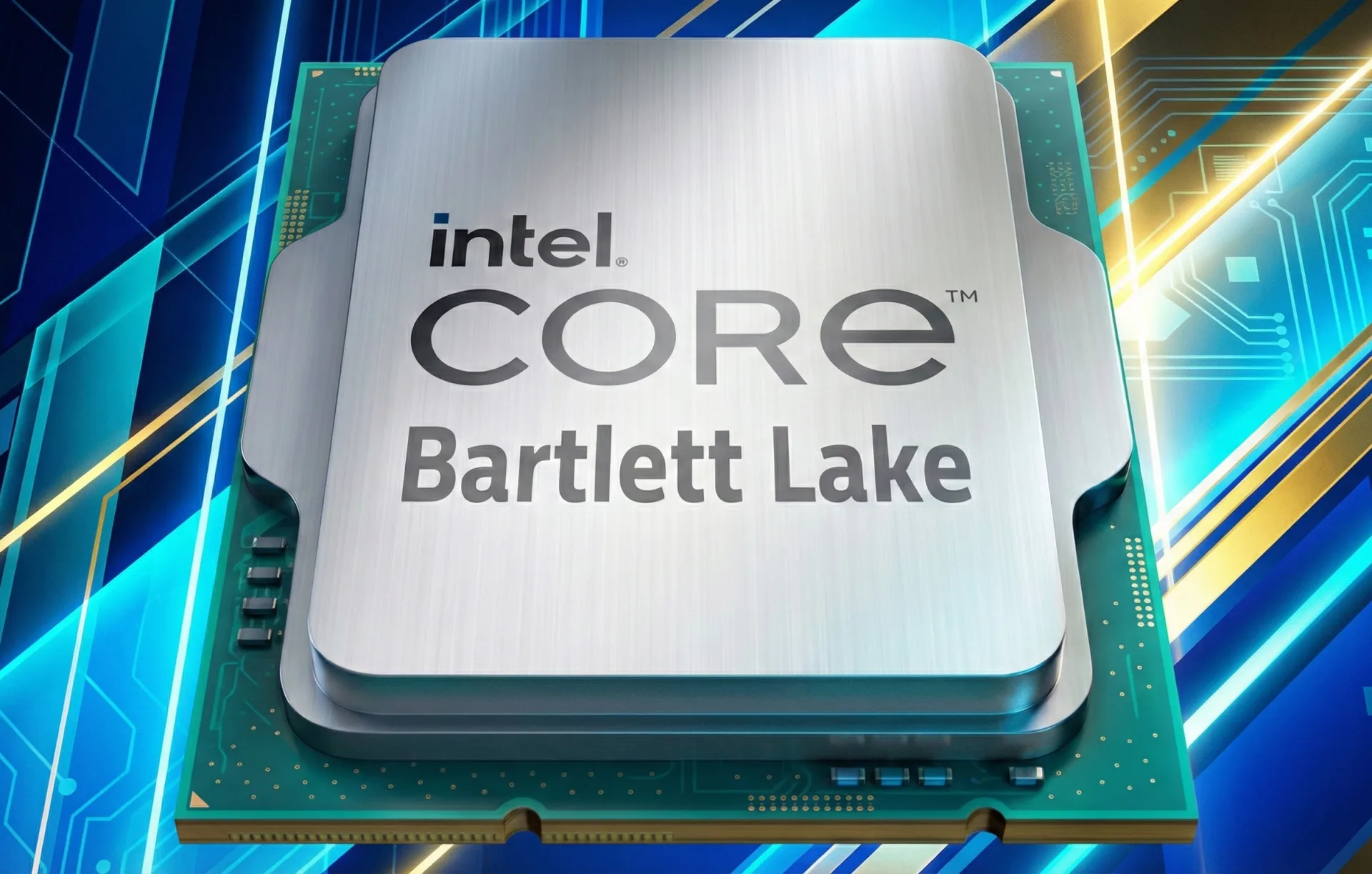
For years, a specific subset of PC enthusiasts has been shouting into the void for one thing: an Intel processor with more than eight Performance cores and zero Efficiency cores. The argument is simple. While Intel's hybrid architecture works for multitasking, it introduces latency and scheduling jitter that can irritate high-end gamers and professional users.
Leaks surrounding Bartlett Lake-S, now identified as the Intel Core 200E series, show that Intel finally built that exact chip. But there is a massive catch. Unless you are running a high-frequency trading floor or an automated factory line, you probably won't be able to buy one.
The Monolithic Unicorn: 12 P-Cores on LGA-1700
The Core 200E series is a peculiar development. The mainstream market has moved on to the LGA-1851 socket and Arrow Lake, but Intel is providing one last gasp of life for the LGA-1700 platform. This is no gift to the DIY community; it is a specialized tool for the Network and Edge (NEX) group.
The lineup centerpiece is the Core 9 273PQE, a 12-core, 24-thread monster that ditches the Gracemont E-cores entirely. It uses a monolithic design based on the Raptor Cove architecture. This development signals Intel’s admission that for deterministic performance—where every microsecond of latency matters—the hybrid approach is still a liability.
Why Deterministic Performance Still Rules the Edge
Intel is positioning these P-core-only models for medical imaging, industrial robot control, and high-frequency trading. In these fields, a thread moving from a P-core to an E-core causes more than a minor stutter in a video game; it results in a failed surgery or a million-dollar loss.
By removing the E-cores, Intel eliminates the need for the Thread Director to make complex scheduling decisions. It provides pure, raw, predictable power. The LGA-1700 socket finally receives a 12-core design where every core is a heavy hitter. Enthusiasts hoped this silicon would arrive with the 14th Gen Raptor Lake Refresh, but Intel reserved it for the industrial sector where reliability trumps marketing metrics.
The Artificial Barriers Guarding Bartlett Lake
Scouting eBay for a Core 9 273PQE to drop into a Z790 gaming rig is a dead end. Intel has effectively locked the gates.
- Motherboard Cold-Shoulder: Major vendors like ASRock have stated they will not provide BIOS support for the 200E series on consumer boards. Without that microcode, your motherboard will not even initialize the chip.
- Locked Multipliers: These are industrial parts. There is no K suffix here. Intel isn't interested in helping you hit 6.2 GHz on liquid nitrogen; they want these chips running at 5.9 GHz in a rack for five years straight.
- The COM-HPC Factor: Many of these chips appear on specialized modules like the Congatec conga-HPC/cBLS. These use form factors that do not fit in a standard ATX case.
Raptor Lake Outlives Its Successor
Intel's official stance is that LGA-1851 and Arrow Lake represent the future of performance. But if that is the case, Bartlett Lake-S should not exist. Intel likely realized that Arrow Lake’s tiled architecture and lack of Hyper-Threading cannot meet the strict latency requirements of its major industrial clients.
The presence of a 5.9 GHz, 12-core monolithic chip in 2026 suggests that the old Raptor Lake architecture has more headroom than Intel wants to admit to its consumer base. It is insulting to enthusiasts that the most requested configuration—all P-cores, high cache, high clocks—is treated as a niche industrial product while consumers are pushed toward tiled architectures with varying degrees of success.
TTEK2 Verdict: A Forbidden Masterpiece for a Frustrated Fanbase
The Core 200E series is a bitter pill to swallow. It is the perfect swan song for the LGA-1700 socket, but it is a song Intel refuses to play for its fans. The 12-core monolithic design is a masterclass in predictable performance, but by locking it behind the NEX group, Intel is telling gamers that their latency concerns are not a priority compared to industrial automation.
Practical Takeaways:
- For DIY Builders: Do not buy these on the grey market. Without official BIOS support from brands like ASUS, MSI, or Gigabyte, you will end up with an expensive paperweight.
- For Professionals: If you work in AI edge computing or industrial design, the Core 9 273PQE is a major upgrade over previous 8-core embedded options.
- The Core Conflict: This release proves Intel’s hybrid strategy hasn't won over the real-time systems industry. If you want perfect scheduling, you still need a single core type.






Comments