In a tech ecosystem increasingly favoring "access" over "ownership," HP has decisively entered the fray with a service that demands attention: the OMEN Gaming Subscription. What began as a quiet rollout months ago has now burst into the spotlight, fueled by prominent tech channels, signaling a significant strategic shift for HP. We've seen subscription models for printers before, but extending this to high-performance PC gaming hardware is a bold move. It forces us to ask: What does this mean for the fundamental relationship between gamers and their machines, and for the industry at large?
Subscribing to Power: Unpacking the OMEN Service
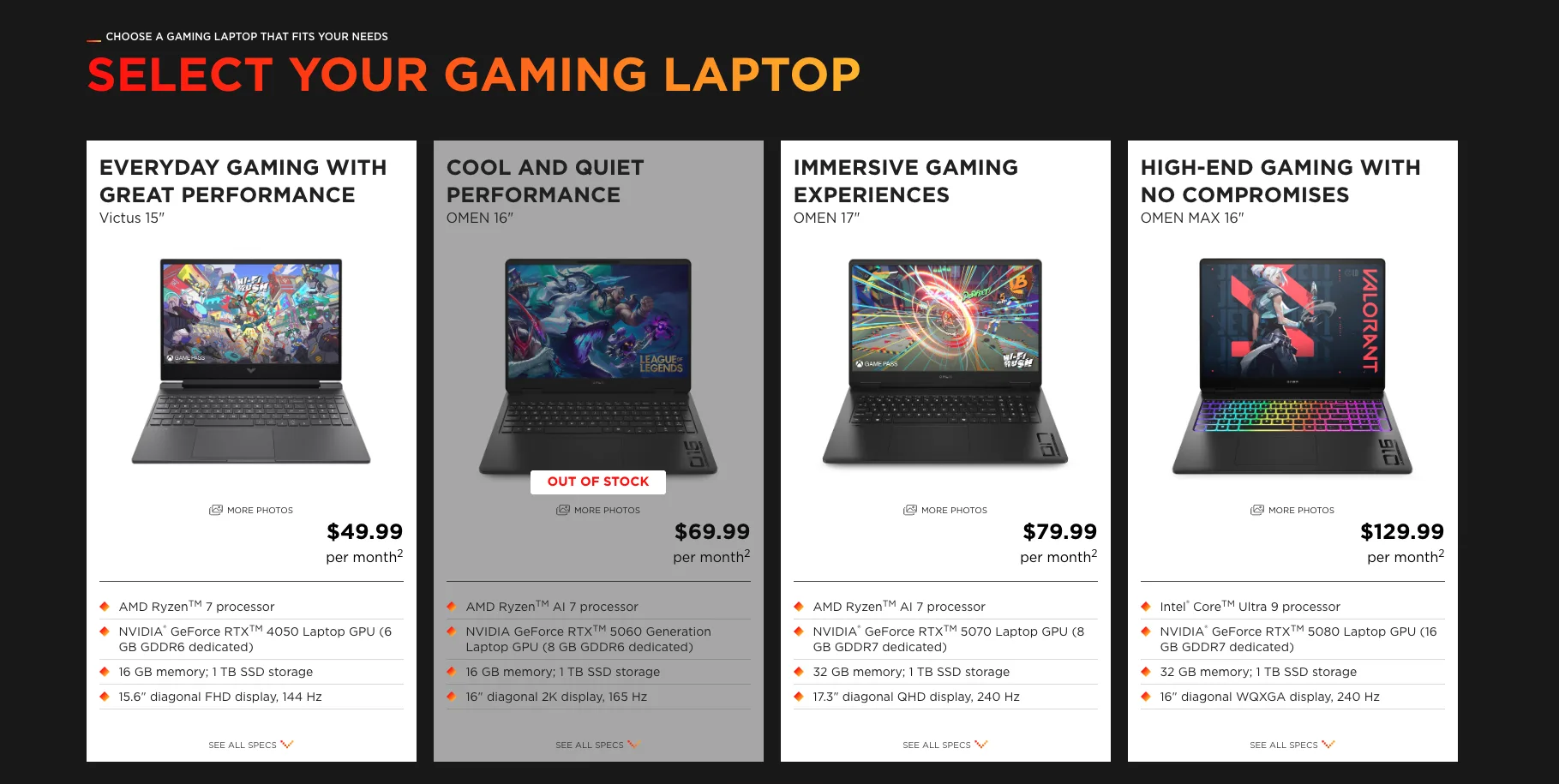
HP's OMEN Gaming Subscription is a rental program for their Victus and OMEN gaming laptops, currently available across the US. The service offers tiered plans from $49.99 to $129.99 per month, aiming to make high-performance gaming more accessible without a large upfront investment. Subscribers can also enhance their setup with HyperX and OMEN accessories, starting from an additional $3.99 per month.
To qualify, prospective users must be US residents aged 18 or older with a valid payment method and a minimum TransUnion credit score of 650. While a soft credit check is performed (which does not impact one's credit score), it's worth noting that a TransUnion credit score of 650 is typically considered "Fair" in the US, rather than "Excellent," meaning approval is possible but potentially with less favorable terms than for those with higher scores. HP offers a generous 30-day risk-free trial period, but this is followed by a non-negotiable 12-month commitment, a detail we believe prospective subscribers should weigh carefully.
The Allure of Always New: A Perpetual Upgrade Cycle
HP positions the OMEN Gaming Subscription as a compelling solution for a broad spectrum of users, from competitive gamers and content creators to students and budget-conscious players. The primary appeal, as HP tells it, is the promise of perpetually up-to-date hardware. After 12 months, subscribers gain the flexibility to upgrade to a newer laptop model, theoretically ensuring their system always keeps pace with the latest games and technologies.
In a market where component generations rapidly succeed one another, this promise of a yearly refresh is certainly tempting. The current lineup showcases HP's commitment to recent performance:
Beyond the raw hardware, the subscription includes valuable perks that genuinely matter to serious users: 24/7 expert support and next-business-day replacement for hardware issues. For streamers or competitive gamers where downtime can be disastrous, this level of service is a clear advantage.
The Strings Attached: Costs, Control, and the Missing "Own"
However, beneath the shiny veneer of perpetual upgrades, significant caveats fundamentally reshape the traditional consumer-hardware relationship.
The most critical aspect, in our view, is the complete absence of ownership. This is not a lease-to-own program; it is a pure rental, and subscribers never gain ownership of the laptop. Financial analysis reveals that the cumulative monthly payments quickly approach and even exceed the outright purchase price of the laptops within a surprisingly short timeframe. For instance, the entry-level Victus 15-inch laptop, which sells for approximately $950 on sale, reaches that price point after just 19 months of subscription payments. The flagship OMEN MAX 16-inch, priced around $2,110 on sale, hits its purchase price in just over 16 months of renting at $130 per month. At full MSRP, this period extends to roughly 25 months. For those who value their devices as personal assets, prefer the freedom to modify components, or expect eventual ownership, this model is an immediate deal-breaker. HP itself acknowledges this, stating the service is 'not ideal for long-term users (4+ years), tinkerers who want to modify components, [or] collectors who prefer owning hardware.'
Financial commitments extend beyond the monthly fee. While cancellation becomes free after 13 months, early termination within the initial 12-month term incurs steep penalties. Canceling the entry-level Victus 15-inch plan in month two, for example, triggers a $550 fee, while doing the same for the OMEN MAX 16-inch plan could cost a staggering $1,430. Furthermore, failure to return the laptop or accessories can result in charges up to $3,299 for the highest-tier model.
Perhaps the most unsettling detail for many is HP's ability to remotely disable a subscribed laptop. This capability starkly illustrates the fundamental shift in control from the user to the manufacturer, a concept that raises legitimate privacy and autonomy concerns for any tech consumer.
HP's Bigger Bet: Recurring Revenue in a Shifting Market
HP is no newcomer to the subscription economy, having launched a printer subscription plan in 2024. The OMEN Gaming Subscription appears to be a natural, albeit more ambitious, expansion of this strategy. For HP, this model promises predictable income streams and a deeper, ongoing relationship with its customer base. By providing access to high-end, frequently updated hardware alongside robust support and replacement services, HP aims to keep customers within its ecosystem, leveraging partnerships with industry giants like Intel, AMD, NVIDIA, and HyperX.
This strategy also reflects a wider industry trend. As gaming laptops grow more expensive due to rising component costs, particularly from GPU manufacturers like NVIDIA, OEMs are seeking new ways to attract customers who might be hesitant to spend thousands upfront for a rapidly depreciating asset. The subscription model positions HP as a service provider rather than just a hardware vendor, offering a perceived lower barrier to entry for consumers, especially when compared to similar rental options like NZXT Flex, which has faced community criticism.
Beyond the Laptop: Ownership, E-Waste, and the Future of Tech
HP's move reflects a broader industry current, from software-as-a-service (SaaS) to media streaming and even car subscriptions. For consumers, it theoretically promises lower upfront costs and freedom from obsolescence. For companies, it offers stable revenue and increased customer lifetime value.
However, the implications are profound, especially when considering the rapid upgrade cycle promoted by HP. When hardware becomes a service, we believe questions arise about:
- Long-term cost: Over several years, a subscription could easily exceed the purchase price of a a similar laptop without ever conferring ownership. While upgrades are included, a savvy consumer might choose to purchase outright, then strategically upgrade components, or sell their current device and buy a new one, potentially saving money over time.
- Consumer control: The remote shutdown capability is a potent symbol of the power imbalance. What happens if a subscriber disputes a charge or faces account issues? This level of control vested in the manufacturer is something we must view with skepticism.
- Digital divide: While lowering the barrier to entry, it also formalizes a two-tiered system where those who can afford to purchase own their tech, while others are perpetual renters.
- Environmental impact: A model built on yearly upgrades, as highlighted by HP's offering, raises concerns about electronic waste. While Device-as-a-Service (DaaS) models can theoretically promote circularity through refurbishment and reuse, the rapid turnover of devices could also exacerbate e-waste if not managed rigorously. The production of a new laptop generates approximately 250 kg of CO2, whereas a laptop entering its second life generates roughly 7 kg of CO2. We question whether HP's model will truly prioritize extending device lifespans or simply encourage faster consumption.
TTEK2's Take: A Conditional Embrace
The OMEN Gaming Subscription is a fascinating, if somewhat controversial, proposition. For a specific segment of gamers – those who prioritize having the absolute latest hardware without the large upfront investment, value inclusive support, and aren't concerned with ownership or modification – it presents a solid alternative. Students who need powerful but temporary hardware, or streamers who rely on peak performance for their livelihood, might find the yearly upgrade cycle and full support highly appealing.
However, for traditionalists, long-term users, and those who value full control and outright ownership of their devices, the model's caveats – particularly the lack of ownership, hefty early cancellation fees, and remote control capabilities – will be significant deterrents. We believe that for many, the cost of never owning the hardware, despite the convenience of upgrades, will prove a tough pill to swallow.
As HP continues to roll out and refine this service, the tech world will be watching closely. Is the OMEN Gaming Subscription a glimpse into a future where even our most powerful personal computers are no longer "ours," but rather services we pay for, month after month? Whether the convenience of perpetual access outweighs the desire for definitive ownership depends on how aggressively HP prices these plans — and how comfortable consumers become with never owning their hardware. In our view, it's a trade-off that demands careful consideration, and for many gamers, the freedom of true ownership will remain an undeniable priority.


Comments