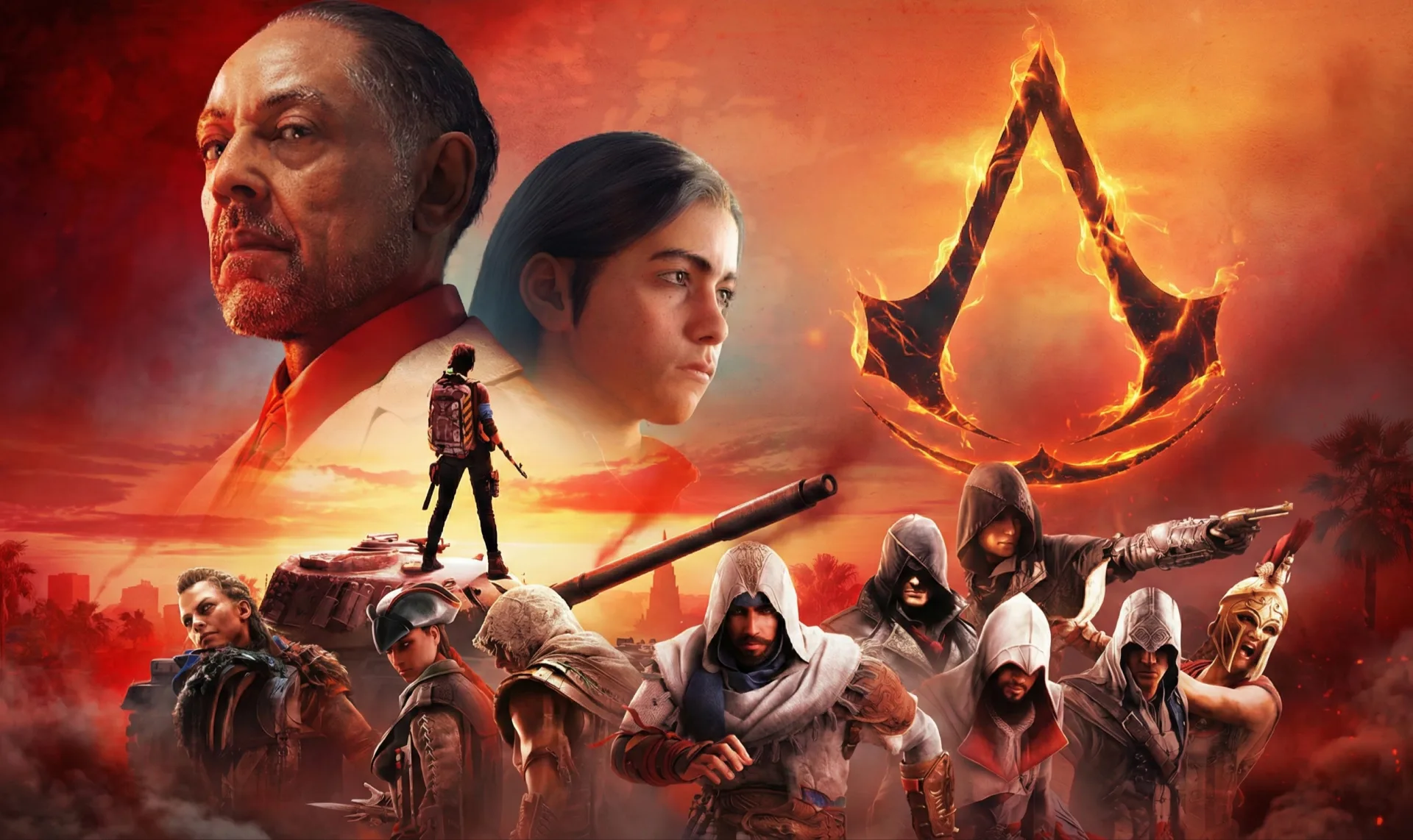
Ubisoft is currently a house divided. As the company struggles with a three-day strike involving 1,200 employees and the fallout of shuttering its Stockholm and Halifax studios, CEO Yves Guillemot is trying to shift the narrative back to his heavy hitters. In a recent update, the publisher confirmed that the future of the company rests almost entirely on two pillars: Assassin’s Creed and Far Cry.
With the company reorganizing into five specialized Creative Houses by April 2026, the newly formed Vantage Studios—a Tencent-backed subsidiary—now holds the keys to the kingdom. We have examined the pipeline, from extraction shooters in the Alaskan wilderness to fast-tracked remakes of fan favorites, to see which of these projects actually deserve your bandwidth.
Ubisoft’s High-Stakes Pipeline
Far Cry 7: A Risky Race Against Time
The next mainline entry, Project Blackbird, appears to be a departure from the "clear the map" fatigue of Far Cry 6. Reports suggest a non-linear story focused on rescuing the protagonist’s family, but the real talking point is the rumored time-pressure mechanic. Players will reportedly have 72 in-game hours—roughly 24 hours of real-time—to complete the objective.
In our view, this is a dangerous gamble. Far Cry has traditionally been a franchise about distracted wandering. Forcing a ticking clock on the player could either provide needed tension or completely alienate those who just want to blow up outposts at their own pace. If Ubisoft cannot balance that pressure, Far Cry 7 might feel more like a chore than a sandbox.
Project Maverick: Chasing the Extraction Trend
Ubisoft is finally taking Far Cry into the standalone multiplayer space with Project Maverick. Set in the Alaskan wilderness, this is reportedly an extraction-style shooter featuring permadeath and a backpack system.
The Alaskan setting sounds like a perfect fit for the series' survival roots, but Ubisoft’s track record with standalone multiplayer spin-offs is spotty at best. We have concerns here. The extraction shooter market is becoming increasingly crowded, and Maverick has already undergone several internal reworks. The inclusion of permadeath suggests a hardcore lean that the mainline series usually avoids, and we wonder if the Far Cry audience is actually looking for that level of punishment.
Assassin’s Creed: The Remake Safety Net
Following the launch of Assassin's Creed Shadows in March 2025, Ubisoft is now leaning heavily into nostalgia. The Assassin’s Creed IV: Black Flag Remake (Project Obsidian) is reportedly being fast-tracked to satisfy a community that now exceeds 30 million players.
Rolling our eyes at the "remake everything" strategy is standard procedure, but Black Flag is the exception. If the reported enhancements to naval combat and new wildlife systems hold up, this could be the win Ubisoft desperately needs. However, it’s hard to ignore the irony: Ubisoft cancelled the Prince of Persia: The Sands of Time Remake after years of public struggle, yet they expect us to believe Black Flag can be rushed to market by late 2026. We’ll believe it when we see a gameplay trailer.
Hexe and the Mobile Gamble
Further out, Assassin’s Creed Codename Hexe is being positioned as a darker, grittier entry set during the witch trials. It’s a tonal shift we’ve been wanting for years, but with a 2027 release window, it’s too far off to save Ubisoft’s current fiscal woes.
More immediate is Rainbow Six Mobile, launching globally on February 23. It’s a bold move to launch a major title just days after a massive employee strike. While Rainbow Six Siege still maintains a solid 2.5 million daily players, bringing that precise tactical experience to a touchscreen is a tall order. We’re skeptical that a mobile port can capture the tension of Siege without feeling like a compromised experience.
Survival Through Consolidation
Ubisoft’s strategy is clear: consolidate and survive. By killing off riskier projects like Assassin’s Creed Singularity (the Web3 card game) and the Prince of Persia remake, the company is betting everything on its most recognizable names.
The reorganization into Creative Houses and the heavy involvement of Tencent via Vantage Studios suggests a more disciplined, perhaps more corporate, Ubisoft. But discipline does not always equal quality. The February 2026 strikes over salary stagnation and return-to-office policies show a workforce that is frustrated, and that kind of internal friction often bleeds into the final product.
TTEK2 Verdict
The Safe Bet: Assassin's Creed IV: Black Flag Remake.
Even a rushed Ubisoft remake of a series high point is a safer bet than their recent string of failed experiments. It’s a proven formula that fits the current studio's strengths.
The One to Watch: Far Cry 7.
The 24-hour real-time clock will either reinvent the series or be the reason people skip it. We’re cautious, but at least they’re trying something different with the narrative structure.
The One to Avoid: Project Maverick.
An extraction shooter from a studio that has spent years reworking the concept smells like a project chasing a trend that has already peaked. Unless the Alaskan survival mechanics offer something genuinely fresh, this is a generic title that fails to justify its existence.
The Warning Sign: Rainbow Six Mobile.
Launching a high-stakes mobile port in the middle of studio layoffs and staff strikes is rarely a recipe for a smooth launch. Expect bugs and a heavy emphasis on monetization as Ubisoft tries to hit its cost-reduction targets.






Comments