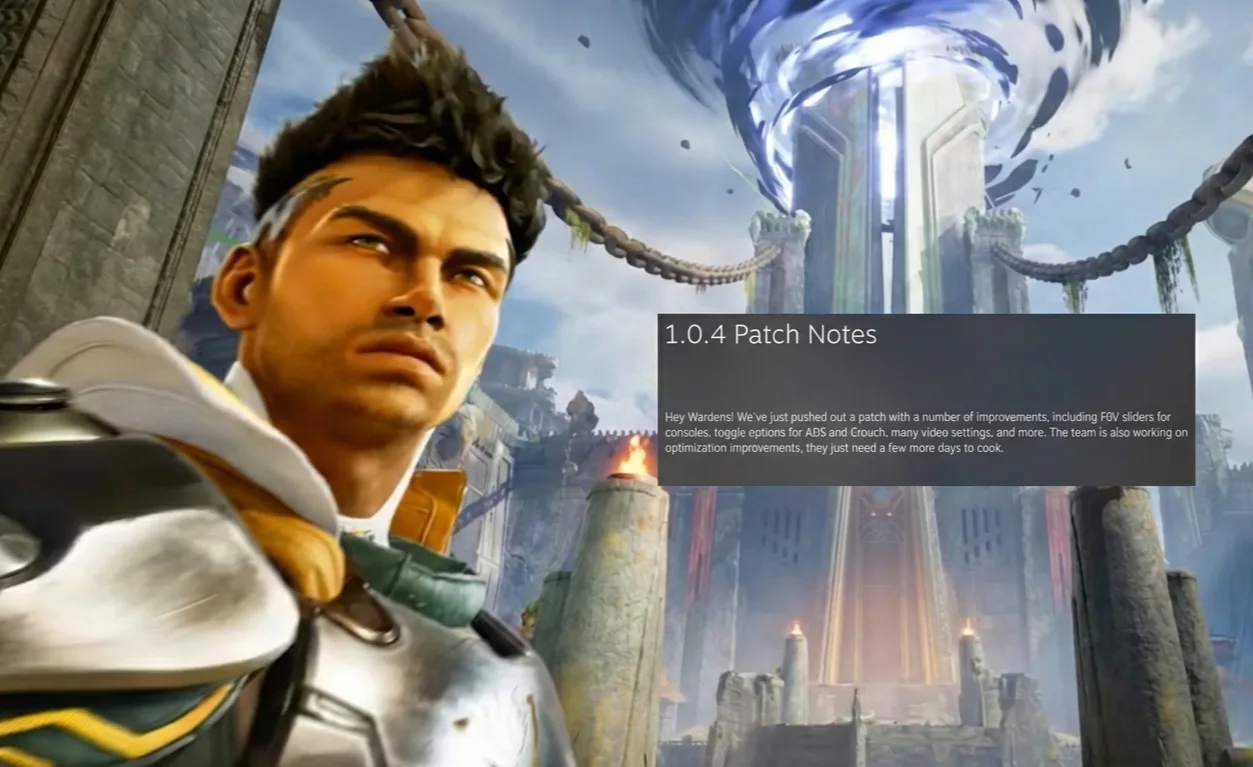
Just days after its highly anticipated, yet undeniably turbulent, launch, Wildlight Entertainment’s free-to-play hero shooter, Highguard, has pushed out its first significant patch (version 1.0.4 on PC, 1.003 on consoles). This major update, following a smaller client-side fix released merely a day after the game’s January 26 debut, speaks volumes about the urgent situation Highguard found itself in. It offers a crucial, albeit early, look at Wildlight’s commitment to salvaging what was, for many, a deeply flawed initial offering.
Highguard arrived with considerable hype, especially given its reveal at The Game Awards 2025 and the pedigree of its 61-person development team, composed of veterans from Titanfall and Apex Legends. Wildlight Entertainment, founded in 2022 by industry stalwarts like Dusty Welch (formerly of Respawn and Activision Blizzard) and Jason McCord (also a Respawn alum), positioned itself as a studio "hyper-focused on creating big, bold, original gaming universes". However, this excitement quickly dissolved as players and critics alike were confronted with a game riddled with widespread performance issues, technical instability, and fundamental design criticisms.
The Rough Landing of a Highly Anticipated Shooter
From its very first moments, Highguard struggled to connect. Reviews were poor, and player counts, after an initial surge, quickly faltered. While the game attracted a peak of nearly 100,000 concurrent players on Steam on launch day, this enthusiasm was short-lived. By the next evening, player numbers had plummeted by almost 80%, dropping to approximately 19,000 concurrent users. Steam reviews quickly trended "Mostly Negative," with only 31.12% positive reviews by January 27, 2026. This downward trend continued, with the game now typically seeing around 2,000 to 3,000 concurrent players on Steam daily.
Players reported persistent crashes and poor anti-aliasing that resulted in blurriness and ghosting. The game also demanded surprisingly high performance, with an RTX 5080 graphics card reportedly struggling to maintain 72 frames per second at 4K-high settings. Beyond the technical woes, deeper criticisms emerged regarding the core experience. Many found the maps too large and bare for 3v3 combat, leading to "lonely" gameplay. The loop of extended resource collection punctuated by brief bursts of action was widely criticized for creating significant downtime. Adding to the perception of an "undercooked, incompetent mess," character lore was noticeably absent, and designs were deemed uninspired. Compounding these initial difficulties were frustrating matchmaking issues, including a reported lack of enough players.
Patch 1.0.4/1.003: A Necessary, If Urgent, Course Correction
Wildlight Entertainment's response has been undeniably swift. A minor client-side patch (1.002) landed on January 27, providing initial fixes for "various stability issues" and "some crashes." However, it's the January 29 release of the major patch (1.0.4/1.003) that truly signaled an all-hands-on-deck approach from the developers.
Wildlight claims this major update has "reduced crashes by 90%" and "significantly improved overall stability". It introduces a host of much-needed performance and quality-of-life options that were sorely missing at launch:
- Performance Control:
- Console players can now adjust their Field of View (FoV) up to 110, a crucial feature for competitive FPS players seeking better situational awareness.
- Low scalability settings for shadows and reflections have been tuned for better performance, with the low shadow setting now disabling volumetric fog.
- A new 'View Distance Quality' setting allows players to control skeletal mesh LODs, offering another avenue to fine-tune GPU/CPU usage.
- Players can toggle Anisotropic Materials, Chromatic Aberration, and Bloom on or off, providing more graphical flexibility.
- DLSS users can now select a DLSS preset, with more options and better descriptions promised in the next patch.
- Crucially, players can now disable Global Illumination entirely, which should offer a significant performance boost for many systems.
- A critical engine bug that throttled laptop users to 60 FPS has been resolved, a fix that will undoubtedly broaden the game's playable audience on PC.
- The highly requested ability to set Crouch to Hold or Toggle is now available across all platforms, a significant quality-of-life improvement for many shooter enthusiasts.
- PC players can also set Aim Down Sights (ADS) to Hold or Toggle, though console support for ADS toggle is still pending due to button rebind limitations.
- Bugs related to online user presence and matchmaking have been resolved, ensuring friends appear online correctly and Xbox presence updates properly.
The patch also specifically targets crashes, addressing PS5 input state issues and loading crashes on machines with slower storage devices.
The 5v5 Pivot: A Reaction to Core Design Flaws
While the initial article focused on the technical patch, a significant development occurred just after: Wildlight Entertainment made its experimental 5v5 raid mode a permanent fixture in early February 2026. This is a direct response to the prevalent criticism that Highguard's maps felt "too large and bare" for 3v3 combat. Community feedback suggests the 5v5 mode improved the experience, making gameplay feel "more energetic" and suiting the gameplay structure better. In our view, making this quick adjustment shows the developers are keenly aware of their game's fundamental design issues and are willing to iterate rapidly. However, it also highlights that the core 3v3 experience, initially touted, was fundamentally flawed. It's a pragmatic move, but one that raises questions about the original design vision.
A Bleak Horizon: Layoffs and the Competitive Landscape
The rapid deployment of these patches, especially the major 1.0.4/1.003 update, and the quick pivot to a permanent 5v5 mode, initially demonstrated a studio acutely aware of its launch missteps and committed to addressing them. For a game that debuted with such technical turmoil, providing immediate stability improvements and crucial graphical customization options was an essential lifeline. The developer's statement acknowledged the speed of changes, even noting that some new menu options were not yet localized, underscoring the urgency of their efforts.
By offering detailed video settings, the patch directly tackles the criticisms regarding Highguard's high performance demands relative to its visual output. Giving players the agency to disable elements like Global Illumination, Bloom, and Chromatic Aberration, or adjust FoV and view distance, empowers them to tailor the experience to their hardware and preferences, potentially broadening the game's playable audience. The fix for the laptop FPS throttle is particularly important, as a large segment of the PC gaming community relies on mobile hardware.
However, any glimmer of hope generated by these fixes and the 5v5 change has been significantly overshadowed by a far more concerning development. Just days before this editorial, Wildlight Entertainment announced it has laid off the majority of its developers, retaining only a "core group" to continue supporting Highguard. This news directly contradicts the initial promise of a "12-month roadmap for content updates" with "Episode 2, Part 1" scheduled for February 2026, including a new playable Warden, mount, map, and a Ranked Mode. While the studio claims a "core group" will continue development, such drastic layoffs cast a long shadow over the feasibility of fulfilling ambitious content roadmaps.
The game director's previous statement that "we don't need huge numbers — we want fans that love us" now rings hollow against the backdrop of an 80% player count drop post-launch and mass layoffs. In a highly competitive free-to-play hero shooter market, dominated by giants like Overwatch 2, Valorant, and Apex Legends, and facing newer entries such as Marvel Rivals, maintaining a dwindling player base with a significantly reduced development team presents an enormous challenge. While the patches addressed symptoms, the layoffs suggest the underlying health of the project, and indeed the studio, is far more precarious than initially presented.
Conclusion: A Long, Uncertain Road Ahead
Highguard's first major patch, and the subsequent implementation of a permanent 5v5 mode, were critical, necessary steps. They demonstrated a commendable level of responsiveness and transparency in addressing the most egregious technical issues and a core design flaw that marred its launch. For a game that appeared on the brink, these updates offered a tangible reason for players to reconsider or return, proving that the developers were listening and acting.
However, the battle for Highguard is far from over—it has, in fact, become significantly harder. While the technical foundation was being shored up, the news of mass layoffs fundamentally alters the game's trajectory. The long-term success of this hero shooter will ultimately hinge not just on its ability to evolve its core gameplay and address its design criticisms, but on whether the remaining "core group" of developers can sustain a product in a cutthroat market with severely constrained resources. The patches cleared the runway, but with the majority of its crew grounded, Highguard now faces an incredibly uncertain flight. The promised February and March content drops will be the next crucial, and perhaps most telling, tests of whether Wildlight can build on newfound stability or if Highguard is destined to remain a cautionary tale.




Comments