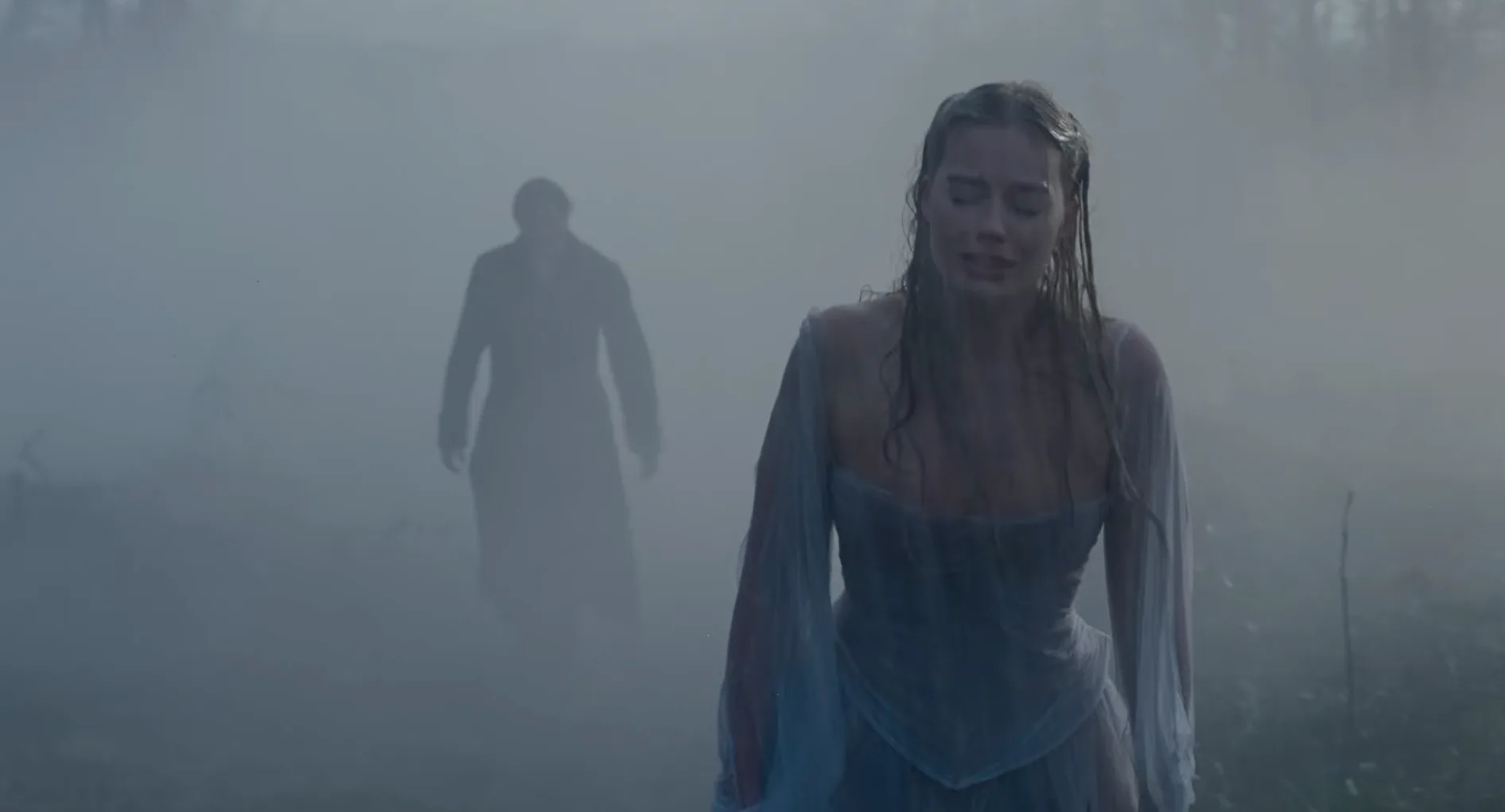
Emily Brontë's 1847 novel Wuthering Heights has long loomed large in the literary canon, a tempestuous tale of obsessive love, revenge, and generational strife on the desolate Yorkshire moors. It is a story that, despite its age, continues to captivate and divide, a brutal psychological drama often mistaken for a simple romance. Now, director Emerald Fennell, known for her provocative cinematic style, brings her audacious vision to the screen with 'Wuthering Heights' (2026), starring Margot Robbie and Jacob Elordi. But does this latest adaptation capture the raw, untamed spirit of the original, or does it merely offer a glossy, misunderstood reflection? We've explored Fennell's interpretation, and the answer, much like the moors themselves, is anything but clear.
Brontë's Unruly Masterpiece: A Legacy of Obsession
The enduring power of Emily Brontë's sole novel lies in its unflinching depiction of human flaws and desires, set against a backdrop as wild and unforgiving as its characters. Published in 1847, Wuthering Heights is no gentle love story; it is a dark, twisted saga exploring obsession, revenge, and the complexities of love in a mesmerizing, often terrifying, way. Its narrative, intricately framed by unreliable narrators Lockwood and Nelly Dean, disorients readers, forcing them to piece together truths from biased perspectives.
Many consider the novel a masterpiece for its commitment to messy, flawed, and even cruel characters like the relentless Heathcliff and the selfish, 'drama queen' Catherine. Their intense desires lead to violence and psychological abuse, making it feel more like psychological horror than a conventional romance to some readers. Themes of generational trauma, class, and the conflict between different houses are integral to its fabric. Yet, this very raw and unfiltered emotional landscape, praised for its wild, melancholy prose and vivid nature descriptions, can also be a turn-off; some find it boring and difficult to finish due to the characters' relentless unlikability.
Fennell's Vision: All Style, Less Substance?
Emerald Fennell's 'Wuthering Heights' arrives with quotation marks around its title, a stylistic choice signaling her intention: this is her interpretation, a daring and bold take rather than a strict adaptation. Indeed, Fennell explicitly stated she felt 'no need to be accurate' to the source material, viewing it as 'just a book,' and instead aimed to capture her own experience of reading it at 14. This approach results in a film that is a visual feast.
The movie shines in its aesthetic ambition, featuring gorgeous set design, opulent costumes, striking cinematography by Linus Sandgren, and a bombastic soundtrack by Charli XCX and Anthony Willis. The lustrous black exterior of the Heights manor, resembling a rock face, immediately telegraphs a sense of doomed fate. Fennell crafts an extravagant swirl of sexy, dramatic, and melodramatic moments, often visually vibrant and a pleasure to watch. Jacob Elordi's Heathcliff is presented as a 'swoon-inducing object of desire,' embodying brute force, a wounded soul, and a smirking seducer. Margot Robbie's Catherine, in turn, is captivating, and the chemistry between the two leads is frequently highlighted as 'scorching hot,' leaning heavily into the passion and obsession of their torrid relationship.
However, this visual splendor often comes at a steep narrative cost. The film is criticized for sacrificing story for spectacle, performing hollow provocation rather than translating Brontë's complex narrative. It reimagines the original drastically, flattening the intricate tale into a simplistic romance that largely ignores the novel's deeper themes of class, race, and generational trauma. The relationship between Catherine and Heathcliff, in this iteration, often feels simplistic and repetitive, lacking the nuanced character development that makes the novel so gripping.
The Heart of the Controversy: Casting and Creative Liberties
The controversies surrounding 'Wuthering Heights' (2026) are as passionate as the story it attempts to tell. The casting of Jacob Elordi, a white actor, as Heathcliff has been a major point of contention. Brontë's novel describes Heathcliff as 'dark-skinned,' 'gypsy in aspect,' and an outsider whose racial identity is central to his alienation and the prejudice he faces. Many critics and audiences view this casting as a 'tone-deaf' erasure of the novel's racial themes and a missed opportunity to provide authentic representation, especially when previous adaptations like Andrea Arnold's 2011 film cast Black actors in the role.
Margot Robbie's casting as Catherine also drew criticism for her age, playing a character who is a teenager in the novel and dies around 18. This alters the dynamic considerably, portraying Catherine more as a 'whiny rich girl' rather than the adolescent figure of innocent, albeit destructive, passion from the book.
Beyond casting, the film takes many liberties with the plot. It drastically alters or excises key characters like Hindley and the entire second generation (Cathy Linton, Linton Heathcliff, Hareton Earnshaw), effectively removing core motivations and the novel's purpose, which centers on generational trauma and revenge. Instead, Fennell's movie focuses almost exclusively on the first half of the novel and the tumultuous relationship between Catherine and Heathcliff, ending shortly after Catherine's death. The film also features a heightened, 'sexually-charged' tone with 'romping in the rain scenes' and explicit intimacy not found in the original. Some critics, ironically, found the highly publicized 'hotness' to be 'overlong and undersexed,' making it a 'coldest hot movie.'
Spectacle Over Soul: A BookTok Romance?
The anachronistic style, from the soundtrack to 'Met Gala-ready gowns,' aims to suggest the love story transcends its period, but often results in a jarring, 'cheap-looking' aesthetic more akin to a 'fairytale or live-action Disney film' than a gothic masterwork. Many describe this film as a 'tacky, tasteless, BookTok-ification spicy romance' that prioritizes aesthetics and shock value over the literary and thematic complexities defining Brontë's work. It feels, in many respects, like a 'Fifty Shades Reskin for the Insipid 'I Can Fix Him' Audience.'
Some critics found it intoxicating, transcendent, tantalizing, bewitching, lust-worthy, and hypnotic, but critics are decidedly split. The emotional depth often falters, with actors sometimes appearing overwhelmed by the filmmaking's gargantuan excess. We questioned whether the film understands the fundamental discomfort and destructiveness central to Brontë's novel, or if it simply wants to sanitize it into something more palatable—a 'brooding heart-throb' romance that sacrifices the novel's complexity.
The Verdict: A Wild Ride, But Not Brontë's Moors
Emerald Fennell's 'Wuthering Heights' is a visually stunning and aggressively stylized film that certainly makes a statement. It’s a large-scale costume drama with an epic scope, avoiding stodginess, and offering plenty to look at, from the windswept landscapes to the foreboding manor. If you approach this film as a bold, sexually-charged, and intensely visual spectacle 'inspired by' rather than 'faithful to' Brontë's novel, you might find yourself enthralled. The audience scores on Rotten Tomatoes suggest a strong appreciation for its romanticism and striking visuals.
However, for those who cherish the novel's intricate narrative, its unflinching examination of brutal human nature, and its profound engagement with themes of race and class, this adaptation will likely disappoint. We believe that by deliberately stripping away the second half of the book and simplifying character motivations, Fennell inadvertently undermines the novel's purpose, transforming a gothic masterpiece into a glossy, albeit entertaining, melodrama. It may capture 'the ache and essence of desire,' but it misses the haunting, complicated soul of Emily Brontë's original.
Ultimately, 'Wuthering Heights' (2026) is less a journey across Brontë's wild, untamed moors and more a meticulously curated fashion shoot set upon them. It’s a film that demands to be seen, if only to spark debate, but it certainly isn't the definitive adaptation. If you're looking for an intoxicating, bombastic experience that prioritizes passion and aesthetics above all else, this might be worth your time. But if you seek the nuanced, often brutal, depths of Brontë's genius, we recommend returning to the book itself.






Comments