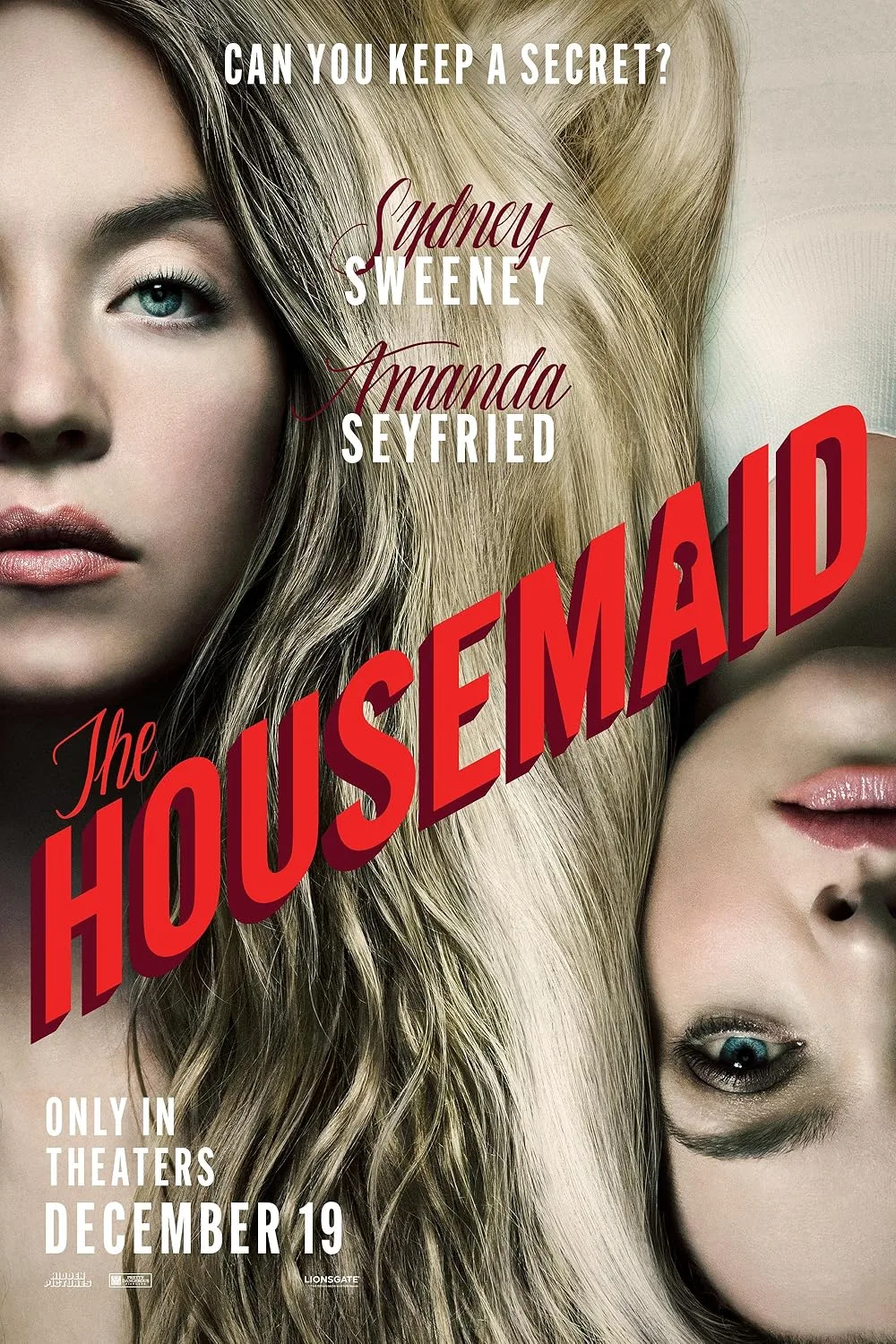
One month after its debut as a dark counterpoint to the usual holiday cinematic fare, Paul Feig’s adaptation of The Housemaid has firmly established itself as a polarizing box office phenomenon. Released on December 19, 2025, the film was clearly engineered to pull audiences away from sugary Hallmark marathons and plunge them headfirst into a twisted saga of domestic psychological warfare. And financially, it delivered, pulling in an impressive $359 million worldwide against a modest $35 million budget as of February 11, 2026. This performance marks it as Lionsgate's most prolific theatrical run in years, inching closer to the $100 million domestic milestone that no other Lionsgate title has achieved since The Hunger Games: The Ballad of Songbirds & Snakes in 2023.
While the film has undeniably dominated social media conversations and boasts a staggering 92% audience score, its journey from "BookTok" sensation to the big screen hasn't been without its share of bumps and critical debate.
From BookTok Darling to Box Office Dynamo
Before it ever hit theaters, The Housemaid arrived with a built-in fan base, courtesy of Freida McFadden's novel, which earned its stripes as a "monster hit" and crowned its author the "BookTok queen of crime fiction." The book itself sold over 2 million copies and spent a remarkable number of weeks dominating bestseller lists. This immense digital popularity generated a "ready-made audience" for the film, eager to see the book's gripping narrative and shocking twists brought to life.
This pre-existing enthusiasm, fueled by TikTok's viral book-focused communities, undeniably played a significant role in the film's financial triumph. We think it's fair to question if this powerful groundswell of support, where some BookTok reviewers even embraced the book's "campy" nature, might have softened the blow of some of the film's rougher edges. Regardless, the film's international success, particularly in markets like the UK where it surpassed Feig's own Bridesmaids in gross, demonstrates its broad appeal. Projections suggest it could reach up to $400 million globally, potentially becoming Sydney Sweeney's highest-grossing film to date.
The Core Conflict: Seyfried's Chilling Dominance
The Housemaid hinges entirely on the palpable chemistry and escalating conflict between Millie Calloway (Sydney Sweeney) and Nina Winchester (Amanda Seyfried). Sweeney, as Millie, a woman on parole desperate for a new beginning with a wealthy Long Island family, brings a raw, grounded intensity to the role. However, in our view, the film undeniably becomes Seyfried's showcase.
Seyfried’s portrayal of Nina is, without question, the film’s strongest asset. She navigates the character’s erratic, often terrifying, behavior with a chilling precision, masterfully keeping us questioning who the real antagonist truly is. Brandon Sklenar, as the seemingly "perfect" husband Andrew, completes a trio that impressively carries the weight of the film’s 131-minute runtime with considerable stamina.
Feig's Genre Gamble: A Calculated Yet Chaotic Pivot
Director Paul Feig is primarily celebrated for his work on female-led comedies like Bridesmaids and Spy. While both were R-rated, Bridesmaids was known as a groundbreaking R-rated female comedy hit. His decision to tackle a gritty, R-rated psychological thriller like The Housemaid was a calculated risk, though not entirely unprecedented given his earlier work on the comedy-thriller A Simple Favor.
For the most part, Feig successfully crafts a suffocating sense of claustrophobia within the opulent Winchester estate. However, his background in comedy doesn’t always translate seamlessly to the meticulous, slow-burn pacing that a mystery of this caliber demands. The first half of the film struggles with significant pacing issues; the build-up feels sluggish, and while it remains faithful to the source material, the narrative often feels overextended on screen. This raises the question of whether Feig's usual comedic rhythm inadvertently hampered the thriller's necessary tension.
Yet, when the third act finally ignites, it does so with the force of a freight train, abruptly shifting from domestic drama into a high-octane thriller defined by visceral violence. We must warn you, this turn is not for the faint of heart; the R rating is fully earned through graphic scenes of abuse and sexual content that may be genuinely triggering for some viewers.
Production Flaws: A Tarnish on the Polish
Despite its undeniable financial success, The Housemaid noticeably lacks the technical polish we typically expect from a major Lionsgate production. Eagle-eyed viewers and critics alike have highlighted several immersion-breaking production errors that detract from the cinematic experience:
- Visible Boom Mics: Multiple critics have pointed out instances of boom microphones dipping into the frame in at least three separate scenes.
- The Final Scene's Dental Mystery: A glaring continuity error sees a character’s missing tooth inexplicably reappear and disappear during the movie’s concluding moments, a noticeable oversight.
- Structural Sag: As previously mentioned, the first hour frequently feels as though it is stalling, a pacing issue that will likely test the patience of viewers not already captivated by Freida McFadden’s novel.
The TTEK2 Verdict: Is The Housemaid a Must-Watch Mess?
The Housemaid presents a fascinating case where audience enthusiasm dramatically outpaces critical consensus. For dedicated fans of the novel, the film stands as a faithful, often visceral, adaptation that powerfully brings the book's most shocking moments to life through high-caliber acting. Amanda Seyfried’s performance alone, in our opinion, makes the price of admission justifiable.
However, for those seeking a perfectly polished cinematic masterpiece, the discernible technical "goofs" and the sagging middle act may prove to be considerable distractions. It is a messy, violent, and at times brilliant domestic thriller that ultimately proves Paul Feig can indeed handle darker material—even if he hasn't quite mastered every technical nuance of the genre just yet.
Final Recommendation: Watch it for the powerhouse performances and the electrifying third-act twists, but be prepared for a slow start and a few distracting production flaws.





Comments