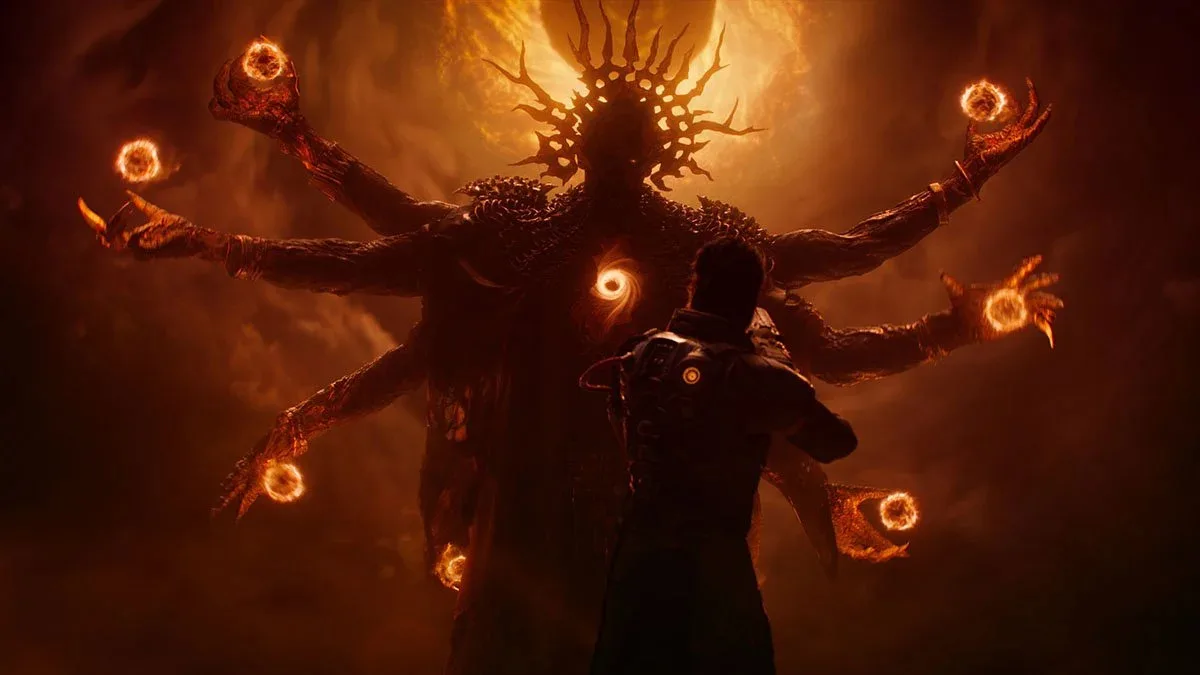
Housemarque, the acclaimed studio that brought us the punishing yet mesmerizing roguelike Returnal, offered players their deepest look yet at Saros during the PlayStation State of Play event on February 12, 2026. Set to launch on April 30, 2026, exclusively for PlayStation 5 and PlayStation 5 Pro, Saros stands as a spiritual successor, evolving the bullet-hell roguelike formula and aiming for a more approachable, yet equally challenging, experience.
The extensive gameplay showcase highlighted a title that looks distinctly Housemarque, featuring the frenetic third-person action and dazzling bullet patterns fans have come to expect. However, it also clearly signaled a move towards broader appeal through major changes to progression, narrative, and player agency.
Carcosa Awaits: A Story-Driven Roguelike
Players will step into the boots of Arjun Devraj, a Soltari Enforcer portrayed by actor Rahul Kohli (known from Midnight Mass and The Fall of the House of Usher), investigating a lost off-world colony on the hostile, shape-shifting planet Carcosa. This narrative choice alone immediately distinguishes Saros from Returnal's more isolated, enigmatic protagonist. Housemarque is clearly leaning into expanded storytelling this time around, with a stated aim of delivering an "emotional and powerful character study" that unfolds through voice-over, cinematics, haunting audio logs, and conversations with an ensemble cast of NPCs in the central hub, The Passage.
This deeper narrative integration marks an important evolution. While Returnal's story was lauded, its slow, fragmented delivery wasn't for everyone. Saros seeks to offer a more grounded, character-driven plot, potentially attracting players who might have been intimidated by Returnal's narrative ambiguity and high difficulty. We believe this focus on Arjun Devraj and the encroaching eclipse mystery could provide a stronger hook for players to endure Carcosa's relentless challenges.
Evolving the Roguelike Loop: Less Punishment, More Power
Perhaps the most notable change Saros introduces, and one sure to spark discussion, is its new approach to player progression. Gone are some of Returnal's more unforgiving elements, replaced by systems designed to "come back stronger" after each inevitable death.
Key Gameplay Shifts in Saros
The Armor Matrix allows players to upgrade their Enforcer Armor permanently, adjusting attributes like armor integrity or power capacity. This direct feedback loop means effort in one run translates into tangible benefits for the next, a vital psychological boost for a genre built on repetition. We expect this will be a welcome balm for those who found Returnal's complete reset on death too demoralizing.
Even more impactful are the Carcosan Modifiers. This system lets players actively dial in their preferred level of challenge, offering "Protection Modifiers" to reduce difficulty (e.g., decreasing incoming damage) or "Trial Modifiers" to ramp it up (e.g., more aggressive hostiles). This level of customization is a clear response to the accessibility debates surrounding Returnal and marks a major departure, allowing players to customize their experience. While some purists might argue it dilutes the roguelike formula, we see it as a smart move to broaden the game's appeal without abandoning Housemarque's core design philosophy. A gauge ensures balance, preventing players from completely trivializing the experience—a clever touch.
Saros maintains the essence of a Housemarque game. The developers state it's "demanding and bullet hell-like" and players are still "expected to perish and learn from their mistakes." Furthermore, true save points are still out, with a "Suspend Cycle" feature planned for mid-run progress saving. This is an improvement over Returnal's initial launch, yet we question if a "suspend" option is enough for players seeking mid-run persistence, especially when facing extended sessions in such an intense game.
Combat, Corruption, and a Foreboding Eclipse
Combat looks as slick and explosive as ever, benefiting from the DualSense controller's Adaptive Triggers for modified gunplay. Arjun's advanced combat suit allows for agile dashing, melee attacks, and jumps, complementing a diverse arsenal of Soltari human weaponry and Carcosan alien tech, like the Soltari Phosphorous Shotgun. The Soltari Shield, activated by holding R1, not only blocks attacks but also absorbs enemy energy, culminating in the devastating Carcosan Power Weapon. This charged attack transforms Arjun's right arm, blasting enemies and corrupting him in the process, offering a customizable burst of damage.
The "Eclipse" mechanic takes center stage, dynamically transforming Carcosa. During these escalations, the environment distorts with corruption, enemies become more aggressive, and even weapons and artifacts can be affected. Hostiles fire yellow corrupted projectiles that reduce maximum armor integrity, adding a new layer of threat that can only be cleansed by the power weapon. The sound design, with a dark-electronic meets drone-metal score by two-time Grammy Award-winner Sam Slater, is set to distort alongside the world, further immersing players in the impending doom. This dynamic environmental challenge suggests that no two runs, even through the same biome, will feel quite the same, adding extensive replayability.
Editions and Pricing: A Familiar Strategy
Saros is priced at $69.99 for the Standard Edition on the PlayStation Store. A Digital Deluxe Edition, available for $79.99, is digital-only and includes a 48-hour early access window (allowing play on April 28), along with four sets of cosmetic-only armor. These armor sets include the Hands of Shore Armour (also a pre-order bonus, inspired by Death Stranding), Astra Armour (modeled after Returnal's Selene Vassos), Onryo Armour (featuring a Ghost of Tsushima color palette), and Midgard Armour (modeled after modern God of War's Kratos' look). For those opting for a physical copy, a Digital Deluxe version upgrade can be purchased separately. The 48-hour early access is a familiar tactic for enticing digital deluxe purchases, but the cosmetic-only nature of the armor ensures no pay-to-win advantages. We appreciate the flexibility for physical buyers to still access the digital deluxe content.
The game's development received substantial backing, with Housemarque's CEO Ilari Kuittinen stating that Saros was made possible by the studio's acquisition by Sony in June 2021, featuring a budget in the "tens of millions of euros." This reflects Sony's clear investment in Housemarque's distinctive brand of action. The development also saw assistance from Nixxes Software, PlayStation Studios Creative Arts teams, and XDev, demonstrating the collaborative power within PlayStation Studios.
Saros: Housemarque's Evolving Identity
Saros marks a clear statement for Housemarque. It shows a confident studio, now backed by Sony, willing to evolve its signature formula. By addressing key criticisms of Returnal's accessibility and narrative depth while retaining its core high-octane combat and visual flair, Saros is set to broaden Housemarque's appeal without sacrificing its identity.
The permanent progression and Carcosan Modifiers are pivotal advancements for the roguelike genre, offering a pathway for more players to experience the thrill of Housemarque's exquisite gameplay. The lack of true save points remains a potential sticking point for some; however, the overall package presented at State of Play suggests a meticulously crafted experience that builds on past successes. For the PlayStation 5, Saros looks to be another exclusive that pushes visual boundaries (gameplay footage was captured at 60fps on PS5) and controller immersion, solidifying the console's reputation as a home for innovative and challenging action titles. We're excited to see if Carcosa can offer the best of both worlds: unrelenting challenge and a compelling reason to keep coming back.






Comments