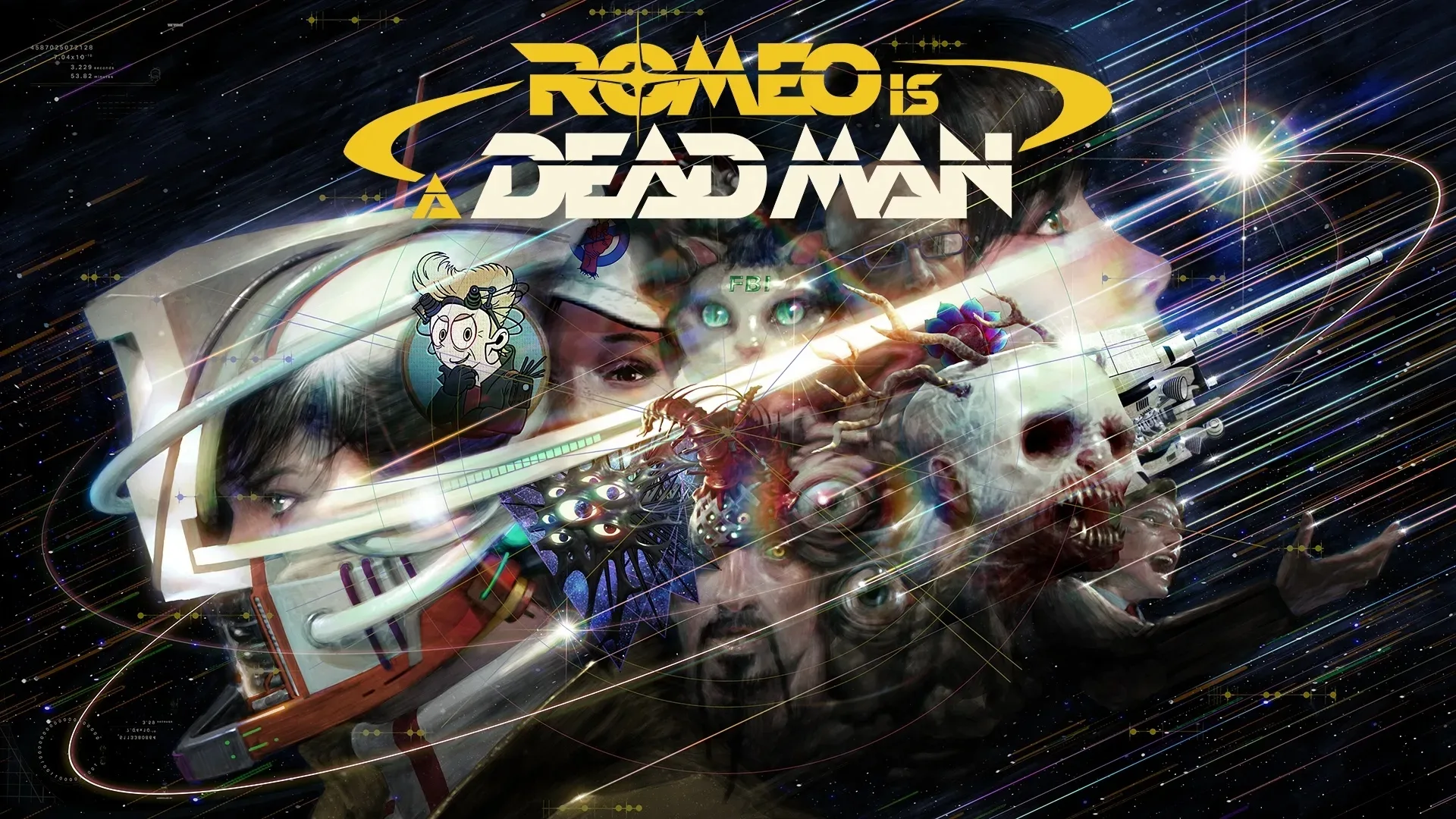
Grasshopper Manufacture Inc. has just unleashed ROMEO IS A DEAD MAN upon the world, and it's every bit as chaotically brilliant and frustratingly unpolished as we've come to expect from a game helmed by the enigmatic Goichi Suda, better known as Suda51. Marketed as an "ultra-violent sci-fi action, adventure, third-person action, and hack-and-slash game", this self-published title from Grasshopper Manufacture certainly aims to inject a dose of "jazz" into the gaming scene. Available now on PlayStation 5, Xbox Series X|S, and PC for $49.99 USD, it's a journey into a fractured multiverse that, while undeniably unique, will likely only resonate deeply with a specific audience.
This marks Grasshopper Manufacture's first brand-new IP in a decade and their inaugural self-published title, a decision Suda51 has stated is "extremely important" for the studio's future publishing endeavors. We believe this move highlights a clear intention to deliver an uncompromised artistic vision, which fans of Suda51's distinctive style will undoubtedly appreciate. Co-directed by Ren Yamazaki, known for his work on No More Heroes 3, ROMEO IS A DEAD MAN is a Mature-rated title, a kaleidoscope of gore, grotesque designs, and existential dread that demands players embrace its particular brand of madness. As Suda51 himself puts it, if other games are students acing their tests, ROMEO IS A DEAD MAN is the "fuck-up" who isn't perfect but is still interesting and funny.
A Fractured Fairytale: Narrative Ambition vs. Execution
Suda51 serves as Executive Director, Scenario Writer, and Producer, imbuing the game with his signature blend of surrealism and dark humor. The premise is classic Suda: players step into the shoes of Romeo Stargazer, a sheriff's deputy resurrected and drafted into the FBI's Space-Time Police as special agent "Dead Man"—complete with a Dead Gear mask. His mission? Hunt fugitives across a time-paradox-shattered multiverse and find his missing extraterrestrial girlfriend, Juliet, who can duplicate herself and disrupt time. Oh, and his grandfather is a sentient jacket patch. Naturally.
This narrative setup promises a wild ride, and the game largely delivers on that front. The story is a mind-bending, genre-defying odyssey that constantly reinvents itself, with many critics finding the abstract and unpredictable narrative to be fearless and personal. However, in true Suda51 fashion, its biggest strength can also be its greatest weakness. The plot becomes frustratingly complex towards the end, with necessary exposition often hidden in easily missable notes. For players who love to dissect every shred of lore, this might be a treasure hunt; for others, we predict it will likely lead to confusion and disengagement. It's a "jazz" narrative alright – improvisational and at times, difficult to follow the melody, leaving some of us wishing for a clearer through-line despite the compelling characters and "little moments" that shine through.
Bloody Ballet: Kinetic Combat, Questionable Depth
ROMEO IS A DEAD MAN is a hyper-kinetic third-person hack-and-slash brawler. Romeo is a whirlwind of destruction, capable of switching between an arsenal of guns (pistol, shotgun, machine gun, rocket launcher) and brutal melee weapons (beam katana-like weapon, heavy greatsword, fists) mid-combo. The combat system emphasizes combo-based attacks and allows players to cleverly turn enemy abilities against them. A standout is the "Bloody Summer" special attack, charged by enemy blood, which unleashes massive damage and simultaneously heals Romeo, creating a satisfying feedback loop of violence. Ranged combat, with its focus on targeting enemy weak spots for massive damage, even evokes memories of Killer7's precise, impactful gunplay.
Yet, despite its flashy moves and visceral appeal, the combat is not without its issues. It’s been described as "scrappy in places" and "not especially deep," leading to some disappointment among those seeking a more refined brawler. There's a certain "jank" that can occasionally affect movement and break the flow, making precise maneuvers more challenging than they should be, and the dodge mechanic often feels insufficient. Boss encounters, a staple of Suda51 games, also suffer from repetitive patterns and inflated health bars, leading to drawn-out, tedious battles rather than engaging spectacles. Furthermore, enemy variety isn't as extensive as one might hope, with older enemy types persisting without sufficient introduction of new ones. We couldn't help but notice some similarities in the "jank" to No More Heroes 3, suggesting a consistent, if sometimes frustrating, design philosophy for Grasshopper's action titles.
The Last Night: A Surprisingly Charming Respite
Between missions, players retreat to the "Last Night" spaceship, Romeo's main hub. This section is a delightful departure from the 3D action, rendered in a charming top-down pixel-art RPG style. Here, you'll interact with quirky NPCs like GreenRiver (a direct callback to No More Heroes 3), cultivate zombie-like "Bastards" from seeds (which can be fused to aid in battle with unique specialties), indulge in a katsu curry mini-game, challenge a quadruple-paddle Pong-style scanning game, and even engage in first-person space-flight through procedurally-generated dungeons. Leveling up is handled via a unique Pac-Man maze game, where players acquire ability-granting badges.
This hub is a clear highlight, showcasing Grasshopper Manufacture's creativity beyond the main combat loop. It offers a welcome respite and a ton of personality, proving that even a hyper-violent game can have moments of whimsical charm. In our view, the sheer inventiveness and delightful oddities within the "Last Night" spaceship are among the game's strongest and most consistently enjoyable features.
Visual Vortex & Sonic Soul: The Game's Unquestionable Strengths
Visually, ROMEO IS A DEAD MAN is a feast for the senses, constantly shifting its artistic identity. It mixes detailed 3D worlds with surreal dimensional environments, animated comic-book sequences, classic pixel art, and manga-influenced storytelling. The visual flair, complete with sparkles, confetti, and copious blood effects, is pure Suda51 – over-the-top, stylish, and impossible to ignore. This stylistic promiscuity works remarkably well, creating a distinct aesthetic experience that is consistently praised across the board.
Complementing the visuals is an awesome soundtrack, featuring contributions from Japanese rap group Scha Dara Parr. The audio design perfectly underpins the game's chaotic energy, elevating every hack, slash, and portal jump. This combination of wildly varied art styles and a killer soundtrack is arguably the game's most consistently strong feature, providing an undeniable sense of identity and atmosphere.
Dimensional Dungeons and Performance Pitfalls
While the game offers three permanent difficulty choices (White, Milk, or Orange chocolate), and a "wheel of fortune" power-up system upon death adds a touch of roguelike unpredictability, the level design itself can be inconsistent. Some areas are "uncreative dungeons" or feel "antiquated," especially in the "Subspace" realm. This "trans-dimensional overlay" system, where players interact with retro TVs to portal between dimensions, quickly becomes repetitive, mazelike, and can feel dull or tedious despite its intriguing concept. Adding to the frustration, a horror-themed asylum stage that strips players of weapons for a forced stealth section was a point of criticism for some reviewers.
Performance is another significant hurdle. PC players, in particular, will encounter frequent frame drops and brutal slowdown, especially in the Subspace and larger dungeons. Reports indicate even an RTX 4070 Ti Super or RTX 5080 can struggle to maintain 50-65 FPS at 1440p on ultra settings, with some identifying a confusing "Graphics Quality" setting that acts as an internal render resolution multiplier, potentially causing unintended 4K rendering and performance dips. While less severe, even PS5 experiences minor frame rate issues in the final stage. The fixed Field of View (FOV) is also notably tight and claustrophobic, further hindering the experience for some.
Perhaps most concerning is the Steam Deck experience. The game is explicitly "not optimized for Steam Deck" and is widely considered unplayable due to frame rates frequently dropping to the low 20s or even high 10s during combat, even with the lowest possible settings and FSR 3 set to performance. We hoped that Grasshopper's self-publishing decision would lead to better optimization, but these technical shortcomings can severely detract from what is otherwise a visually stunning and conceptually rich experience. Additionally, certain in-game systems—such as the "Sentrey Forge"—are difficult to understand or feel impenetrable, and some PlayStation trophies were reportedly broken at launch.
Verdict: A Bizarre, Bloody Ride For The Faithful
ROMEO IS A DEAD MAN is a quintessential Suda51 game: overflowing with unique ideas, dripping with style, and unapologetically strange. It’s a game that will charm fans of No More Heroes, Killer7, and other Grasshopper Manufacture titles with its distinct personality, hyper-kinetic combat, and genuinely creative hub world. The blend of art styles, the fantastic soundtrack, and the sheer audacity of its design philosophy make it stand out in a crowded market. We recognize it as a culmination of Suda51's past works, incorporating his signature gameplay experimentation and stylistic sensibilities.
However, its technical issues, particularly on PC and Steam Deck, combined with inconsistent level design, repetitive boss fights, and a story that deliberately obscures itself, prevent it from reaching true greatness. If you’re willing to overlook the "jank" and embrace the "jazz" – the rough edges, the improvisational storytelling, and the occasionally discordant notes – you'll find a deeply rewarding and memorable experience. If you demand polished combat, a clear narrative, and stable performance, you might want to wait for patches or simply give this one a pass. For the initiated, the $49.99 price tag offers a wild ride with decent replayability through New Game Plus and side content like Palace Athene.


Comments