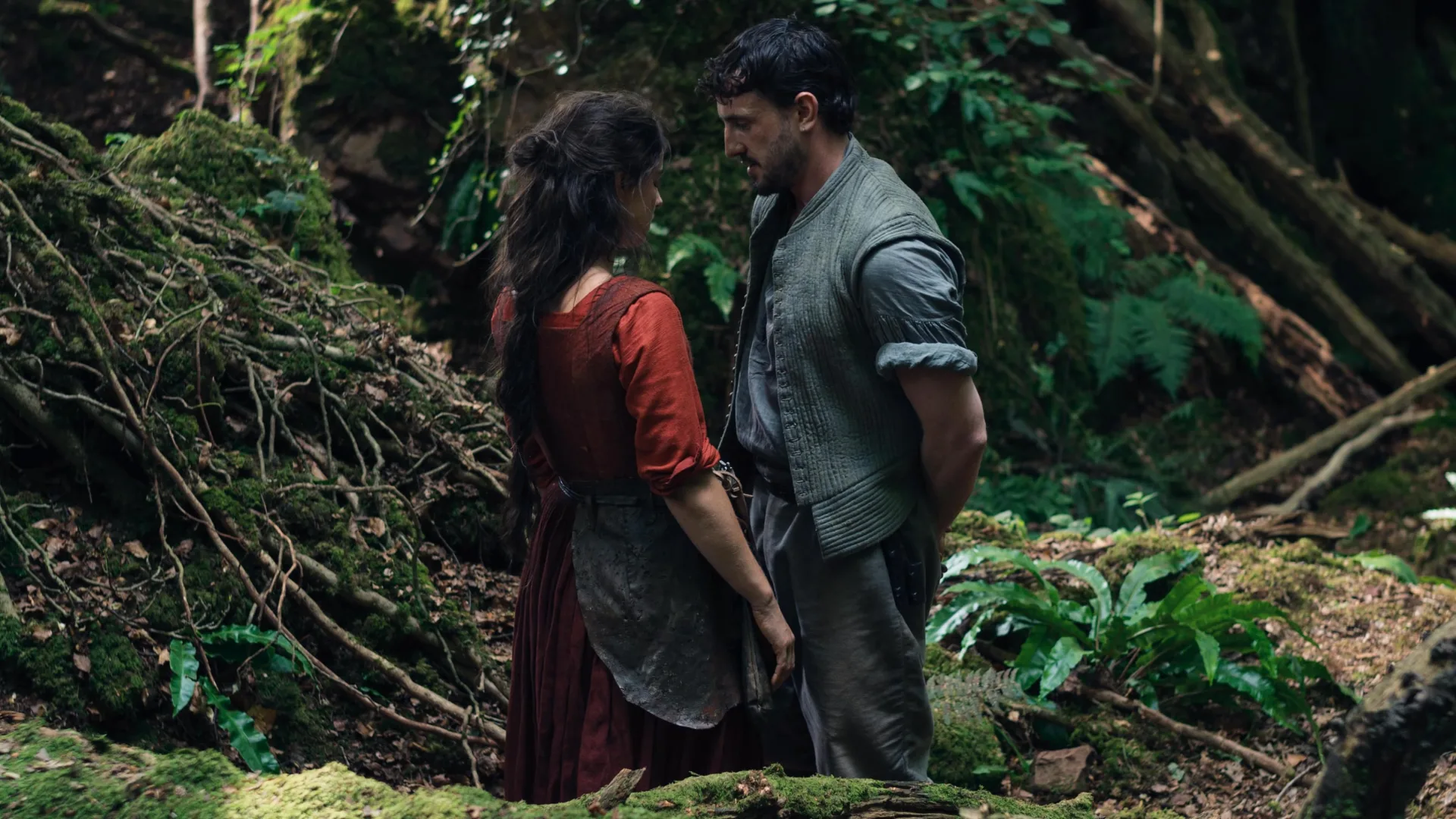
Almost a year after its world premiere at Telluride, and mere weeks after its wide release, Chloé Zhao’s "Hamnet" arrives in UK and Australian cinemas heralded by a tidal wave of critical acclaim and awards season buzz. Adapted from Maggie O'Farrell's celebrated 2020 novel, this historical tragedy film delves into a speculative, deeply emotional origin story for arguably the greatest play ever written. The marketing suggests it’s not a question of if it will move you, but how deeply it will cut – a bold claim we were keen to put to the test.
Agnes Takes Center Stage: Buckley's Breathtaking (and Blistering) Turn
We argue "Hamnet" is undeniably anchored by an astonishing performance from Jessie Buckley as Agnes Shakespeare (born Anne Hathaway), the wild, unconventional wife of the nascent playwright. Buckley delivers a revelatory portrayal, widely praised as elemental and heroic, a force of nature that we believe genuinely anchors the film. Her raw, often gut-wrenching depiction of maternal grief, particularly after the devastating loss of her son, Hamnet, is frequently cited as soul-shattering. Indeed, numerous audience reactions across platforms like Reddit and Letterboxd confirm the film's profound emotional impact, with some viewers admitting to accumulating "quite a pile of napkins from crying" during screenings.
It's an immersive performance that has already garnered Buckley a Golden Globe for Best Performance by a Female Actor in a Motion Picture – Drama, a Critics’ Choice Award for Best Actress, and an Academy Award nomination for Best Actress, among a cascade of other accolades. However, such intense, visceral acting isn't universally lauded, and we must acknowledge the undercurrent of skepticism surrounding performances of this magnitude. Some critics, including our own, found Buckley's powerful turns, as well as Paul Mescal's expressive performance as William Shakespeare, to occasionally stray into "histrionic" or "overwrought" territory, leaning into a theatricality that skirts dangerously close to "Oscar-baity" sentiment. While the film champions itself as a grand meditation on art's capacity for healing, we find it hard to ignore the critical whispers suggesting its approach to evoking tears feels "manipulative" or even "exploitative." For viewers seeking a nuanced character study, "Hamnet" often feels like it's "telegraphing loudly and incessantly" its desired emotional impact, leaving little room for subtlety.
Zhao's Return: From Marvel's Cosmic Stage to Elizabethan Mud
Chloé Zhao, widely seen as returning to her strengths after the mixed reception of her Marvel Cinematic Universe entry "Eternals," imbues Elizabethan England with her signature compassion and curiosity. "Eternals," while praised for its stunning visuals and ambitious nature, received a decidedly split critical reception, averaging only 48% on Rotten Tomatoes, with many finding fault with its runtime and convoluted lore. Zhao herself acknowledged the "unexpected reactions" to her MCU film. Partnering with the novel's author, Maggie O'Farrell, Zhao co-wrote the screenplay, crafting a narrative that intentionally shifts the spotlight from the famed playwright to the strength and sacrifice of the women in his life, particularly Agnes.
Visually, "Hamnet" largely delivers a feast for the eyes. Cinematographer Łukasz Żal, celebrated for his work on "Cold War" and "Ida," imbues the film with a "beautiful, pellucid" quality, capturing the Welsh and Herefordshire landscapes with breathtaking clarity – a visual treat we found consistently impressive. From the muddy fields of Stratford-upon-Avon to London's bustling streets and a meticulously crafted replica of the Globe Theatre at Elstree Studios, the production design feels genuinely authentic. While the visual praise is widespread, we did encounter a lone dissenting critique describing the cinematography to be "murky and dingy" – a sharp counterpoint to the generally glowing reviews.
Max Richter’s score, prominently featuring the famously resonant "On the Nature of Daylight," undoubtedly amplifies the emotional experience. We agree it's a powerful tool, but its "shameless deployment" feels, for us, a tad "overused" or "trite," bordering on manipulative, particularly for those familiar with Richter's distinctive sound.
Rewriting Shakespeare: Creative License or Historical Misstep?
The film's central premise posits that the tragic death of Shakespeare's 11-year-old son, Hamnet (sensitively portrayed by Jacobi Jupe), directly inspired his masterpiece "Hamlet." This is, as critics have noted, a captivating "historical fantasy," and we find ourselves questioning the extent of this creative leap. While Hamnet and Hamlet were indeed interchangeable names in Elizabethan England, and Shakespeare’s son did die in 1596, scholarly consensus points to other plays being written in the interim years, challenging the film's direct causation. "Hamnet" bravely, and perhaps controversially, takes liberties with the creative timeline, and we contend this reduces "Hamlet" for some to a purely therapeutic instrument of healing, risking making the play feel "smaller, less meaningful."
Scholars highlight that "Hamlet" was based on an older legendary story, "The Tale of Amleth" from "History of the Danes," which existed centuries before Shakespeare. Although the names were interchangeable and the play's themes align with grief, Shakespeare never explicitly confirmed a connection to his son's death. In fact, some historians argue that Shakespeare's grief may be more directly reflected in the grieving mother Constance in King John, a play likely written around the time of Hamnet's passing. More recent scholarship also speculates on Hamnet's influence on Twelfth Night, which features separated twins, one presumed dead.
The film's commitment to historical accuracy, while strong in its visual design, does suffer from minor historical "lapses." Anachronistic dialogue and creative timelines for Shakespeare's early works like "Romeo & Juliet" are noted by eagle-eyed viewers. Furthermore, while the film commendably aims to elevate Agnes, we found her "woodsy mysticism" somewhat "cloying" or "rather anachronistic and modern" for the Elizabethan period, pulling us out of the immersion. And, in a curious specific criticism, one reviewer noted the actor playing Hamlet in the play-within-the-film was "dreadful."
Despite these minor quibbles, the film’s ending, culminating in the Globe Theatre sequence, is widely hailed as a powerful, striking, and cathartic experience, and we largely agree. It’s here that the film’s grand meditation on transforming private sorrow into universal art truly resonates.
Our Verdict: A Heart-Wrenching Journey That Demands Its Tears (And Perhaps Your Patience)
"Hamnet" is not a light watch, and we feel it’s important to manage expectations upfront. It's "deliberately slow," and for some, an "extremely slow" or "lugubrious slog," demanding significant emotional investment with little reprieve from its central theme of loss. Community reactions are often split, with some finding it "overhyped and extremely depressing" while others describe it as "extremely powerful and emotionally moving". We acknowledge that this is a film designed to put viewers through an "emotional ringer".
However, we ultimately find its exceptional performances, particularly from Jessie Buckley (whose portrayal of grief is noted as a highlight by many viewers), its stunning visuals, and its profound exploration of grief, art, and the overlooked power of women in history, make it an immensely rewarding cinematic journey. If you're open to a film that will challenge your emotional fortitude and are drawn to richly textured historical dramas, we believe "Hamnet" is essential viewing. It’s a beautifully crafted, deeply moving film that largely earns its accolades, even if its design to break hearts feels a touch too deliberate. Just be warned: it largely succeeds in its mission.










Comments