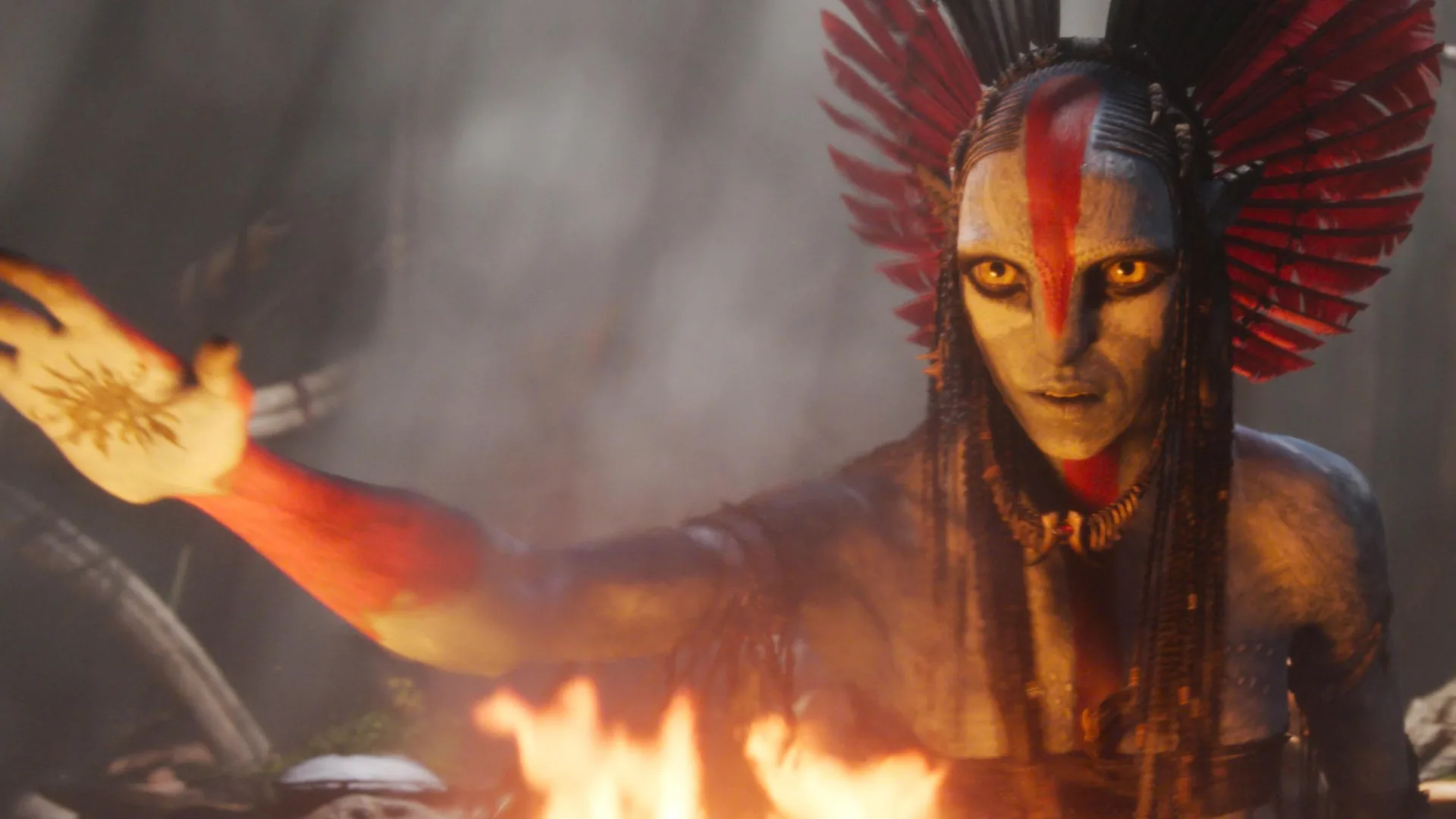
One month into its theatrical run, James Cameron’s Avatar: Fire and Ash has undeniably scorched the box office, incinerating the competition with a domestic haul of $307.7 million. As of February 11, 2026, the film has amassed a worldwide total of $1.441 billion, placing it in the top 30 highest-grossing films of all time globally. But as the smoke clears from the volcanic landscapes of Pandora, a familiar question remains for audiences still flocking to IMAX theaters: Is this an actual evolution of the franchise, or simply a beautifully rendered case of history repeating itself? In our view, it’s a bit of both.
Pandora's Ash People: A Visual Masterclass with a Technical Glitch
Buying a ticket for Fire and Ash guarantees a front-row seat to the most sophisticated visual effects currently possible, and on that front, Weta FX and supervisor Joe Letteri have truly outdone themselves. Where the previous film, The Way of Water, submerged us in the serenity of Pandora’s reefs, this installment plunges viewers into the harsh, scorched territories of the Mangkwan, better known as the Ash People.
The world-building for this volcanic tribe is nothing short of immersive. The stark contrast between the cool blues of the Omatikaya and the aggressive, soot-stained aesthetics of the Mangkwan creates a visual tension that compellingly drives the film's first half. The technical highlights—specifically a massive aerial battle involving magnificent airships—remind us why Cameron remains an undisputed pioneer of the "Big Screen Experience."
However, that experience arrives with a significant technical caveat that many viewers, ourselves included, found distracting. The film employs a variable frame rate, inconsistently switching between 24fps and 48fps. While this choice renders action sequences with crystalline clarity, it often results in what critics and audiences alike have dubbed the "soap-opera effect" during dialogue-heavy scenes. This visual inconsistency, which can feel like watching a sped-up video game cutscene or even "bad software slow motion stutter" to some, frequently pulls the audience out of the very world Cameron worked so tirelessly to build. We can’t help but wonder why a director known for pushing boundaries would choose a technique that so clearly fragments the immersive experience for a noticeable portion of his audience.
Shifting Sands, Familiar Footprints: Narrative Hopes and Stumbles
The most refreshing element in Fire and Ash is the deliberate shift in perspective. Jake Sully takes a backseat as Lo'ak (Britain Dalton) steps up as the film’s narrator, a transition that injects youthful energy into a story picking up roughly a year after the events of The Way of Water.
Perhaps more surprisingly, the emotional core largely centers on Spider (Jack Champion). His character arc takes a fascinating turn as he discovers he can breathe Pandora’s atmosphere unfiltered—a plot point that raises significant questions about his biological connection to the moon and his place among the Na'vi. On the antagonistic front, Oona Chaplin is a standout as Varang. She brings a visceral, menacing presence to the Ash People that makes the RDA’s corporate villainy feel almost secondary. Yet, despite these promising shifts, some critics felt the film's heavy focus on Spider, particularly in the later acts, was baffling and overshadowed the development of the new Ash People characters.
The Marathon Myth: When Ambition Outpaces Narrative
Despite its visual triumphs, Fire and Ash struggles under the weight of its own ambition—and its runtime. At 195 minutes (3 hours and 15 minutes), the film is a marathon without an intermission, leading to a final act that can feel physically taxing for many viewers. This extended length often feels like narrative padding, a suspicion reinforced by the sense that the story is stalling to ensure the franchise reaches its planned five-film conclusion.
The script, co-written by Cameron, Rick Jaffa, and Amanda Silver, is, unfortunately, the film's weakest link. The dialogue is frequently blunt, often devolving into what critics have dubbed "surf-bro hysterics," and common sentiment suggests it frequently pulls viewers out of dramatic moments. While the visuals are state-of-the-art, the plot beats often mirror The Way of Water too closely, leading to a pervasive sense of narrative déjà vu that prevents the film from feeling genuinely new. Many reviewers noted a "big repetition problem that even the amazing visuals can't fix," making much of the over three-hour experience feel like a "remix" of its predecessor.
Our Verdict: A Spectacle Stuck in Neutral
Avatar: Fire and Ash is a film of immense highs and exhausting lows. It is a technical marvel that absolutely demands to be seen on the largest screen possible, offering a level of world-building and spectacle that few, if any, other franchises can currently touch. The introduction of the Mangkwan and the fascinating evolution of Spider are genuine highlights that provide glimmers of meaningful story progression for the series.
However, if you found the dialogue or the length of the previous films a chore, this installment regrettably won’t win you over. It is very much a "middle movie" in every sense—spectacular to look at, but narratively stuck in a holding pattern, as many critics have pointed out. While visually unprecedented at times, some argue it doesn't feel as visually new as its predecessor, a potentially worrying sign for a franchise that relies so heavily on pushing technological boundaries. Newcomers should also be warned: there is no recap of previous events, so do your homework before heading to the theater.
Recommendation: See it in IMAX 3D for the unparalleled craftsmanship, but bring a comfortable seat cushion and plenty of patience for a script that often plays it safe.







Comments