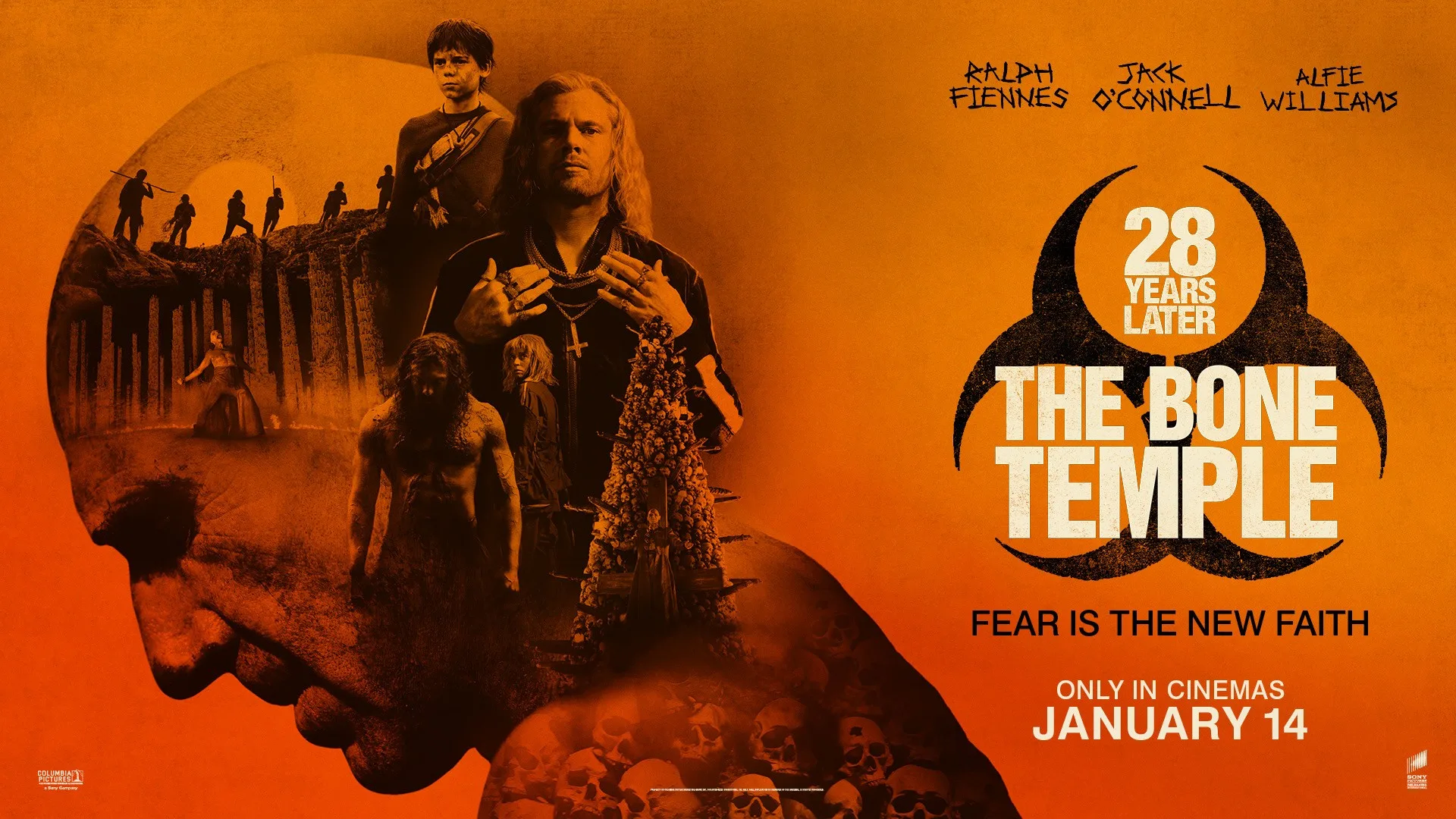
The apocalypse has rarely looked this polished—or this depraved. Arriving just a year after its 2025 predecessor, 28 Years Later: The Bone Temple confirms that the franchise isn’t merely back; it has evolved into something far more complex and disturbing than its "Rage virus" origins.
Directed by Nia DaCosta, who takes the torch from original director Danny Boyle, the film leans into a dual-narrative structure that pits cold scientific desperation against a rising, ritualistic madness. While it suffers from some typical "middle chapter" growing pains, it remains a staggering achievement in atmospheric horror.
Navigating the Apocalypse: Science, Madness, and the Human Monster
The film splits its 109-minute runtime between two starkly different worlds. On one side is Dr. Kelson (played with chilling, clinical precision by Ralph Fiennes), who is attempting to bridge the gap between humanity and the "Alpha" infected—specifically a specimen named Samson. This half of the film is pure sci-fi thriller, exploring the biological limits of the virus with a level of intellectual curiosity rarely seen in the genre. For a franchise often credited with reinvigorating the zombie genre with its fast-running infected, delving into the scientific nuances of the "Rage virus" offers a fresh, intellectual pivot.
On the other side lies the nightmare of "The Bone Temple." Jack O’Connell delivers a career-defining performance as Sir Jimmy Crystal, a cult leader visually modeled after the late, disgraced British TV figure Jimmy Savile. It is here that The Bone Temple earns its "R" rating and then some. We find ourselves questioning how much humanity remains when the film depicts a society that has moved past mere survival into a twisted form of occult worship and ritualized violence. The choice to model a villain after Savile, a figure whose posthumous revelations exposed him as one of the UK's most prolific sexual abusers operating unchecked within public institutions, is a chilling and potent commentary on the darkest aspects of human nature. Spike’s forced induction into this group provides the film’s emotional core, though critics have rightly pointed out that his character growth feels somewhat stalled compared to the seismic shifts occurring in the world around him. This emphasis on the inhumanity of the survivors, rather than just the infected, resonates deeply with the original film's thematic core.
The Unflinching Viscera and Haunting Sounds of Survival
Where Nia DaCosta truly shines is in her commitment to practical effects. In an era where digital blood is the norm, The Bone Temple opts for tactile, stomach-turning reality. The "infected contortions" are physically jarring, and the film does not shy away from the visceral; expect scenes involving skinning, cannibalism, and ritualistic mutilation that will test the resolve of even the most seasoned horror fans. We applaud this decision, as practical effects are widely praised for creating a tangible, visceral authenticity that computer-generated imagery often struggles to replicate, making the on-screen horror feel more immediate and impactful. DaCosta, known for her work on the critically acclaimed Candyman and her focus on social components in storytelling, clearly understands the power of grounded terror.
The technical pedigree extends to the soundscape. Composer Hildur Guðnadóttir delivers a score that feels like a weight on the chest, punctuated by some of the most inspired needle drops of the year. Guðnadóttir, an Academy and Emmy winner recognized for her haunting work on Joker and Chernobyl, masterfully crafts atmospheric scores that become integral to a film's emotional and narrative depth. Hearing Iron Maiden’s "The Number of the Beast," Duran Duran’s "Rio" and "Girls on Film," and Radiohead’s "Everything in Its Right Place" against the backdrop of a crumbling Britain is haunting. While all these choices are strong, we'd argue Radiohead's "Everything in Its Right Place" is perhaps the most inspired, its unsettling calm offering a stark, almost perverse contrast to the chaos. For the purists, the return of John Murphy’s iconic "In the House, In a Heartbeat" during the finale is a masterstroke that ties the legacy of the 2002 original to this new, darker era.
Second Act Syndrome? A Bridge Too Far for the '28 Years Later' Franchise
If there is a legitimate grievance to be found, it is that The Bone Temple is clearly the second act of a larger play. Alex Garland’s script is dense and ambitious, but it leaves several major plot threads dangling precariously in anticipation of the next installment. Garland, whose screenwriting explores weighty themes of self-destruction and societal collapse in films like Ex Machina and Annihilation, often uses stories as a vehicle for themes rather than providing easy answers. However, for some viewers, the extensive focus on "Jimmy’s" cult might feel like a detour into gratuitous sadism that distracts from the overarching search for a cure. We can't help but wonder if the narrative balance might have been better served by less time in the Temple and more progress on the scientific front, particularly since "middle chapters" frequently struggle with maintaining momentum while setting up a finale.
There is also some minor technical confusion behind the scenes, with conflicting reports on whether cinematography was handled by Sean Bobbitt or Anthony Dod Mantle. Regardless of who held the camera, the 2.39:1 aspect ratio captures a Britain that looks beautiful even as it rots.
Final Word: A Demanding Yet Essential Horror Experience
28 Years Later: The Bone Temple is a demanding, often punishing experience. It replaces the kinetic energy of the early films with a looming sense of dread and a deep dive into the "Satanic" pivot of a dying civilization. While Spike’s journey feels a bit like he is treading water, the performances by O'Connell and Fiennes, combined with DaCosta’s unflinching eye for practical horror, make this mandatory viewing. This is a bleak, brilliant examination of what happens when the world ends and we are left with nothing but our darkest impulses. Just be prepared for the fact that this story is far from over.
Final Recommendation: A must-see for fans of high-concept horror, though the faint of heart should stay far away from the Temple.






Comments